

| Review Article Online Published: 23 Mar 2026 | ||||||||||||
Arch Appl Sci. 2026; 1(1): 47-53 Transforming agriculture with artificial intelligence: A scoping review of technologies and trends Ako Kakarash Omer, Ayas Hussein, Safar Maghdid Assad.
| ||||||||||||



Introduction
Artificial intelligence (AI) has become a revolutionary power, transforming the conventional approach and revolutionizing industries, especially agriculture [1]. Its ability to develop more informed decisions, better utilization of resources, and innovative evidencebased solutions has been a vision [2,3]. Although the idea of agriculture functional difference seems to be apparent, they are starting to use the same AI technology in terms of more machine learning (ML) [4], convolutional neural network (CNN) [5], computer vision (CV), the Internet of Things (IoT) [6], and deep learning (DL) [7], which essentially opens tremendous interconnected opportunities. AI has done more than enrich farming by making it more sustainable and productive [8]. Combining IoT and ML is associated with precision agriculture, which helps better manage resources, such as water, fertilizer, and pesticides, and reduces waste and its impact on the environment to increase yields [9]. Moreover, your technology’s drone and satellite imagery in the form of a CV allows realtime monitoring of crop health to assist with early identification of pests and disease. AIdriven autonomous machinery can increase operational efficiency by automating strategic agricultural processes such as planting, harvesting, and irrigation. This can ultimately lead to better agricultural decisions and climate resistance [10,11]. The remainder of the work is organized as follows. Section 2 provides a conceptual overview of AI. Section 3 investigates the application of AI in agriculture. Section 4 explains the current challenges of the adoption of AI in agriculture, followed by a discussion in Section 5. Section 6 summarizes the study, providing future directions in the field of agriculture.
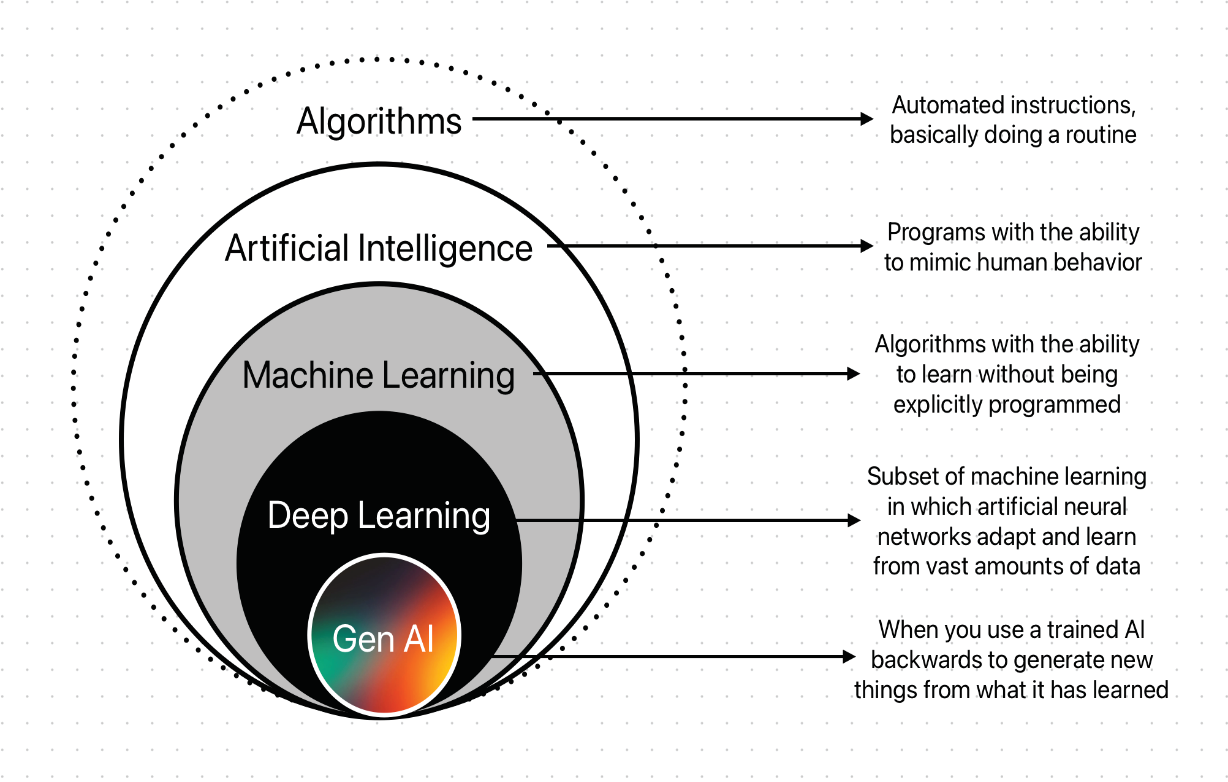
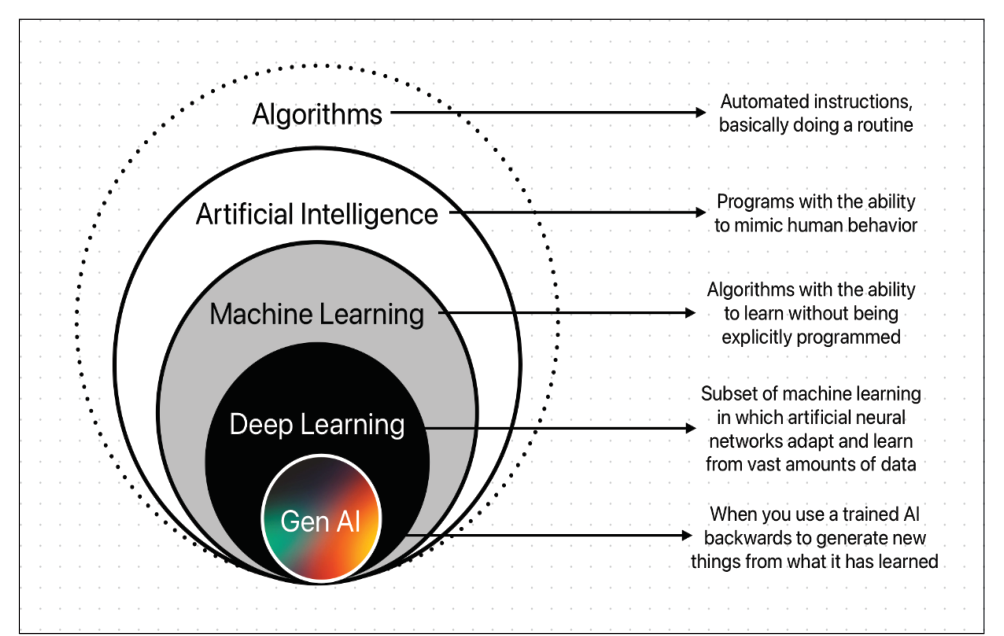
A conceptual overview of the use of AI in agriculture AI algorithms improve productivity and sustainability in agriculture through the use of precision techniques, as Figure 1 demonstrates the progress of AI key steps [12]. ML models, such as support vector machines and Neural Network [13,14]. It can predict crop yield and detect pests. With the help of CV algorithms, drones or satellite imagery can be used to monitor crop health and detect diseases [15,16]. DL supports autonomous machinery in making optimum decisions for flexible PF tractors and harvesters [17]. Moreover, kmeans and hierarchical clustering are used for AI algorithms to segment agricultural data for soil analysis and irrigation management [18,19]. Figure 2 clearly illustrates that integrating DL algorithms in the agricultural sector enhances prediction and recommendation accuracy. For instance, CNNs form the foundation for image recognition tasks in agriculture.
Applications of AI in agriculture
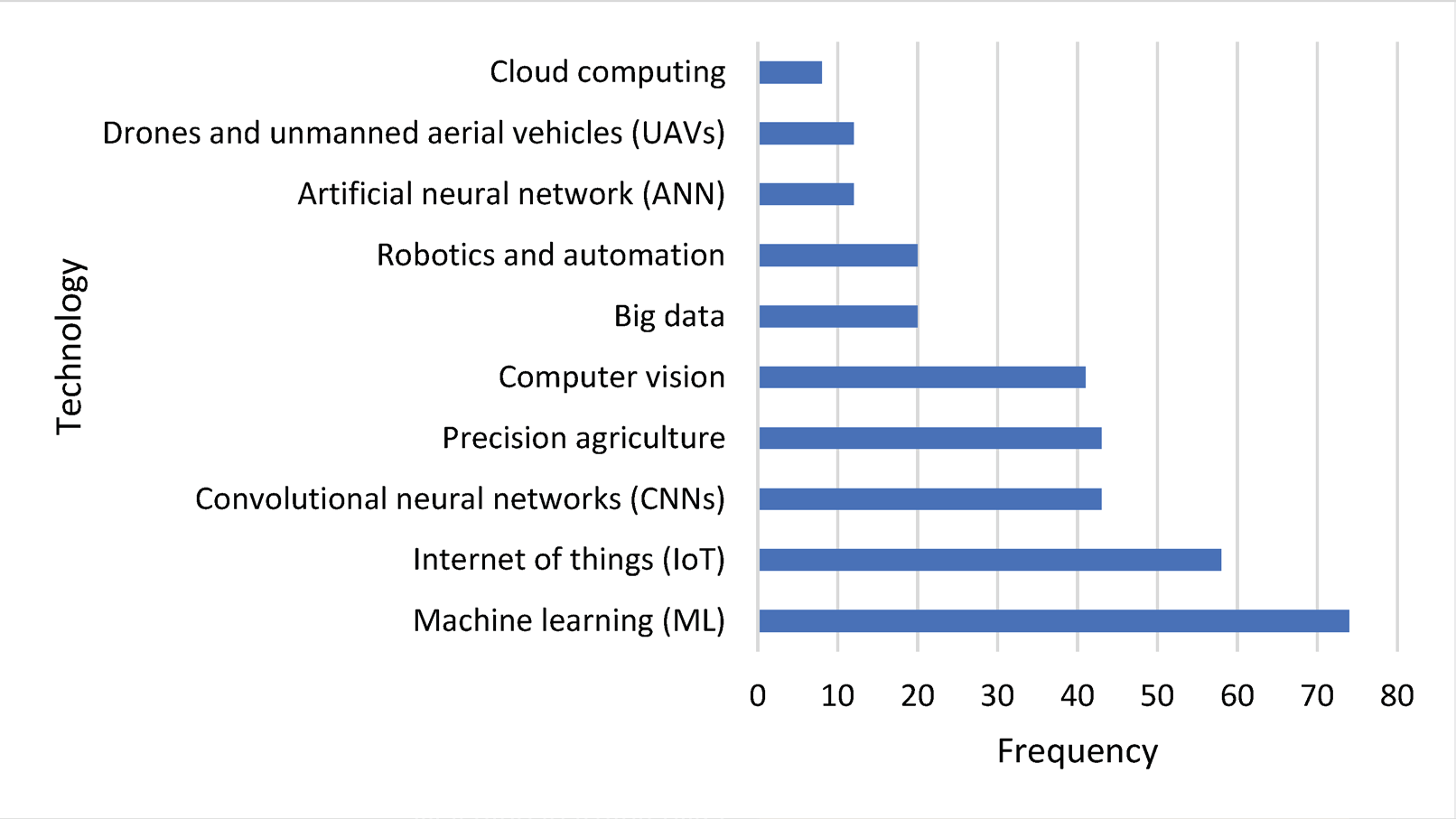
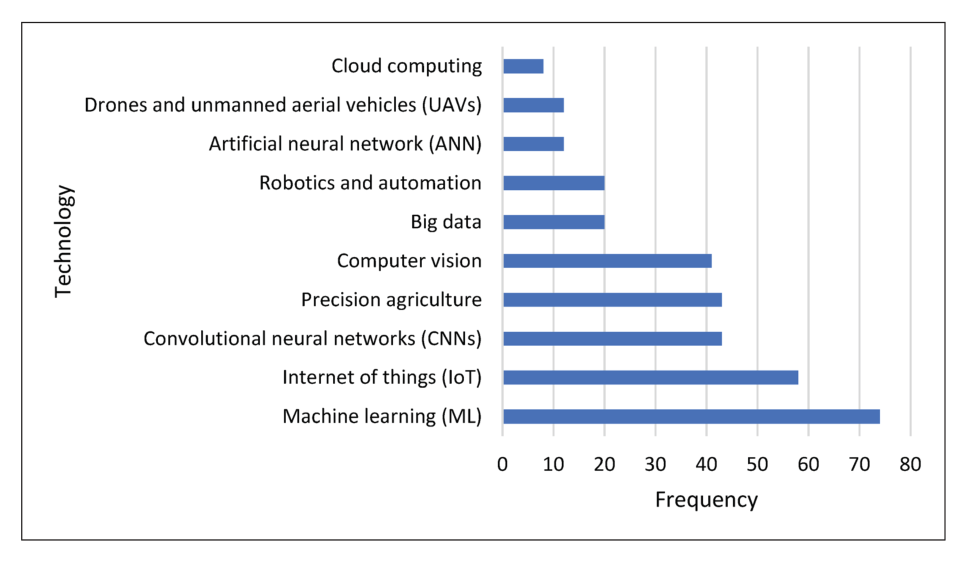
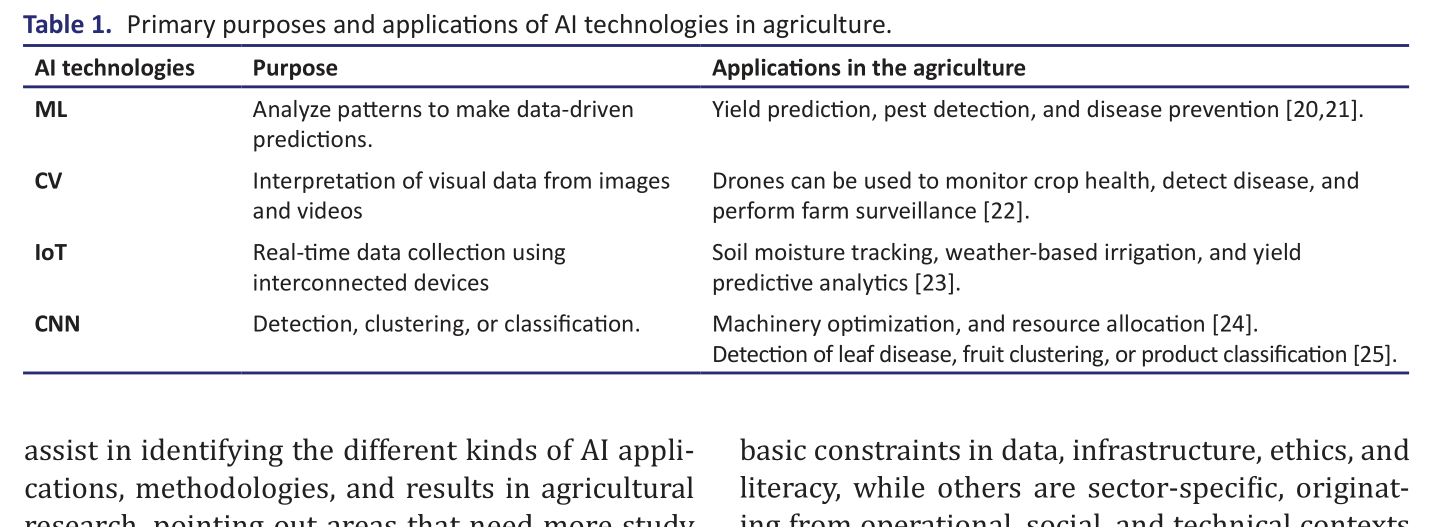
It can be seen from Table 1 that AI is addressing the critical challenges of food production, sustainability, and agricultural resource management. By integrating technologies such as ML, CV, and IoT, AI allows farmers to make informed decisions, optimize crop yields, and enhance resource utilization. AIdriven solutions for global challenges, such as climate change, growing population, and shrinking agricultural land, promote sustainable practices that maximize productivity at the expense of conservation [24]. The impact of AI on agriculture is twofold: it facilitates greater efficiency and sustainability while simultaneously driving transformative change in agricultural operations.Figure 3 illustrates the relative adoption frequency of various AI technologies in agriculture. ML tops the charts, followed by IoT and CNNs. Precision agriculture, CV, and big data have been moderately used, whereas robotics, artificial neural networks, and drones are of low use. Cloud computing is the least used technology in the literature [24]. AI technologies have emerged as critical approaches to solving problems in modern agriculture. Using more sophisticated devices and techniques, AI enables resource conservation, boosts productivity, and facilitates the implementation of sustainable farming practices [25].
A. Precision farming: IoTenabled devices can process and analyze data to significantly enhance the management of inputs such as water, fertilizers, and pesticides. That is when an AIpowered IoT solution can be used to examine soil moisture and provide irrigation suggestions in real time. This will enable farmers to conserve water and enhance crop health [19]. Furthermore, ML algorithms can analyze weather patterns to determine suitable planting and harvesting times, reducing waste and increasing yields.
B. Crop monitoring: Drones equipped with the CV offer realtime insights into crop health, replacing traditional crop monitoring methods. Then, AIpowered drones are used to capture highresolution images of the field, which are analyzed to identify early signs of disease, pests, or nutrient deficiencies [25]. It enables farmers to act quickly when significant yield losses are detected early enough to prevent significant yield losses. For instance, CV algorithms can detect discoloration patterns in crops and infer potential diseases or stress conditions. It enables targeted interventions by promoting precision performance monitoring, which minimizes costs and has less environmental impact [23].
C. AI drives autonomous agricultural machinery, such as tractors, seeders, and harvesters: These are causing agricultural processes to operate with high accuracy and minimal human involvement [23]. They employ Reinforcement Learning / Real Life algorithms on these machines, as they can optimally decide on routes and tasks and navigate across fields. Another example is driverless tractors that use sensors and AI software to determine the correct depth and spacing when planting seeds, promoting crop uniformity and increasing yield. Innovations such as these can lower labor costs, enhance productivity, and address shortages in agricultural labor [19].
Materials and Methods
This article has chosen a scoping review approach because it is effective in the field. A review is a type of research synthesis that seeks to discover important ideas, gaps, and future research paths by mapping and summarizing the body of knowledge on a certain subject. Scoping reviews are more comprehensive than systematic reviews, concentrating on examining the depth and breadth of the body of current literature rather than providing a response to a particular research issue. A scoping review would
assist in identifying the different kinds of AI applications, methodologies, and results in agricultural research, pointing out areas that need more study in the context of AI in agriculture. It also examines the applications of AI in agriculture. It searched the Scopus, Web of Science, and IEEE Xplore databases using the search string: AI in Agriculture for articles published between 2017 and 2025. The inclusion criteria were as follows: (1) peerreviewed articles, (2) articles written in English, and (3) articles focusing on AI applications in agriculture. We excluded articles that were not relevant to the topic or did not meet the inclusion criteria. The search yielded 25 articles, of which 75 met the inclusion criteria. The selected articles were analyzed to identify AI technologies, applications, challenges, and prospects in agriculture; therefore, the current literature study extensively examines AI applications in agriculture by methodically assessing research published since 2017 in prestigious academic databases. In particular, it aims to:• Determine and critically assess key AI technologies that have been effectively implemented in agricultural contexts.• Systematically compare and analyze the varying impacts, methodologies, and outcomes of AI deployment in agriculture.• Investigate challenges in the field, including data reliability, ethical concerns, infrastructure limitations, and technological literacy deficits.This analysis contributes to a deeper understanding of how new technologies can be effectively used to enhance innovation, inclusivity, and sustainability in key sectors by providing a unified perspective on the role of AI in agriculture.
Challenges of AI adoption in agriculture
AI promises significant advantages in agriculture and other areas, but it is not without its challenges. Upon further inspection, these challenges have a dual character: some are common, arising from basic constraints in data, infrastructure, ethics, and literacy, while others are sectorspecific, originating from operational, social, and technical contexts unique to agriculture. Addressing such nested challenges is crucial for the responsible and inclusive implementation of AI systems.
A. Shared challenges across agricultural operations
Data quality and accuracy
A lack of completeness, consistency, and quality in the data can strongly affect AI approaches’ performance and trustworthiness. In agriculture, poor datasets can undermine crop forecasts. This challenge can be mitigated by standardizing data acquisition, implementing strict preprocessing, and adhering to quality assurance procedures [18].
Technological literacy and digital literacy
There is a low level of knowledge of technology and AI in agriculture. In agriculture, farmers’ low technical literacy downplays the adoption of developed AIbased systems. This highlights the importance of contextualized and facilitated sectorspecific training [22,24].
Infrastructure and connectivity gaps
Insufficient access to electricity, internet, and equipment represents a substantial constraint—especially in rural or less developed areas. These barriers limit the penetration of cloud computing in learning solutions and IoTbased agriculture. Scaling infrastructure investment and publicprivate partnerships are required. AI innovations have high prospects in the agricultural sector, but some barriers slow down their adoption.
Inadequate data and transparent decisionmaking
AI models are trained on substandard or mismatched datasets in some agricultural settings, leading to decisions that may not be contextually
relevant. Poor model transparency also hinders the trust of farmers in the recommendations generated. Addressing this requires the development of explainable and contextaware AI tools that enable stakeholders to understand and validate the decisionmaking [24].
Limited access to rural infrastructure
Rural populations in developing nations often lack access to essential infrastructure resources, such as the internet and electricity. Such AI applications continue to find new problems to expand. Such applications do not benefit society because they cannot be implemented or used effectively due to the lack of AI tools. To solve these problems, universal ideas to connect such regions and boost access to energy resources are needed [23].
Technological literacy among farmers
Farmers are not trained on how to use AI tools. This leads to avoiding technologies that enable productivity and facilitate informed decisionmaking. It also emphasizes the need to tailor training interventions tailored to farmers in their local language to address this knowledge and understanding gap. Nevertheless, such programs can ensure that farmers can effectively leverage these technologies by equipping them with the necessary skills, thus helping them avail of the potential benefits of such tools for achieving efficiency and effectiveness in agricultural processes.
Results and Discussion
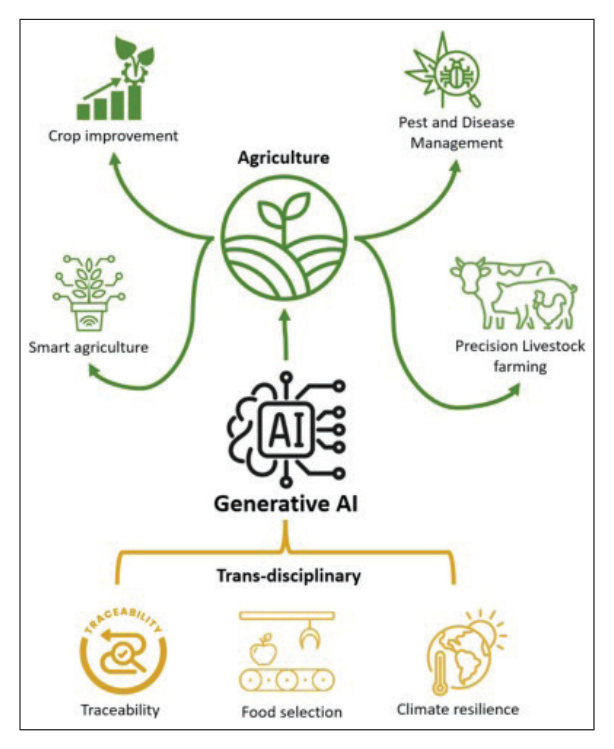
The findings of this scoping review support the critical and growing role of AI in agriculture. Initially, this study aimed to determine which key technology qualifies for an application in the outlined domain. Searching for the difference between the application of AI and its impacts on agriculture, the difficulties and ethical issues encountered by each have been outlined.AI is a transformative force in agriculture. ML, DL, CV, and CNN are examples of AI technologies that have demonstrated significant usefulness in a variety of applications, such as autonomous machinery, early plant disease detection, and precision farming.For instance, AI systems that utilize ML may influence the ability of autonomous agricultural systems to adjust to environmental changes and increase agricultural operation efficiency and productivity.
Overall, the findings support the argument that inclusive, ethical, and sustainable AI solutions are needed. To develop creative and socially sensitive AI systems, the cooperation of representatives of various industries is required. Partnerships with all stakeholders, including governments, businesses, academia, farmers, and researchers, are required.
Conclusion
AI, being revolutionary by itself, revolutionizes industries. Agriculture AI will change the longpracticed traditional ways of farming to precision in prudently practicing agriculture with the use of these resources, fertilizers, or pesticides; the efficiency of these resources in terms of their use is crucial. AIenabled realtime monitoring systems will provide farmers with useful information on the soil condition, weather assessment, and the speed of crop development, enabling them to make datadriven decisions. Productivity enhancement and the sustainability of agricultural practices are also observed.AI has great potential for agriculture in the future, but its effectiveness will depend on strategic cooperation among policymakers, researchers, and industry leaders. Governments and the private sector should invest in inclusive AI development with affordability, ethicality, and scalability in mind. Just as AI should be used responsibly and justly, frameworks regulating its operation should also prioritize this. The years ahead will witness even closer integration of AI into agriculture as ML, edge computing, and decentralized AI models continue to improve. These advancements will further increase product accessibility, enhance decisionmaking speed, and create even more sustainable, intelligent systems. Society can indeed adopt a forwardthinking outlook and strive toward that historic best vision to maximize the benefits of AI for students, educators, farmers, and communities worldwide.
Conflict of interest
The authors have no competing interests to declare.
Funding
This research received no specific grant from any funding agency in the public, commercial, or notforprofit sectors.
Informed consent
Not applicable.
Author contributions
All authors equally contributed to the conception, design, analysis, and writing of this manuscript.
Data availability statement
No new data were created or analyzed in this study. Data sharing does not apply to this study.
Research involving humans and/or animals Not applicable.
References1. Liakos KG, Busato P, Moshou D, Pearson S, Bochtis D. Machine learning in agriculture: a review. Sensors 2018; 18(8):2674; doi:10.3390/S18082674 2. Tzounis A, Katsoulas N, Bartzanas T, Kittas C. Internet of Things in agriculture, recent advances and future challenges. Biosyst Eng 2017; 164:31–48; doi:10.1016/J.BIOSYSTEMSENG.2017.09.007 3. Wolfert S, Ge L, Verdouw C, Bogaardt MJ. Big data in smart farming–a review. Agric Syst 2017; 153:69–80; doi:10.1016/J.AGSY.2017.01.023 4. Jura J, Trnka P, Cejnek M. Using NLP to analyze requirements for agriculture 4.0 applications. In 23rd International Carpathian Control Conference, Prague, Czech Republic, ICC 2022, 2022, pp. 239–43; doi:10.1109/ICCC54292.2022.9805905 5. Ghazal S, Munir A, Qureshi WS. Computer vision in smart agriculture and precision farming: techniques and applications. Artif Intell Agric 2024; 13:64–83; doi:10.1016/J.AIIA.2024.06.004 6. Anand A, Trivedi NK, Gautam V, Tiwari RG, Witarsyah D, Misra A. Applications of Internet of Things (IoT) in agriculture: the need and implementation. In Proceedings - International Conference Advancement in Data Science, E-Learning and Information Systems, ICADEIS 2022, 2022; doi:10.1109/ICADEIS56544.2022.10037505 7. Din A, Ismail MY, Shah B, Babar M, Ali F, Baig SU. A deep reinforcement learningbased multiagent area coverage control for smart agriculture. Comput Electr Eng 2022; 101:108089; doi:10.1016/J.COMPELECENG.2022.108089 8. Aijaz N, Lan H, Raza T, Yaqub M, Iqbal R, Pathan MS. Artificial intelligence in agriculture: Advancing crop productivity and sustainability. J Agric Food Res 2025; 20:101762; doi:10.1016/j.jafr.2025.101762 9. Wen C, Xie B, Song Z, Yang Z, Dong N, Han J, et al. Methodology for designing tractor accelerated structure tests for an indoor drumtype test bench. Biosyst Eng 2021; 205:1–26; doi:10.1016/J.BIOSYSTEMSENG.2021.02.007 10. Klippenstein SR, Khazaei H, Vandenberg A, Schoenau J. Nitrogen and phosphorus uptake and nitrogen fixation estimation of faba bean in western Canada. Agron J 2022; 114(1):811–24; doi:10.1002/AGJ2.20945 11. Jana S, Biswas R, Das A, Pal M, Pal K. The role of AI in automating farm machinery: From planting to harvesting. IJARSCT 2023; 3(2):363–9; doi:10.48175/IJARSCT-13555B12. Sun X, Fang W, Gao C, Fu L, Majeed Y, Liu X, et al. Remote estimation of grafted apple tree trunk diameter in modern orchard with RGB and point cloud based on SOLOv2. Comput Electron Agric 2022; 199:107209; doi:10.1016/J.COMPAG.2022.10720913. Gambart C, Swennen R, Blomme G, Groot JCJ, Remans R, Ocimati W. Impact and opportunities of agroecological intensification strategies on farm performance: a case study of bananabased systems in central and southwestern Uganda. Front Sustain Food Syst 2020; 4:544659; doi:10.3389/FSUFS.2020.00087/BIBTEX 14. Reddy DJ, Kumar MR. Crop yield prediction using machine learning algorithm. In Proceedings - 5th International Conference on Intelligent Computing and Control Systems, ICICCS 2021, 2021, pp. 1466–70; doi:10.1109/ICICCS51141.2021.9432236 15. Ait Issad H, Aoudjit R, Rodrigues JJPC. A comprehensive review of data mining techniques in smart agriculture. Eng Agric Environ Food 2019; 12(4):511–25; doi:10.1016/J.EAEF.2019.11.003 16. AI-Powered Crop Disease Detection: Deep Learning & UAVs [Online]. Available via https://flypix.ai/blog/cropdiseasedetection/ (Accessed 19 March 2025) 17. Abbas A, Zhang Z, Zheng H, Alami MM, Alrefaei AF, Abbas Q, et al. Drones in plant disease assessment, efficient monitoring, and detection: a way forward to smart agriculture. Agronomy 2023; 13(6):1524; doi:10.3390/AGRONOMY13061524 18. Arevalo -Ramirez T, Auat Cheein F. Cluster analysis for agriculture. Encycl Digital Agric Technol 2023; 148–55; doi:10.1007/978-3-031-24861-0_189 19. Pascucci S, Carfora M, Palombo A, Pignatti S, Casa R, Pepe M, et al. A comparison between standard and functional clustering methodologies: application to agricultural fields for yield pattern assessment. Remote Sens 2018; 10(4):585; doi:10.3390/RS10040585 20. Javaid M, Haleem A, Khan IH, Suman R. Understanding the potential applications of artificial intelligence in the agriculture sector. Adv Agrochem 2023; 2(1):15–30; doi:10.1016/j.aac.2022.10.001 21. N. Clara Eli-Chukwu, Applications of Artificial Intelligence in Agriculture: a review, [Online]. 2019. Available via www.etasr.com 22. Sharma S, Verma K, Hardaha P. Implementation of artificial intelligence in agriculture. J Comput Cognit Eng 2023; 2(2):155–62; doi:10.47852/bonviewJCCE2202174 23. Wolfert S, Ge L, Verdouw C, Bogaardt MJ. Big data in smart farming – a review. Agric Syst 2017; 153:69–80; doi:10.1016/J.AGSY.2017.01.023 24. Asaad SM, Maghdid HS. Novel integrated matching algorithm using a deep learning algorithm for Wi-Fi fingerprintpositioning technique in the indoors-IoT era. PeerJ Comput Sci 2023; 9:1406; doi:10.7717/peerjcs.1406 25. Elbasi E, Mostafa N, Alarnaout Z, Zreikat AI, Cina E, Varghese G, et al. artificial intelligence technology in the agricultural sector: a systematic literature review. IEEE Access 2023; 11:171–202; doi:10.1016/j.access.2023 26. Dibbern T, Romani LAS, Massruhá SMFS. Main drivers and barriers to the adoption of digital agriculture technologies. Smart Agric Technol 2024; 8:100459; doi:10.1016/J.ATECH.2024.100459 27. Pallottino F, Violino S, Figorilli S, Pane C, Aguzzi J, Colle G, et al. Applications and perspectives of generative artificial intelligence in agriculture. Comput Electron Agric 2025; 230:109919.
| How to Cite this Article |
| Pubmed Style Omer AK, Hussein A, Assad SM. Transforming agriculture with artificial intelligence: A scoping review of technologies and trends. Arch Appl Sci. 2026; 1(1): 47-53. doi:10.5455/AAS.20260304090202 Web Style Omer AK, Hussein A, Assad SM. Transforming agriculture with artificial intelligence: A scoping review of technologies and trends. https://www.wisdomgale.com/aas//?mno=312707 [Access: June 27, 2026]. doi:10.5455/AAS.20260304090202 AMA (American Medical Association) Style Omer AK, Hussein A, Assad SM. Transforming agriculture with artificial intelligence: A scoping review of technologies and trends. Arch Appl Sci. 2026; 1(1): 47-53. doi:10.5455/AAS.20260304090202 Vancouver/ICMJE Style Omer AK, Hussein A, Assad SM. Transforming agriculture with artificial intelligence: A scoping review of technologies and trends. Arch Appl Sci. (2026), [cited June 27, 2026]; 1(1): 47-53. doi:10.5455/AAS.20260304090202 Harvard Style Omer, A. K., Hussein, . A. & Assad, . S. M. (2026) Transforming agriculture with artificial intelligence: A scoping review of technologies and trends. Arch Appl Sci, 1 (1), 47-53. doi:10.5455/AAS.20260304090202 Turabian Style Omer, Ako Kakarash, Ayas Hussein, and Safar Maghdid Assad. 2026. Transforming agriculture with artificial intelligence: A scoping review of technologies and trends. Archives of Applied Sciences, 1 (1), 47-53. doi:10.5455/AAS.20260304090202 Chicago Style Omer, Ako Kakarash, Ayas Hussein, and Safar Maghdid Assad. "Transforming agriculture with artificial intelligence: A scoping review of technologies and trends." Archives of Applied Sciences 1 (2026), 47-53. doi:10.5455/AAS.20260304090202 MLA (The Modern Language Association) Style Omer, Ako Kakarash, Ayas Hussein, and Safar Maghdid Assad. "Transforming agriculture with artificial intelligence: A scoping review of technologies and trends." Archives of Applied Sciences 1.1 (2026), 47-53. Print. doi:10.5455/AAS.20260304090202 APA (American Psychological Association) Style Omer, A. K., Hussein, . A. & Assad, . S. M. (2026) Transforming agriculture with artificial intelligence: A scoping review of technologies and trends. Archives of Applied Sciences, 1 (1), 47-53. doi:10.5455/AAS.20260304090202 |