

| Review Article Online Published: 08 Sep 2026 | ||||||||||||
Arch Appl Sci. 2026; 1(3): 72-92 A review of Monte Carlo Simulation for Assessing Excess Lifetime Cancer Risk (ELCR) from Radon-222 in Groundwater: Evidence from Nasarawa State, Nigeria and Global Perspectives Abubakar Bala Madaki, Adamu Usman Mohammed, Jamilu Labaran Ari, Ali Musa Kazzayo.
| ||||||||||||



Introduction
Groundwater is one of the most important natural resources for domestic, agricultural, industrial, and ecological sustainability worldwide. Approximately half of the global population depends on groundwater for drinking purposes, especially in developing countries where centralized water supply systems are often inadequate. In Nigeria, groundwater obtained from boreholes, handdug wells, and springs constitutes the principal source of portable water for both rural and the urban populations due to increasing population growth, rapid urbanization, and inadequate public water infrastructure [1]. Despite its importance, groundwater quality may be compromised by naturally occurring contaminants, including radionuclides, which are derived from geological formations. Among these naturally occurring radionuclides, 222Rn has attracted considerable scientific and public health attentions as a result of its radiotoxicity and recognized carcinogenic potential [2,3].
222Rn is a naturally occurring radioactive noble gas generated from the alpha decay of Radium-226 within the Uranium decay series. Owing to its chemical inertness, colorless appearance, odorless nature, and moderate solubility in water, radon gas readily migrate through fractures, pore spaces, and permeable geological formations before dissolving into groundwater systems. The occurrence of radon in groundwater is therefore controlled mostly by geological and hydrogeological factors, including uranium and radium content of aquifer materials, lithology, rock fracturing, groundwater residence time, porosity, permeability, recharge characteristics, and groundwater–rock interactions [4–6]. Consequently, groundwater abstracted from crystalline basement rocks, granites, pegmatites, alaskites, and uraniumbearing formations frequently contains higher dissolved radon concentrations than groundwater from unconsolidated sedimentary aquifers. Human exposure to groundwaterderived radon occurs mainly through ingestion of radoncontaminated drinking water and inhalation of radon released into indoor air during routine household activities such as cooking, showering, laundering, and washing. Although ingestion contributes to internal radiation exposure, numerous epidemiological investigations have consistently demonstrated that inhalation of radon and its shortlived decay products constitutes the dominant exposure pathway and is strongly associated with an increased risk for lung cancer [7,8]. By contrast, evidence linking the ingested radon in drinking water to stomach or other gastrointestinal cancers remains limited and less conclusive. Consequently, recent World Health Organization (WHO) guidance recommends that discussions of health effects distinguish clearly between the wellestablished inhalation pathway and the comparatively uncertain evidence for ingestionrelated malignancies. Globally, radon concentrations in groundwater exhibit substantial spatial variability due to differences in geological settings and hydrogeological conditions. The elevated level of radon concentrations have been reported in Finland, Czech Republic, Brazil, Saudi Arabia, India, Iran, Thailand, and many other countries where groundwater is abstracted from uraniumrich crystalline rocks [9–11]. Similar variability has also been reported across Nigeria, including studies conducted in Delta, Kano, Bauchi, Nasarawa, and the Southern parts of Nigeria, demonstrating that groundwater radioactivity is highly dependent on local geology and mining activities [12–15].Nasarawa State is located within the Middle Benue Trough and the Nigerian Basement Complex and possesses diverse geological formations comprising granites, migmatites, pegmatites, sandstones, alaskites, and other uraniumbearing lithologies. Moreso, extensive artisanal and commercial mining of tin, columbite, tantalite, lithium, and associated minerals has increased concern regarding enhanced mobilization of naturally occurring radionuclides into the groundwater systems. Recent investigations conducted in some locations in Wamba and Nasarawa local government areas (LGAs) revealed considerable differences in the radon concentrations in groundwater and the corresponding excess lifetime cancer risk (ELCR), indicating substantial spatial variability even within the same state [16,17]. These findings emphasize the need to understand the geological, hydrogeological, and anthropogenic factors responsible for such variability. Radiological health risk assessments have traditionally relied on deterministic models that employ singlepoint estimates for exposure parameters such as radionuclide concentration, water consumption rate, exposure duration, and dose conversion factors. Although these approaches are computationally simple and widely used, but they inadequately represent the inherent uncertainty and natural variability associated with environmental systems [18]. In contrast, Monte Carlo simulation (MCS) provides a probabilistic framework in which uncertain input variables are represented by probability distributions rather than fixed values. Repeated random sampling allows estimation of the full probability distribution of radiological risk, confidence intervals, percentile values, and uncertainty associated with the predicted health outcomes [19,20]. Consequently, MCS has become an important tool in environmental radiation protection and quantitative health risk assessment. This review critically evaluates the occurrence of 222Rn in groundwater sources of Nasarawa State, North-Central Nigeria, with emphasis on the application of MCS in the estimation of ELCR. Unlike other previous summaries focusing primarily on individual studies, this review synthesizes the findings from Nigerian and international investigations, compares deterministic and probabilistic risk assessment approaches, examines the geological and hydrogeological controls governing the occurrence of radon in groundwater, discusses methodological strengths and limitations of RAD7 measurement technique, and identifies future research priorities for improving groundwater radiological protection in Nigeria.
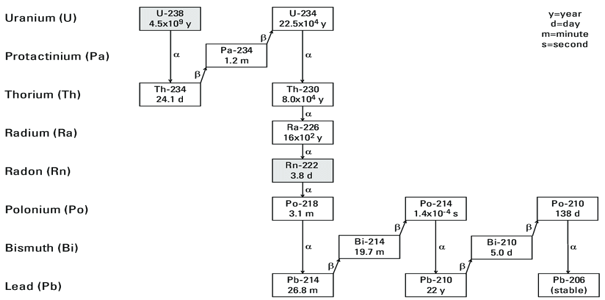
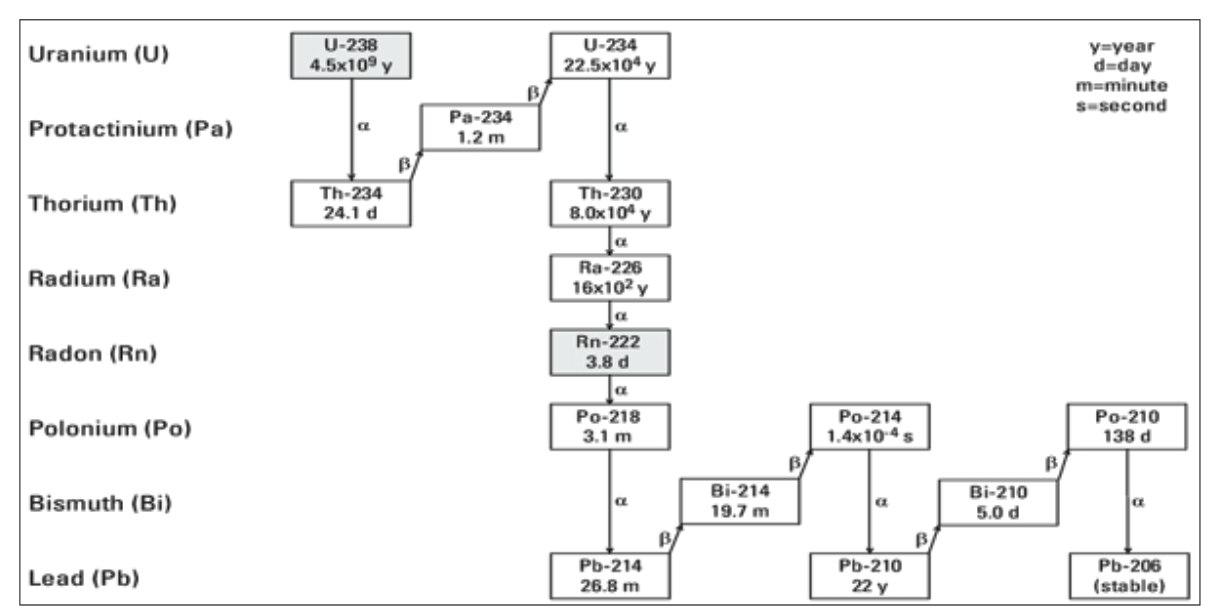
Radon-222 in Groundwater Systems Radon-222 (222Rn) is a naturally occurring radioactive noble gas produced during the radioactive decay of radium-226 (226Ra), which is itself a daughter product of the uranium-238 (238U) decay series [2,12,13]. Because uranium and radium occur naturally in many igneous, metamorphic, and sedimentary rocks, radon is chemically inert in gaseous is continuously generated within the Earth’s crust. Unlike its parent radionuclides radon is chemically inert and exists in gaseous form, allowing it to migrate through pores, fractures, and fissures before dissolving into groundwater or escaping into the atmosphere [2,3,7]. Radon possesses many physical characteristics that make it important in environmental radiation and health sciences. Radon is colorless, odorless, tasteless, and chemically nonreactive, making its presence in groundwater impossible to detect without specialized instrumentation [3,9]. The radionuclide has a halflife of approximately 3.82 days, which is sufficiently long to permit migration from geological materials such as uraniumbearing rocks into the groundwater systems before the occurrence of radioactive decay. Radon decays by the emission of alpha particle to produce a series of shortlived radioactive progeny, including Polonium-218 (218Po), Lead-214 (214Pb), Polonium-214 (214Po), and Bismuth-214 (214Bi), which contribute substantially to radiation dose following inhalation [3,7].The radioactive decay sequence relevant to groundwater contamination is represented in the uranium decay series, as shown in Figure 1.The concentration of radon in groundwater depends primarily on geological and hydrogeological factors, which varies based on the locations.
Rocks that are rich in uranium and radium such as granites, shale, phosphate rocks, pegmatites, and alaskites typically generate elevated levels of radon concentrations [23]. Weathering, dissolution, and fracturing of these rocks can facilitate the release of radon into surrounding groundwater aquifers [4,8]. Studies have shown that radon enters into the human body through two major exposure pathways:i. Ingestion of contaminated groundwater: this exposes the internal organs to alpha radiation [24].
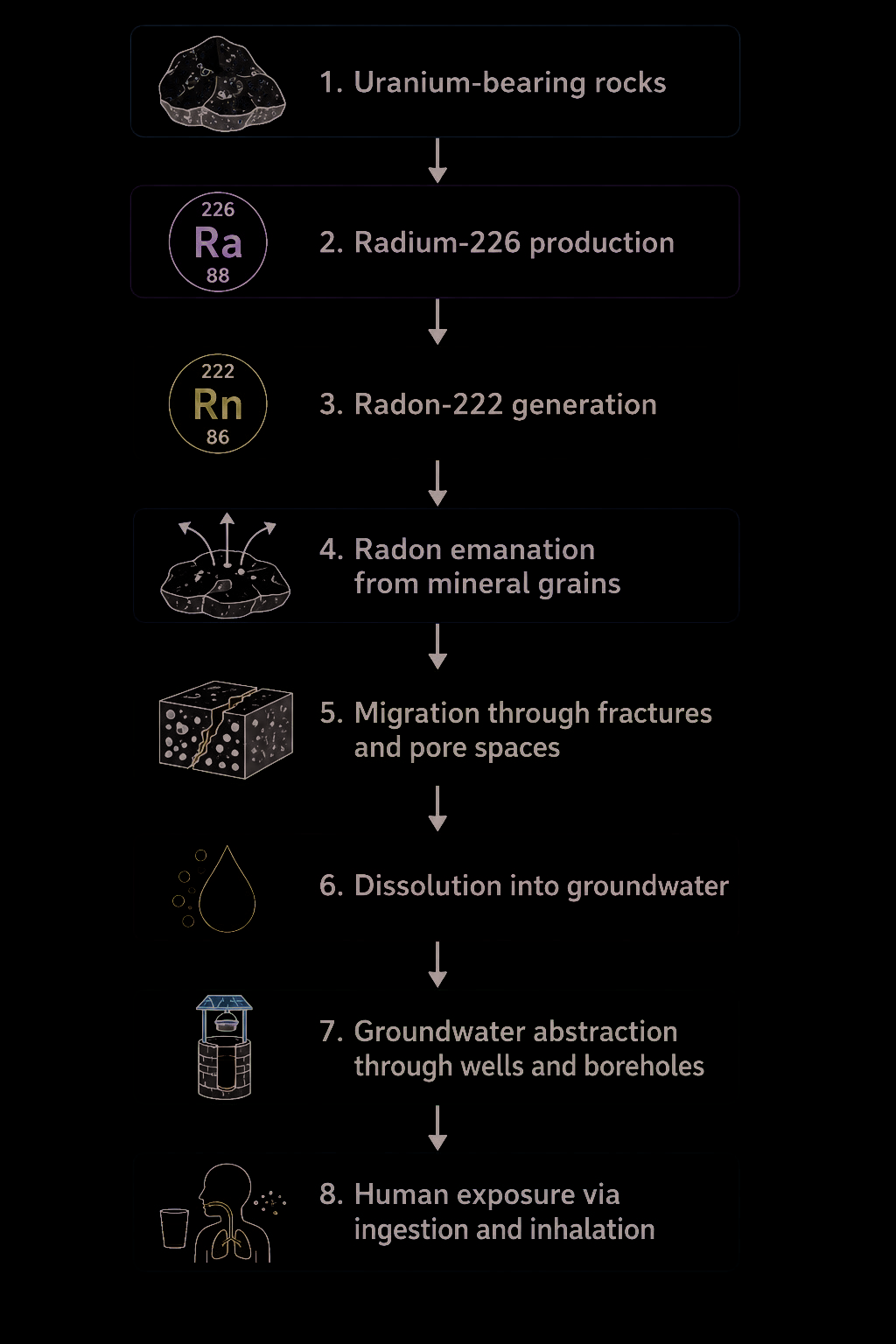
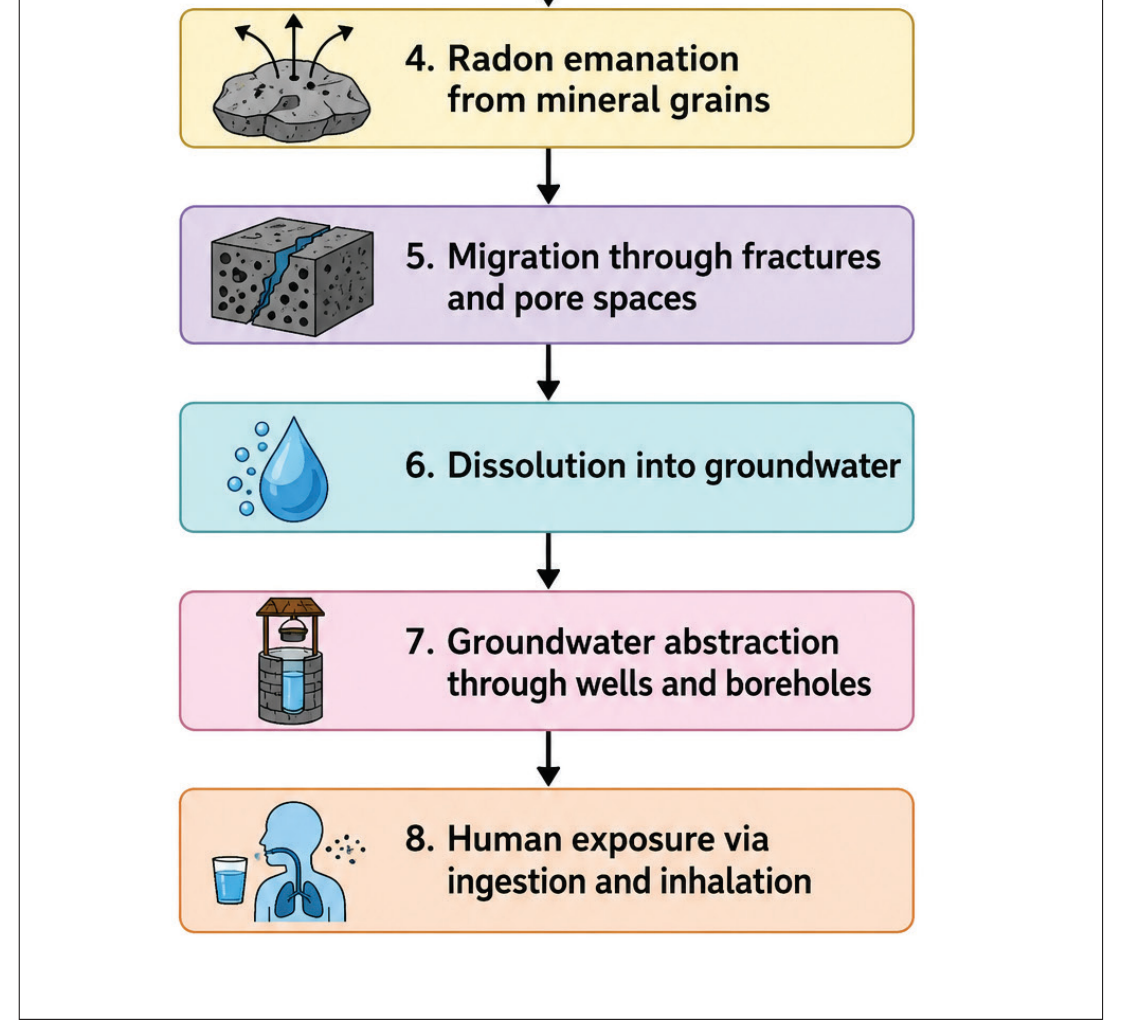
(1)ii. Inhalation of radon released from water into indoor air, especially during household activities such as bathing and cooking.Although inhalation contributes to the greater proportion of the total radon dose, ingestion of contaminated water remains an important source of internal exposure, especially in communities that rely heavily on untreated groundwater [25].The biological effects of radon exposure arise primarily from alpha (α) particle emissions during radioactive decay. The alpha particles possess high linear energy transfer (LET), enabling them to deposit substantial energy within biological tissues over short distances. This ionization process may damage cellular DNA, induce chromosomal abnormalities, and initiate carcinogenic processes [26,27]. Groundwater acquires dissolved radon primarily through prolonged contact uraniumbearing geological formations. As radium-226 decays, within mineral grains, newly formed radon atoms may escape into pore spaces through emanation. The released radon subsequently diffuses into groundwater occupying fractures, pores, and interconnected voids within aquifer materials. Consequently, groundwater generally contains considerably higher radon concentrations than surface water since subsurface environments provide greater opportunities for continuous water–rock interaction [4,5]. The concentration of radon in groundwater is controlled by a combination of geological and hydrogeological factors not only by uranium concentration. The most important controlling factors arei. Uranium and radium content of aquifer rocks;ii. Lithological composition (granites, pegmatites, gneisses, alaskites, sandstones, and shales); iii. Degree of rock weathering and fracture;iv. Aquifer porosity and permeability;v. Groundwater residence time;vi. Hydraulic conductivity;vii. Recharge characteristics; andviii. Temperature and groundwater geochemistry.Crystalline basement rocks generally produce higher radon concentrations than unconsolidated sedimentary formations as fractures provide extensive surfaces for groundwater–rock interactions. Similarly, prolonged groundwater residence time increases the opportunity for the accumulation of radon before abstraction [3,6]. These factors explain why communities may exhibit different radon concentrations in groundwater despite their geographical proximity. Such geological variability is particularly important in Nasarawa State, where basement rocks, granitic intrusions, pegmatites, alaskites, and active mining activities going on.
Radon Exposure Pathways
Human exposure to radon in groundwater occurs through two main pathways:i. Ingestion: individuals may ingest dissolved radon while consuming untreated groundwater from wells, boreholes, and springs. Following ingestion, a proportion of the dissolved radon irradiates the tissues of the stomach and other internal organs before being exhaled through the lungs. Although ingestion contributes to internal radiation dose, numerous international assessments indicate that its contribution is generally much smaller than that arising from inhalation following radon degasing [3,28]. The annual effective dose (AED) due to ingestion is commonly estimated using Eq. (2).AEDing =CRn × DCFing × W × 365 (2)AEDing = Annual effective ingestion dose (mSv y−1)CRn = Radon consentration in the drinking water (Bq L−1)DCFing= Ingestion dose conversion factor (mSv Bq−1)W=Daily water consumption (L day−1)365=Number of days per yearii. Inhalation: the dominant exposure pathway arises when dissolved radon escapes from groundwater into indoor air during showering, cooking, washing, and other domestic activities. Once released, radon and its shortlived progeny may be inhaled and deposited within the respiratory tract, where alphaparticle emissions irradiate bronchial epithelial cells. Extensive epidemiological evidence has established inhalation of radon as the second leading cause of lung cancer after cigarette smoking. Consequently, international radiation protection agencies regard inhalation as the principal health concern associated with radon in groundwater [2,3,7].
Health Effects of Radon in Groundwater
The biological effects of radon exposure arise primarily from alpha particle emissions during radioactive decay. The alpha particles possess high LET, producing dense ionization tracks, which is capable of causing DNA doublestrand breaks, chromosomal aberrations, genomic instability, and mutagenesis. Failure of cellular repair mechanisms may ultimately result in malignant transformation [7].Strong epidemiological evidence supports an association between longterm inhalation of radon and lung cancer. By contrast, evidence linking ingestion of radon in drinking water to stomach or gastrointestinal cancers remains inconsistent. The WHO therefore recommends that discussions of ingestionrelated cancers should be interpreted cautiously because current epidemiological evidence is less definitive than for lung cancer [1,3,26]. Accordingly, radon assessments in groundwater should evaluate both ingestion and inhalation pathways while recognizing that inhalation contributes the larger proportion of the total effective dose.
International Guideline Values of Radon
Many international organizations have established guidance for radon concentrations in drinking water and radiation exposure. The WHO recommends a reference level of 100 Bq L−1 for radon in drinking water where national standards have not been established, while recognizing that local geological conditions may require countryspecific management strategies [1]. The United States Environmental Protection Agency (USEPA) recommends an alternative maximum contamination level of approximately 11.1 Bq L−1 (300 pCi L−1) for public water supplies under its proposed radon regulations. For effective dose, the European Basic Safety Standards (EBSS) recommend that annual public exposure from planned practices should generally not exceed 0.1 mSv yr−1, while the International Commission on Radiological Protection (ICRP) recommends optimization of radiation protection based on the principles of justification, optimization, and dose limitation [7]. It should be noted that 1 Bq L−1 is equivalent to 1,000 Bq m−3.
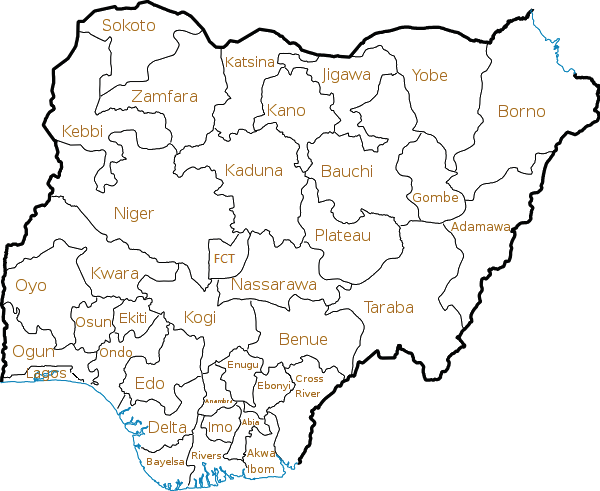
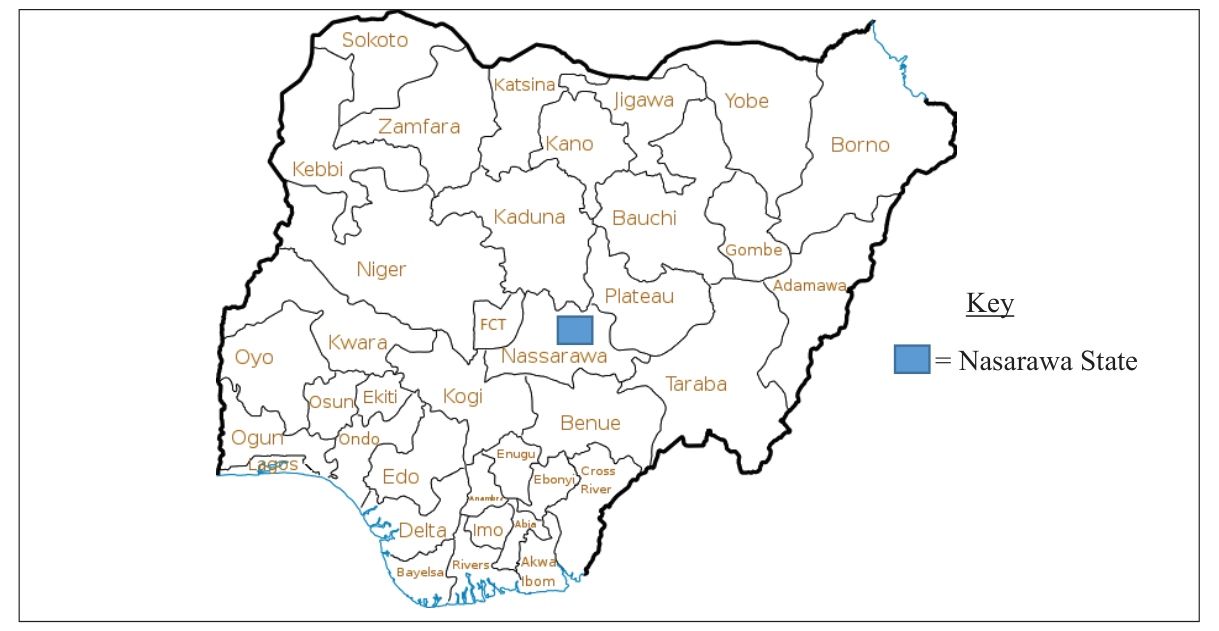
Geological Characteristics of Nasarawa State and their Influence of Radon Concentrations on Groundwater Nasarawa State (as shown in Fig. 2) is located within the North-Central region (Middle Benue Trough) of Nigeria between latitudes approximately 7°45′–9°25′N and longitudes 7°00′–9°37′E and is characterized by diverse lithological formations, including granites, sandstone, migmatites, pegmatites, clay formations, and is thought to also possess uraniumbearing rocks [17,29]. The state occupies a geologically diverse terrain comprising Precambrian Basement Complex rocks and Cretaceous sedimentary formations of the Middle Benue Trough. This geological complexity makes the State one of the most mineralized regions in Nigeria and partly explains the considerable spatial variability in naturally occurring radionuclides in groundwater and significantly influences the distribution and mobility of naturally occurring radionuclides. The Basement Complex consists predominantly of migmatite–gneiss complexes, granites, granodiorites, pegmatites, schists, quartzites, amphibolites, and alaskitic intrusions. Literatures have shown that these lithological units are frequently enriched in 238U, 232Th, 40P, and 222Rn, the naturally occurring radionuclides responsible for environmental radioactivity. In contrast, the sedimentary formations of the Middle Benue Trough comprise of sandstone, limestone, alluvial, shale, and siltstone deposits whose radionuclides contents are generally lower but may vary considerably depending on mineral composition and groundwater residence time [30,31]. Several areas in Nasarawa State are experiencing artisanal and commercial mining activities involving tin, columbite, tantalite, and uraniumassociated minerals [7]. Mining operations often increase rock fracturing and groundwater–rock interactions, thereby enhancing the release of radon into aquifers [18,32].The geological formations containing uraniumrich minerals can contribute substantially to elevated radon concentrations in groundwater with a typical example as observed in Wamba and Nasarawa LGAs. Sandyloam soils and fractured basement rocks further facilitate groundwater infiltration and radionuclide migration.The hydrological conditions of Nasarawa State, including aquifer depth, porosity, permeability, and groundwater resistance time, also influence radon accumulation within groundwater systems [28]. The LGAs of Nasarawa, including Wamba, Nasarawa, Awe, Akwanga, Keana, Kokona, and Lafia, overlie crystalline basement rocks that contain numerous faults, fractures, and weathered zones. These structural features provide favorable pathways for groundwater circulation and facilitate the continuous transfer of dissolved radon from uraniumbearing minerals into aquifer systems.
Geological Controls of Radon Concentrations on Groundwater Radon concentrations in groundwater are governed by the combined effects of geological, hydrogeological, and geochemical processes rather than by uranium abundance alone. The principal controlling factors are as follows: i. Uranium and radium concentrations within aquifer rocks;ii. Lithological composition;iii. Degree of weathering;iv. Fracture density;v. Fault systems;vi. Groundwater residence time; vii. Aquifer porosity and permeability;viii. Hydraulic conductivity;ix. Groundwater recharge characteristics; and x. Mineral dissolution rates.Among these variables, lithology is regarded as the primary control because uraniumbearing minerals such as uraninite, zircon, monazite, allanite, and xenotime continuously generate radon through radioactive decay. Granitic rocks generally contain significantly higher uranium concentrations than sedimentary rocks and therefore produce higher amount of radon concentrations in groundwater [4,6]. Fracture and fault systems further enhance radon mobility by increasing the contact area between groundwater and radioactive minerals. Consequently, fractured crystalline aquifers often exhibit substantially higher radon concentrations than unconsolidated sedimentary aquifers. Also, longer groundwater residence times allow radon to accumulate within groundwater before abstraction, whereas rapidly flowing groundwater may contain lower concentrations because of reduced contact time and radioactive decay during transport.
Influence of Mining Activities
Nasarawa State is internationally recognized for its abundant solid mineral resources, including tin, columbite, tantalite, cassiterite, barite, gemstones, leadzinc ores, and gold. Both artisanal and
commercial mining have expanded considerably over the past two decades, especially in Nasarawa, Keana, Awe, Akwanga, and Wamba LGAs.Mining activities influence radon concentrations in groundwater through several mechanisms. Rock blasting, excavation, drilling, and weathering expose fresh uraniumbearing mineral surfaces, thereby increasing radon emanation. Mine pits and abandoned excavations also create additional pathways for groundwater infiltration and groundwater–rock interactions. Furthermore, excavations increase fracture connectivity, permitting greater migration of dissolved radon into surrounding groundwater systems. Nevertheless, mining should not be regarded as the sole determinant of radon concentrations in groundwater. Several investigations have demonstrated that lithology and hydrogeological conditions generally exert stronger control than mining intensity alone [3,11]. Consequently, groundwater monitoring programs should integrate geological mapping, hydrogeological investigations, and mining history when interpreting groundwater radon distributions. One of the major observations emerging from recent groundwater investigations in Nasarawa State is the substantial difference in radon concentrations reported for Wamba LGA [16] and Nasarawa LGA [17]. Although both study areas occur within the same State, the measured radon concentrations in the groundwater differ considerably. The difference from the studied areas may be attributed to the following geological and hydrogeological factors: i. Variation in lithology influences uranium and uranium abundance within aquifer rocks: Areas dominated by granitic intrusions, pegmatites, and highly fractured basement rocks generally produce greater radon emanation than areas underlain by sedimentary formations. ii. Fracture density controls groundwater–rock interaction: Highly fractured aquifers provide larger surface areas for radon release and facilitate groundwater circulation through radioactive minerals.iii. Groundwater residence time differs among aquifers: Slowly moving groundwater remains in contact with radioactive minerals for longer periods, allowing greater radon accumulation before discharge. iv. Local mining activities modify natural groundwater flow systems by increasing rock fracturing and exposing fresh mineral surfaces. However, mining also cannot fully explain observed differences because groundwater chemistry, recharge rates, hydraulic conductivity, and aquifer thickness also contribute significantly. v. Finally, sampling methodology and seasonal variation may influence measured concentrations. Radon concentrations frequently fluctuate between dry and wet seasons because groundwater recharge, dilution, and hydraulic gradients alter groundwater circulation patterns. Consequently, comparison between studies may also consider seasonal sampling periods, analytical protocols, and quality assurance procedures. These observations demonstrate that groundwater radon occurrence is controlled by multiple interacting factors rather than a single geological process. Further investigations in Nasarawa State should therefore integrate geological mapping, hydrogeological characterization, mineralogical analysis, geographic information system (GIS), and probabilistic modeling to better explain the spatial distribution of groundwater radioactivity.
Conceptual Model of Radon Migration in Groundwater The conceptual process governing the occurrence of radon in groundwater may be summarized as shown in Figure 3. Understanding each stage of this process is essential for the interpretation of groundwater radon measurements, selecting representative sampling locations, designing groundwater monitoring programs, and developing effective radiological protection strategies.The geological evidence reviewed in this section indicates that radon concentration in groundwater of Nasarawa State are primarily controlled by lithology, structural geology, hydrogeological conditions, and the groundwater residence time. These factors provide a scientific explanation for the observed differences between Wamba LGA and Nasarawa LGA and reinforce the need for probabilistic risk assessment approaches that explicitly account for spatial variability and uncertainty.
Review of Groundwater Radon Studies: Evidence from Nigeria, Africa, and Other Parts of the World Radon concentrations in groundwater have been extensively investigated worldwide because of its potential contribution to human radiation exposure through both ingestion and inhalation pathways. Although radon is naturally produced by the radioactive decay of uraniumbearing minerals, its occurrence in groundwater exhibits remarkable spatial variability resulting from differences in geological formations, hydrogeological conditions, groundwater residence time, structural geology, and anthropogenic activities such as mining. Consequently, results obtained in one geographical location cannot be generalized to another without considering local geological conditions [2,3]. Recently, investigations have increasingly combined direct measurement of radon concentrations in groundwater with probabilistic risk assessment techniques, particularly MCS, to better quantify uncertainties associated with radiological risk estimation. Nevertheless, studies applying MCS to radon in groundwater remain relatively limited in Nasarawa State Nigeria and Africa at large, highlighting an important research gap.
Groundwater radon studies in Nigeria
Research on radon in groundwater in Nigeria has increased considerably over the past decade, largely because groundwater constitutes the principal source of potable water for many rural and urban communities. Agbalaba et al. [12] investigated naturally occurring radionuclides in drinking water sources from Delta State and reported considerable spatial variability in radionuclide concentrations attributable to geological differences. Their findings emphasized that local geology strongly influences groundwater radioactivity and recommended continuous monitoring in areas underlain by crystalline rocks. Studies conducted in southwestern Nigeria similarly demonstrated that groundwater abstracted from Basement Complex terrains generally contains higher concentrations of naturally occurring radionuclides than groundwater obtained from sedimentary formations [13,25,33]. These investigations concluded that lithology, groundwater residence time, and fracture systems are among the most important factors governing radionuclide occurrence.
More recently, Shuaibu et al. [14] assessed radon concentrations in groundwater in Bauchi State using RAD7 electronic radon detector. Their study estimated AEDs resulting from both ingestion and inhalation and reported that radon concentration in groundwater varied substantially among the sampled boreholes, reflecting differences in local geological conditions. Within Nasarawa State, groundwater radon investigations have expanded rapidly. Bako et al. [34] evaluated groundwater from Awe Local Government and demonstrated considerable spatial variation in radon concentrations and AED estimates. A companion investigation by Bako et al. [35] in Keana LGA similarly reported that groundwater radon concentrations were strongly influenced by the lithology variation, groundwater–rock interaction, and aquifer characteristics.Abubakar et al. [15] investigated radon concentration in groundwater from Kano State and likewise observed marked differences among boreholes and handdug wells. Their results further reinforced the importance of geological controls on groundwater radioactivity across different regions of Nigeria. Collectively, Nigerian investigations consistently demonstrate that radon occurrence in groundwater is highly sitespecific and primarily controlled by geological and hydrogeological factors. These studies therefore support the need for locationspecific groundwater monitoring rather than reliance on generalized national averages.
Previous studies in Nasarawa State
Among the published investigations from Nasarawa State, the studies conducted by Madaki et al. [16] and Madaki et al. [17] represent the first comprehensive application of deterministic and probabilistic approaches to groundwater radon risk assessment within the State. Madaki et al. [16] investigated groundwater obtained from Wamba LGA using RAD7 radon detector and estimated AEDs together with ELCR. The study demonstrated that the radon concentrations in the groundwater varied among the sampled locations but generally remained within the internationally accepted guideline values when expressed in consistent units. The investigation also highlighted the influence of local geology and recommended continued groundwater surveillance. Subsequently, Madaki et al. [17] extended this work to Nasarawa LGA of Nasarawa State by integrating MCS into groundwater radiological risk assessment. Rather than relying solely on deterministic point estimates, the study quantified uncertainty associated with radon concentrations in groundwater and exposure parameters through probabilistic simulation. This represented an important methodological advancement because environmental exposure parameters inherently exhibit natural variability. Although both investigations substantially improved understanding of groundwater radioactivity within Nasrarawa State, comparison of the two studies reveals considerable spatial variation in the concentrations of the radon in groundwater despite their geographical proximity. Such variability is most plausibly explained by differences in lithology, aquifer permeability, groundwater residence time, structural geology, fracture density, and miningrelated disturbance rather than only analytical methodology. Consequently, the present review expands beyond these two investigations by synthesizing evidence from other Nigerian, African, and international studies to provide a broader scientific context for interpreting radon occurrence in groundwater in Nasarawa State.
Studies from other African countries
In comparison with European and North America, relatively few African countries have conducted systematic groundwater radon investigations. Nevertheless, available studies consistently demonstrated that radon occurrence in groundwater is strongly influenced by geology.Investigations conducted in Egypt by El-Taher et al. [11] reported elevated groundwater radon concentrations in areas underlain by granitic rocks. Their study also estimated ingestion and inhalation doses using internationally accepted dose conversion coefficients and recommended routine groundwater monitoring in uraniumbearing geological environments. Studies from Ethiopia, South Africa, and Ghana have similarly demonstrated that groundwater obtained from fractured crystalline aquifers generally exhibits higher radon concentrations than groundwater derived from sedimentary formations. Although the reported concentrations vary considerably among countries, the common conclusion is that lithology and groundwater–rock interaction represents the dominant controls governing groundwater radon occurrence. These African investigations remain comparatively scarce, with little or no MCSs. This emphasizes the need for additional groundwater radon research across the continent, especially within mineralized regions of Africa.
International studies
Internationally, radon concentration in groundwater has been investigated extensively for more than four decades. Bonotto and Bueno [4] examined groundwater radioactivity in Brazil and demonstrated that groundwater radon concentrations increase significantly within granitic terrain enriched in uraniumbearing minerals. Their investigations identified lithology and groundwater residence time as the principal controlling factors. Nuccetelli et al. [5] reviewed groundwater radioactivity across Italy and concluded that geological variability represents that dominant source of spatial differences in groundwater radon concentrations. Their work emphasized the importance of continuous groundwater monitoring in areas underlain by crystalline rocks.Instigations in India [9], Thailand [10], Saudi Arabia [11], Greece [6], Finland [35], and Iran [36] similarly reported considerable geographical variability associated with lithology, uranium concentration, groundwater circulation, and fracture development.Despite differences in climate, geology, and hydrogeological conditions, these studies consistently identify several common controls governing groundwater radon occurrence as follows:i. Uranium and radium abundance within aquifers;ii. Hydraulic conductivity;iii. Groundwater residence time;iv. Degree of rock fracturing;v. Aquifer porosity and permeability; andvi. Seasonal groundwater recharge.This remarkable consistency across continents suggests that the geological controls identified in Nasarawa State, North-Central Nigeria, conform to wellestablished international observations.
Critical comparison of previous studies
Although previous investigations have substantially improved understanding of radon occurrence in groundwater, there are still many important limitations:i. Most published studies rely exclusively on deterministic risk assessment methods that employ singlepoint estimates for radon concentration in groundwater, water consumption, elemental concentrations, and exposure duration. Such approaches neglect natural variability and uncertainty associated with environmental exposure and health risk. ii. Relatively few investigations incorporate uncertainty analysis through MCS. Consequently, confidence intervals, percentile estimates, and sensitivity analyses are often unavailable, limiting interpretations of radiological risk. iii. Many studies emphasize measurement of groundwater radon concentration while providing relatively limited discussion of the geological and hydrogeological mechanisms responsible for the observed spatial variability.iv. Finally, few review articles critically synthesize evidence across different geographic regions. Most of the publications presented individual case studies without integrating findings into a broader conceptual framework. This review addresses these limitations by combining evidence from Nigeria, Africa, and the international literature while emphasizing geological interpretation, probabilistic risk assessment, uncertainty analysis, and comparison of independent investigations. This broader synthesis provides a better scientific basis for understanding radon occurrence in groundwater and the associated radiological risk in Nasarawa State of Nigeria than would be obtained from isolated studies alone.
Monte Carlo Simulation of Radiological Risk Assessment in Groundwater Environmental radiological risk assessment has traditionally relied on deterministic methods, whereby singlepoint values are assigned to exposure parameters such as radionuclide concentration, daily water consumption, exposure duration, body weight, and dose conversion coefficients. Although deterministic methods are computationally simple and widely accepted, they fail to account for the inherent uncertainty and natural variability associated with the environmental systems. Consequently, risk estimates obtained using deterministic approaches may either underestimate or overestimate the true health risk because they do not adequately represent the range of possible exposure conditions [18,20,27].
MCS is the probabilistic modeling technique developed to overcome these limitations. Originally introduced by Metropolis and Ulam [19], the method estimates uncertainty by repeatedly sampling random values from predefined probability distributions assigned to uncertain model parameters. Instead of a single deterministic output, MCS generates a distribution of possible outcome, thereby providing a more realistic representation of environmental and health risk.In groundwater radiological assessment, MCS has become an increasingly important analytical tool because radon concentrations in groundwater, water consumption rates, exposure durations, and other model inputs vary naturally among individuals and locations. Incorporating these uncertainties into the assessment would provide a more comprehensive estimate of the population risk than deterministic calculations alone.
Principle of Monte Carlo simulation
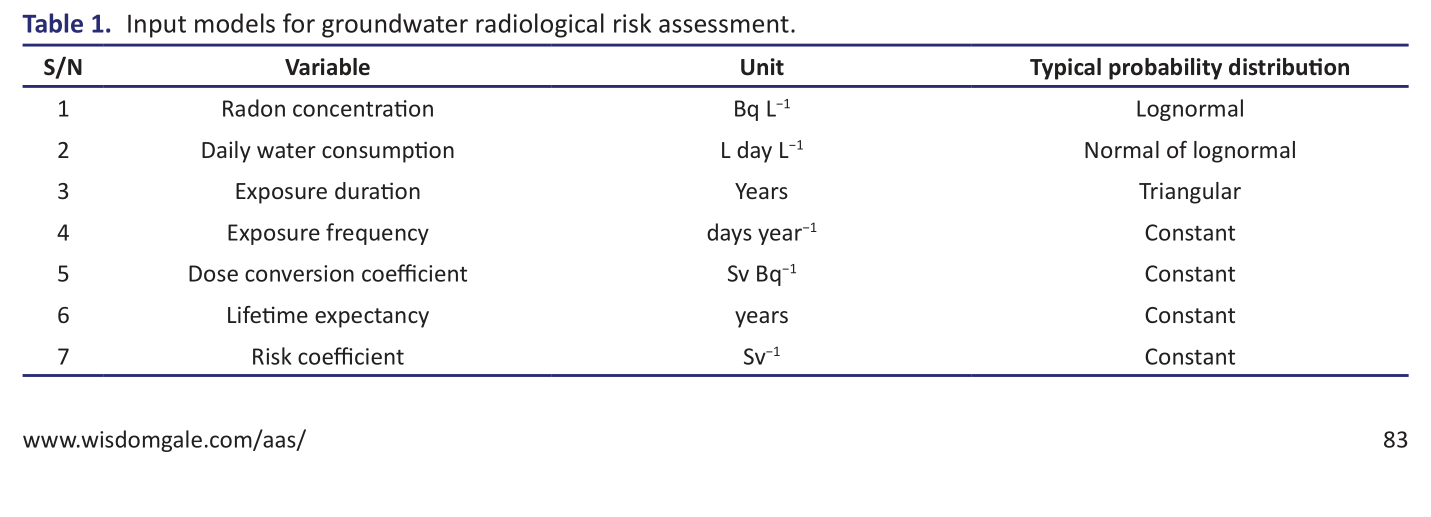
MCS is based on repeated random sampling from probability distributions assigned to uncertain input variables. During each simulation cycle, a random value is selected for each model parameter according to its specified probability distribution. These sampled values are then substituted into the risk equation to calculate an individual realization of the AEDs or ELCR. The process is repeated thousands of times or iterations until the resulting output distribution becomes stable. The collection of simulated outcomes is then analyzed statistically to estimate the following:i. Mean valueii. Median iii. Standard deviation iv. Minimum and maximum valuesv. Confidence intervalsvi. Selected percentiles (e.g., 5th, 50th, and 95th)vii. Probability of exceeding regulatory thresholds.Unlike deterministic methods, which provide only a single estimate, MCS produces the full probability distribution of potential health risks, thereby allowing decisionmaking to explicitly quantify uncertainty.
Simulation workflow
The MCS workflow adopted for radon risk assessment consists of the following sequential steps: i. Experimental measurement of radon concentrations in groundwater using RAD7 electronic radon detector;ii. Statistical evaluation of the measured radon concentrations in the groundwater;iii. Selection of appropriate probability distributions for the uncertain input variables;iv. Assignment of parameter ranges based on measured data and published literature;v. Random sampling from each probability distribution during every simulation iteration;vi. Calculation of AED for ingestion and inhalation pathways;vii. Estimation of ELCR;viii. Repetition of the simulation until convergence is achieved;ix. Statistical analysis of simulation outputs; and x. Sensitivity analysis to identify the most influential variables affecting predicted health risk.This workflow provides a transparent framework for the uncertainty propagation throughout the risk assessment process.
Input variables and probability distributions
Several exposure variables contribute uncertainty to groundwater radiological risk assessment. The typical model inputs include the following (Table 1):Radon concentration in groundwater is commonly represented using a lognormal distribution because environmental radioactivity data frequently exhibit positive skewness. Water consumption may be represented by either normal or lognormal distribution depending on the local survey data, whereas exposure duration is often modeled using a triangular distribution defined by minimum, most likely, and maximum values.
Whenever possible, probability distributions should be selected after statistical goodnessoffit testing rather than arbitrary assignment. Appropriate tests include the Kolmogorov–Smirnov, Anderson–Darling, and chisquare goodnessoffit tests.
Number of simulation iterations
The accuracy of MCS depends partly on the number of simulation iterations performed. Small numbers of iterations may produce unstable estimates, whereas larger simulations improve numerical precision. In environmental and health radiological studies, 10,000 and 100,000 simulation iterations are generally considered adequate to achieve stable estimates of AED and ELCR [20].
Uncertainty propagation
Risk assessment estimates are influenced by multiple sources of uncertainty, including:i. Spatial variability in groundwater radon concentration;ii. Seasonal variation;iii. Measurement uncertainty associated with the RAD7 radon detector;iv. Difference in individual water consumption;v. Variability in exposure duration;vi. Dose conversion coefficient uncertainty; and vii. Statistical sampling uncertainty.MCS technique propagates these uncertainties throughout the mathematical model by repeatedly sampling from their respective probability distributions. Consequently, uncertainty associated with each input variable contributes directly to the overall uncertainty in the predicted health risk.This represents a major advantage over the deterministic calculations, which assume that all model parameters are precisely known.
Sensitivity analysis
Sensitivity analysis is an essential component of probabilistic risk assessment as it identifies the variables that contributes mostly strongly to uncertainty in the model outputs.The sensitivity analysis may be performed using the following:i. Rank correlation coefficients;ii. Standardized regression coefficients;iii. Partial correlation coefficients; and iv. Tornado diagrams.Previous groundwater radiological studies consistently demonstrate that radon concentration in groundwater is the dominant contributor to uncertainty in AED and ELCR, followed by daily water consumption and exposure duration. Parameters such as exposure frequency and lifetime expectancy generally contribute relatively little to the total uncertainty because they are commonly treated as fixed values.
Model validation and convergence
The validation is necessary to demonstrate that the MCS technique produces stable and reliable results. Convergence model may be evaluated by monitoring the following:i. Running mean;ii. Running variance;iii. Stability of percentile estimates; and iv. Confidence interval width.The convergence is considered satisfactory when these statistics stabilize despite any further increases in simulation iterations.The model validation may also be archieved through comparison of deterministic and probabilistic estimates or by comparison with previously published investigations conducted under similar geological conditions.
Advantages and limitations of Monte Carlo simulation The main principal advantages of MCS include the following:i. Explicit treatment of uncertainty;ii. Improved representation of environmental variability;iii. Estimation of confidence intervals;iv. Identification of influential exposure variables;v. More realistic assessment of population risk; and vi. Support for evidencebased decisionmaking.However, many limitations should also be recognized. Simulation accuracy depends strongly on the quality of the measured groundwater data and the appropriateness of the selected probability distributions. Poorquality field measurements, incorrect distribution fitting, or unrealistic assumptions may produce misleading results despite the sophisticated computational techniques. Furthermore, MCS cannot compensate for inadequate sampling design or insufficient geological characteristics.Accordingly, probabilistic modeling should complement, rather than replace comprehensive field investigation.
Implications for groundwater risk assessment in Nasarawa State Application of MCS to groundwater radon assessment in Nasarawa State represents a significant methodological advancement because it allows uncertainty associated with geological variability, groundwater characteristics, and human exposure to be incorporated directly into health risk estimation.Further investigations should integrate MCS with GIS, geological mapping, hydrogeological characterization, and seasonal groundwater monitoring to produce spatially explicit probabilistic risk maps. Such integrated approaches would provide more reliable information for groundwater resource management, environmental monitoring, and public health protection than deterministic assessments alone. Overall, MCS offers a robust framework for evaluating groundwater radiological risk under conditions of uncertainty and should be considered an essential component of future groundwater radon investigations in Nigeria.
Variability of radon concentrations in groundwater One of the most significant observations emerging from groundwater investigations in Nasarawa State is the marked variation in radon concentrations between different LGAs. Although Wamba and Nasarawa LGAs are located within the same state, but the radon concentrations in the groundwater from the two LGAs differ considerably [16,17].This variability is expected because radon occurrence in groundwater is controlled primarily by local geological and hydrogeological conditions rather than geographical proximity alone. Several international investigations have similarly demonstrated that radon concentrations may vary substantially over relatively short distances because uraniumbearing minerals are distributed heterogeneously within aquifer rocks [1,4,5]. Consequently, comparisons between groundwater studies should always consider lithology, structural geology, groundwater residence time, sampling season, and abstraction characteristics rather than relying solely on concentration values.
Geological controls on radon occurrence
The geology of Nasarawa State provides a convincing explanation for the observed differences in groundwater radon concentrations. Much of the state is underlain by Precambrian Basement Complex rocks, including granites, migmatites, pegmatites, schists, and alaskitic intrusions that commonly contain uraniumbearing accessory minerals such as zircon, monazite, allanite, and uranite. Continuous radioactive decay of 238U generates 226Ra, which subsequently produces 222Rn. However, uranium concentration alone cannot adequately explain radon occurrence in groundwater. Fracture density, fault systems, weathering intensity, groundwater residence time, hydraulic conductivity, porosity, permeability, and groundwater–rock interaction collectively determine the amount of radon that ultimately dissolves into the groundwater [6,11,38]. Highly fractured crystalline aquifers generally produce significantly higher groundwater radon concentrations than sedimentary aquifers because fractures increase both groundwater circulation and the surface area available for radon emanation. These geological controls explain why neighboring communities may exhibit markedly groundwater radon concentrations despite similar climatic conditions.
Influence of aquifer characteristics
Aquifer characteristics represent another major determinant of radon occurrence in groundwater. Slowmoving groundwater remains in contact with radioactive minerals for longer periods, thereby allowing greater accumulation of dissolved radon before abstraction. Conversely, rapidly flowing groundwater may contain lower radon concentrations because reduced residence time limits radon accumulation and radioactive decay continues during the groundwater transport.Groundwater recharge also influences dissolved radon concentrations. During the rainy season, dilution resulting from increased recharge may reduce radon concentration in groundwater, whereas reduced recharge during the dry season may permit greater radon accumulation. Seasonal groundwater monitoring is therefore essential for obtaining representative estimates of annual radon concentration in groundwater. Future investigations should incorporate hydrogeological parameters such as the groundwater flow velocity, hydraulic gradient, transmissivity, and recharge characteristics to improve understanding of groundwater radon dynamics in Nasarawa State.
Review of Studies Conducted in Nasarawa State
Study in Wamba local government area
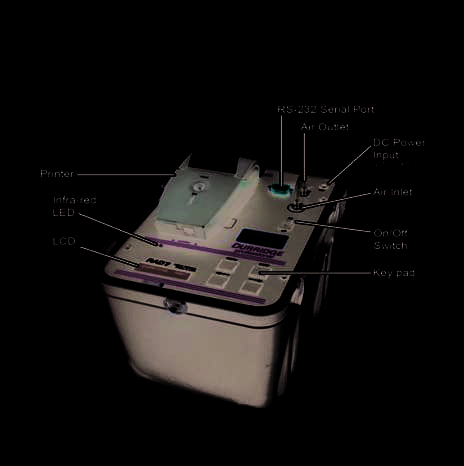
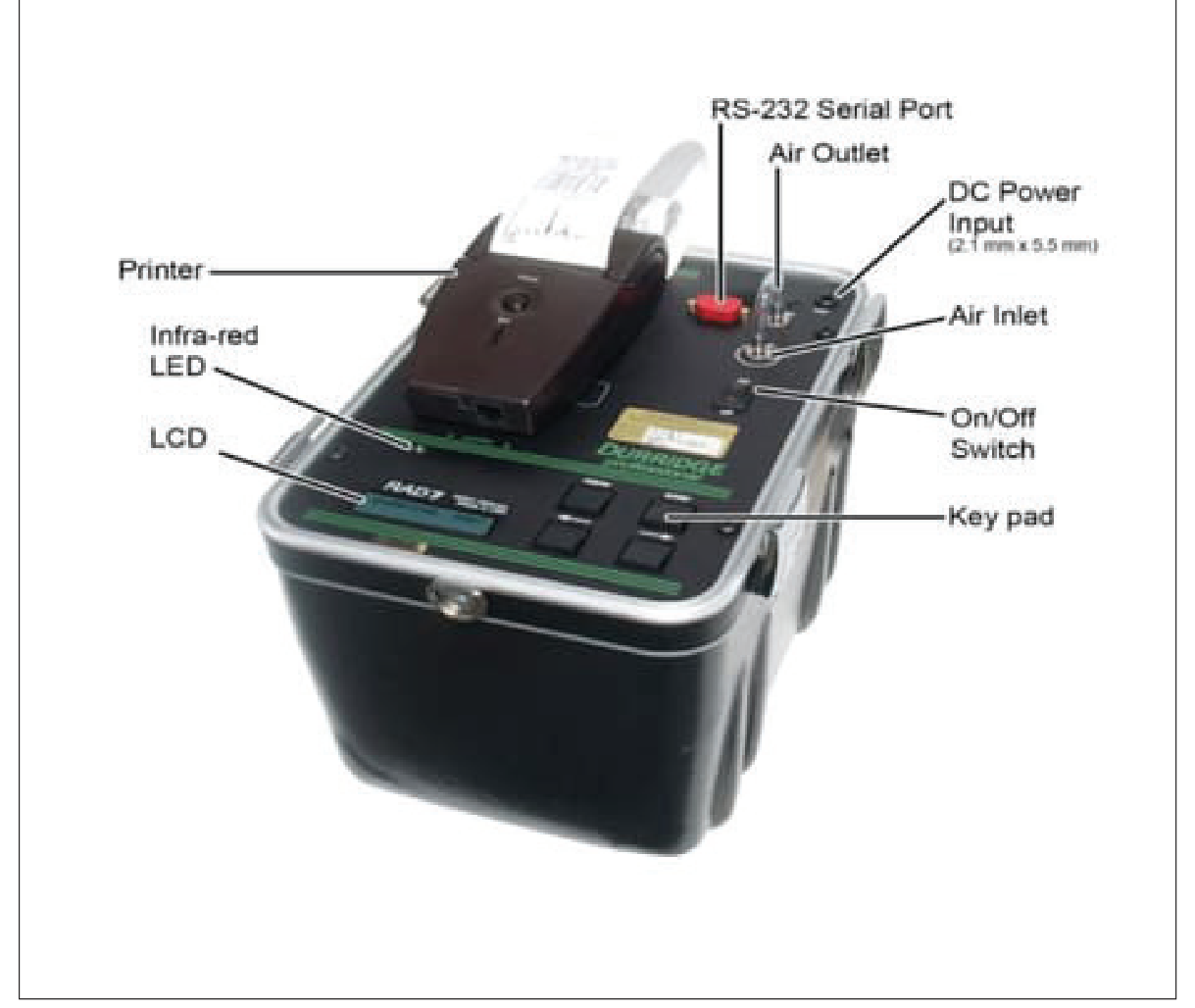
Madaki et al. [16] conducted one of the earliest comprehensive investigations on radon concentrations in groundwater and the associated ELCR in Wamba LGA of Nasarawa State. The study analyzed ten (10) groundwater samples from randomly selected groundwater sources comprising of four (4) boreholes and six (6) wells using the RAD7 electronic radon detector (Fig. 4). The measured radon concentrations ranged from 0.146 to 0.474 Bq/L with an average concentrations of 0.3134 Bq/L [16]. These values were below the USEPA recommended limits of 11.1 Bq/L and significantly lower than the WHO guideline values. The annual effective ingestion dose (AEDing) was calculated using Eq. (3).AEDing=CRn × Ding × Dw × T (3)where CRn represents radon concentration,Ding ris the ingestion dose conversion factor,Dw is the daily water consumption, T is the exposure duration. The calculated annual effective ingestion dose (AEDing) values ranged from 1.10 × 10⁻⁶ to 3.50 × 10⁻⁶ Sv/yr, while ELCR values ranged from 4.54 × 10⁻⁶ to 1.44 × 10⁻⁵ [16]. These values remained significantly below the United Nations Scientific Committee on the Effects of Atomic Radiation (UNSCEAR) maximum contamination threshold of 0.003875. MCS was performed using Oracle Crystal Ball software validated the results at 10% and 90% probability intervals. At 10% probability, the highest ELCR value was observed at Events Center with 1.26 × 10⁻⁵, while the lowest occurred at Angwan Dalatu with 1.05 × 10⁻⁶. Similarly, at 90% probability, the highest and lowest ELCR values remained within internationally acceptable safety limits [16]. The authors concluded that groundwater sources within Wamba did not pose significant radiological health hazards and therefore required no urgent intervention from a radiological perspective.
Study in Nasarawa local government area
A more recent investigation still conducted by Madaki et al. [17] assessed radon concentrations in groundwater and the associated health risks in Nasarawa LGA of Nasarawa State. The study focused on communities near areas characterized by extensive mining activities with uraniumbearing geological formations. The measured radon concentrations ranged from ~1,870–2,810 Bq/m3 with a mean concentration exceeding internationally recommended threshold [17]. The elevated concentrations were attributed to uraniumrich geological formations such as granitic intrusions, alaskites, sandstone formations, and miningdisturbed environments.
The corresponding AEDs due to ingestion and inhalation exceeded WHO and EU permissible limits of 0.1 mSv/yr. The calculated ELCR values were substantially higher than the UNSCEAR recommended threshold of 0.003875.MCS results demonstrated that all simulated ELCR values exceeded the international safety standards. The simulation further provided estimates of mean risk, standard deviation, and percentile risk probabilities, including the 5th, 50th, and 95th percentiles [17]. The authors emphasized that probabilistic simulation approaches provide superior characterization of uncertainty compared to the conventional deterministic methods. The study therefore recommended urgent implantation of radiological protection measures and groundwater remediation strategies within the affected communities.
Comparison with Nigerian studies
The findings reported from Wamba and Nasarawa LGAs of Nasarawa State are generally consistent with previous Nigerian investigations demonstrating considerable spatial variability in groundwater radioactivity. Studies conducted in Delta State [12], Bauchi [14], Kano [15], Awe LGA [34], and Keana LGA [35] similarly reported substantial differences among the groundwater sources attributable primarily to geological variation. These studies collectively demonstrated that radon occurrence in groundwater in Nigeria cannot be adequately described using national average concentrations because groundwater chemistry and geological characteristics differ considerably among regions.
Comparison with international studies
The observations from Nasarawa and Wamba LGAs of Nasarawa State are also consistent with the international groundwater radon investigations. Studies conducted in Brazil [4], Italy [5], India [9], Thailand [10], Saudi Arabia [11], Finland [36], and Iran [37] all concluded that radon concentrations in groundwater are governed principally by geological and hydrogeological conditions . Despite differences in climate and geology, these investigations consistently identified similar controlling factors such as uraniumbearing lithology, fracture density, groundwater residence time, groundwater–rock interaction, hydraulic conductivity, and aquifer permeability.
The consistency of these findings strengthens confidence that the geological mechanisms proposed for Nasarawa State are scientifically plausible and consistent with international experience.
Evaluation of Monte Carlo simulation
A major contribution of recent groundwater investigations in Nasarawa State is the application of MCS to radiological risk assessment. Unlike deterministic approaches that produce a single estimate of AED or ELCR, MCS quantifies uncertainty by repeatedly sampling from probability distributions assigned to uncertain model parameters [19,20]. Consequently, probabilistic methods provide confidence intervals, percentile estimates, and uncertainty ranges that better represent natural environmental variability. Nevertheless, MCS should not be regarded as a substitute for highquality field measurements. The reliability of simulation outputs depends directly on the quality of groundwater sampling, analytical measurements, probability distribution fitting, and model assumptions. Poorquality input data inevitably produce unreliable simulation results. Future groundwater investigations should therefore report the following:i. The probability distributions assigned to each variable;ii. Goodnessoffit statisticsiii. The number of simulation iterations;iv. Convergence analysis results; andv. Model validation procedures.Providing these details will substantially improve transparency and reproducibility.
Limitations of RAD7 methodology RAD7 electronic radon detector is widely regarded as one of the most reliable instruments for the determination of radon concentration in groundwater because it provides rapid measurements with relatively high sensitivity. However, several methodological limitations should be recognized. Radon losses may occur during groundwater collection, transportation, and sample transfer if appropriate sampling protocols are not followed. Air bubbles introduced during sampling may permit radon degassing before analysis, resulting in underestimation of radon concentrations in the groundwater. Instrument calibration, humidity correction, background radiation, and counting statistics may also influence measurement accuracy. Consequently, quality assurance procedures including instrument calibration, duplicate analyses, blank measurements, and standardized sampling techniques should always accompany groundwater radon investigations.
Monte Carlo simulation in radiological risk assessments MCS is a probabilistic computational technique widely used in environmental risk analysis to account for uncertainty and variability in exposure parameters. Unlike deterministic approaches that utilize fixed parameter values, MCS assigns probability distributions to uncertain variables and performs repeated random sampling to generate risk distributions. The reviewed studies utilized Oracle Crystal Ball software for MCS of ELCR associated with the radoncontaminated groundwater. The probability of cancer induction from exposure to 222Rn by the inhabitants was evaluated using the ELCR. This model presented the probability of an individual developing cancer in 75 years for adults due to exposure to the 222Rn in the groundwater. The ELCR calculation was carried out using Eqs. (4) and (5).DTotal(mSv/yr)=AEDing + AEDinh (4)where DTotal is the sum of the annual radon doses through ingestion and inhalation.ELCR=DTotal × DL × RF (5)DL is the assumed life expectancy or duration of an average inhabitant (75 years), and RF is the stochastic risk factor given as 0.055 Sv−1.A computer installed with Oracle Crystal Ball version 11.1.2.4.850 software was used in this study to perform the MCSs [11,17,41]. MCS enabled estimation of the following:a) Mean cancer risk;b) Standard deviation;c) Minimum and maximum probable risks;d) Confidence interval; ande) Percentile probabilities.The major advantages of MCS lie in its ability to quantify uncertainty and improve the reliability of radiological risks predictions. This makes the approach particularly valuable for health assessments and policymaking.
Comparison between deterministic and probabilistic (Monte Carlo) approaches Deterministic methods of radiological risk assessment rely on fixed average parameter values and provide singlepoint estimates of exposure risk. While simple and computationally efficient, deterministic methods fail to adequately represent environmental variability and uncertainty [18,38]. MCS, by contrast, incorporates parameter uncertainty and stochastic variability into the risk assessment process. The reviewed studies demonstrated that simulated ELCR values provide confidence intervals and probability distributions. In Nasarawa LGA, the probabilistic simulation revealed higher upperbound risk estimates than deterministic calculations, indicating the potential for underestimation of radiological hazards using conventional approaches alone [17]. Consequently, MCS offers a more comprehensive framework for radiological risk assessment and health decisionmaking.
Health implications
The elevated radon concentrations in groundwater samples in Nasarawa LGA of Nasarawa State (which is just a small part of Nasarawa State) present important public health concerns. Chronic exposure to radoncontaminated groundwater may increase the risks of;a) Lung cancer;b) Stomach cancer;c) Gastrointestinal malignancies;d) Cellular DNA damage; ande) Genetic mutations.The communities depending exclusively on untreated groundwater are especially vulnerable. The significantly elevated ELCR values reported in Nasarawaa LGA indicate the necessity for immediate intervention and longterm environmental monitoring.The potential mitigation strategies should include the following:a) Aeration systems for radon removal.b) Granularactivated carbon filtration.c) Public awareness campaigns.d) Regular groundwater monitoring.e) Development of groundwater radiological regulations.f) Alternative safe water supply schemes.
Public health implications
The reviewed studies demonstrated that groundwater radon should remain an important component of environmental health surveillance in mineralized regions of Nigeria. The current evidence strongly and sufficiently supports the association between longterm inhalation of radon and increased lung cancer risk.
However, evidence linking the ingestion of radon in drinking water to stomach or other gastrointestinal cancers remains less conclusive. Therefore, interpretations of ingestionrelated health effects should remain cautious and consistent with the current WHO and ICRP guidance [41–45]. Routine groundwater monitoring should therefore emphasize both exposure pathways while avoiding overstatement of ingestionrelated cancer risks.
Limitations of the present review
Although this review substantially expands the available literature by incorporating Nigerian, African, and International investigations, but the following limitations are acknowledged:i. Groundwater radon data remain unavailable for many regions of Nigeria, limiting nationwide comparison.ii. Relatively few African studies have incorporated probabilistic methods such as MCS.iii. Variations in analytical methodology, sampling season, reporting units, and dose conversion factors complicate direct comparison among published investigations.Future studies should adopt standardized sampling protocols, consistent reporting units (preferably Bq L−1 with Bq m−3 equivalents where necessary), harmonized risk assessment methodologies, and transparent reporting of probabilistic model assumptions to facilitate comparison across different geographical regions. Overall, the evidence reviewed indicates that radon occurrence in groundwater in Nasarawa State reflects the combined influence of geology, hydrogeology, and environmental variability. Integrating detailed geological characterization with probabilistic risk assessment provides a more scientifically robust framework for evaluating groundwater radiological health risks than deterministic approaches alone.
Conclusion and Future Research Directions
Conclusion
This review critically synthesized the current knowledge on radon-222 occurrence in groundwater and the application of MCS in radiological health risk assessment and Medical Physics, with particular emphasis on Nasarawa State, North-Central Nigeria. The present review integrated evidence from Nigerian, African, and international studies to provide a broader scientific perspective on groundwater radon occurrence and the associated health risks.The reviewed literature demonstrated that radon concentrations in groundwater exhibit substantial spatial variability due to differences in lithology, uranium and radium abundance, structural geology, groundwater residence time, fracture density, hydraulic conductivity, aquifer permeability, and groundwater–rock interactions. Consequently, geographic proximity alone cannot be used to explain differences in groundwater radon concentrations, as demonstrated by the contrasting observations reported for Wamba and Nasarawa LGAs of Nasarawa State. Instead, groundwater radon occurrence reflects the combined influence of geological, hydrogeological, and environmental processes operating within individual aquifer systems. Comparison with the previous investigations concluded in the other parts of Nigeria, including Delta, Bauchi, Kano, Awe, and Keana, together with studies from Brazil, India, Italy, Finland, Thailand, Saudi Arabia, Iran, and other countries, indicates remarkable consistency regarding the principal controls on radon occurrence in groundwater. Across these studies, uraniumbearing crystalline rocks fracture development, groundwater–rock interactions, and groundwater residence time consistently emerged as the dominant factors controlling groundwater radioactivity. These observations strengthen the confidence in the geological interpretations proposed for Nasarawa State and demonstrate that the findings are consistent with the established international knowledge. The review further demonstrates that the MCS provides a significant improvement over just the deterministic approaches to groundwater radiological risk assessments. By the explicit incorporation of the uncertainty associated with radon concentrations in groundwater, exposure parameters, and model assumptions, MCS generates probability distributions of AED and ELCR rather than singlepoint estimates. This probabilistic framework provides a more realistic representation of environmental variability and supports evidencebased decisionmaking for groundwater management and radiation protection.Notwithstanding these advantages, the review also highlights several methodological limitations that should be considered in interpreting groundwater radon investigations. The reliability of risk estimates depends fundamentally on representative groundwater sampling, rigorous quality assurance procedures, appropriate selection of the probability distributions, transparent reporting of model assumptions, and careful validation of simulation results. Similarly, although the RAD7 electronic radon detector is widely used and accepted for groundwater radon measurements, strict adherence to standardized sampling protocols is essential to minimize radon loss during sample collection, transportation, and analysis. From a public perspective, the available, evidence continues to support inhalation of radon released from domestic water use as the principal exposure pathway associated with increased lung cancer risk. Conversely, although ingestion of radon in drinking water contributes to internal radiation dose, but current epidemiological evidence linking ingested radon to stomach or other gastrointestinal cancers remains comparatively limited. Consequently, health risk discussions should distinguish clearly between the wellestablished evidence for inhalationrelated lung cancer and the less certain evidence regarding ingestionrelated malignancies, consistent with current recommendations of the WHO and ICRP.
Future research directions
Despite significant advances in groundwater radon research, many important knowledge gaps remain and should be addressed by the future investigations. Therefore, the followings are recommended:i. Systematic groundwater radon surveys should be extended to all the LGAs of Nasarawa State and other parts of Nigeria to establish comprehensive baseline datasets for groundwater radioactivity. Such investigations may incorporate seasonal sampling campaigns to evaluate temporal variability associated with rainfall, groundwater recharge, and hydrogeological conditions;ii. Future studies should integrate geological mapping, hydrogeological characterization, mineralogical analysis, and GIS to produce highresolution spatial models of groundwater radon distributions. Coupling field measurements with GISbased spatial interpolation would facilitate identification of radonprone areas and support evidencebased groundwater management. iii. Greater emphasis should be placed on probabilistic risk assessment using MCS. Future publications should explicitly report the number of simulation iterations, probability distributions assigned to input variables, goodnessoffit statistics, convergence diagnostics, sensitivity analysis results, uncertainty propagation procedures, and model validation techniques to enhance transparency and reproducibility. iv. Comparative evaluation of groundwater radon measurement techniques, including RAD7, liquid scintillation counting, alpha spectrometry, and other established analytical methods, would improve the understanding of methodological uncertainties and facilitate the development of standardized national monitoring protocols. v. Future investigations should evaluate the influence of groundwater chemistry, dissolved uranium, radium-226, aquifer mineralogy, and groundwater age on radon occurrence to improve understanding of the geochemical processes governing radionuclide mobility.vi. Integrating machine learning techniques into radiological prediction models.vii. Multidisciplinary collaboration among Physicists, Geologists, Hydrogeologists, Environmental Scientists, Public Health Specialists, and the Regulatory Agencies is required to establish National Guidelines for groundwater radon monitoring, develop risk communication strategies, and strengthen environmental radiation protection programmes in Nigeria. viii. Continued research integrating highquality field measurements, advanced probabilistic modelling, and comprehensive geological characterization is recommended, which will improve understanding of groundwater radon occurrence and contributes to the sustainable management of groundwater resources in Nigeria and other regions underlain by uraniumbearing geological formations.
Funding
The authors appreciate TET Fund for research support.
References1. World Health Organization (WHO). Guidelines for drinkingwater quality. 4th edition, incorporating the first and second addenda. World Health Organization, Geneva, 2022.2. United Nations Scientific Committee on the Effects of Atomic Radiation. Sources and effects of ionizing radiation, UNSCEAR 2000 report, Vol 1, United Nations, New York, pp 105–8, 2000.3. World Health Organization (WHO). WHO handbook on indoor radon: a public health perspective. World Health Organization, Geneva, 2009.4. Bonotto DM, Bueno TO. Natural radioactivity in groundwater and radiological implications. J Environ Radioact. 2008; 99:1192–201.5. Nuccetalli C, Rusconi R, Forte M. Radioactivity in drinking water: regulations, monitoring results and radiation protection issues. Ann Ist Super Sanita 2012; 48:362–73. doi:10.4415/ANN_12_04_04.6. Vogiannis EG, Nikolopoulos D. Radon sources and associated risk in terms of exposure and dose. Front Public Health 2015; 2:207; doi:10.3389/fpubh.2014.00207.7. International Commission on Radiological Protection (ICRP). The 2007 recommendations of the International Commission on Radiological Protection (ICRP Publication 103). Ann ICRP 2007; 37:1–332. 8. Gaso MI, Armienta MA, Trueta C, Morales I, Alfaro R, Segovia N. Indoor radon exposure and excess of lung cancer mortality: the case of Mexico—An ecological study. Environ Geochem Health 2020; 43:221–34.9. Kumar M, Kumara P, Agrawal A, Sahoo BK. Radon concentration measurement and effective dose assessment in drinking groundwater for the adult population in the surrounding area of a thermal power plant. J Water Health 2022; 20: 551; doi:10.2166/wh.2022.26.10. Raksawong S, Sola P, Tampraserd P, Macha K, Khonman S, Somingmee C. Measurement of radon concentrations and effective dose assessment in groundwater from Kamphaeng-Saen district, Nakhon Pathom province, and Ban-Pong district, Ratchaburi province. J Phys Conf Ser. 2019;1380:012019; doi:10.1088/1742-6596/1380/1/012019.11. El-Taher A, Abojassim AA, Najam LA, Bakir Mraity HA. Assessment of annual effective dose for different age groups based on radon concentrations in the groundwater of Qassim, Saudi Arabia. Iran J Med Phys. 2020; 17:15–20; doi:10.22038/ijmp.2019.37379.1476.12. Agbalagba EO, Avwiri GO, Ononugbo CP. Activity concentration and radiological impact assessment of 226Ra, 228Ra, and 40K in drinking waters from (OML) 30, 58, and 61 oil fields and host communities in Niger Delta Region of Nigeria. J Environ Radioact. 2013; 116:197–200; doi:10.1016/j.jenvrad.2012.08.017 13. Ajiboye Y, Omoniyi M, Olabode G, Temitope O, Atoiki V. Pilot groundwater radon mapping and the assessment of health risk from heavy metals in drinking water of Southwest, Nigeria. Heliyon 2022; 8:e08840.
14. Shuaibu HK, Khandaker MU, Amin YM, Bradeley DA, Ahmed H, Faruque MRI. Determination of Radon concentration in groundwater of Gadau, Bauchi State, Nigeria and estimation of effective dose. Radiat Phys Chem. 2021; 178:108934; doi:10.1016/j.radphyschem.2020.108934.15. Abubakar AA, Garba NN, Nasiru R, Tijani AS, Bello S, Ado AM et al. Determination of Radon-222 (222Rn) in well and borehole water at Nasarawa LG, Kano State, Nigeria. UMYU Sci. 2024;3:151–158; doi:10.56919/usci.2433.017.16. Madaki AB, Hamza AM, Aliyu SA, Ari JL. Simulation of excess lifetime cancer risk due to the presence of radon in groundwater in Wamba town of Wamba local government area, Nasarawa state, Nigeria. J Nucl Radiat Sci 2024; 3:1–10. doi:10.5455/jnrs.2024.01.001.17. Madaki AB, Hamza AM, Aliyu SA, Ari JL, Kazzayo AM, Liman MS et al. Monte Carlo simulation of the health risk from exposure to Rn-222 in groundwater sources in the Nasarawa Local Government Area of Nasarawa State, North-Central Nigeria. Sci Technol Dev J 2025;28:3878–87; doi:32508/std.v28i4.4455.18. Mohammed AU, Aris AZ, Ramli MF, Isa NM, Arabi AS, Orosun MM. A Monte Carlo simulation of unmitigated risk of radon exposure from soil and groundwater around Maiganga Coal Mine, North-Eastern Nigeria. Arab J Geosci. 2022; 15:1297; doi:10.1007/s12517-022-10575-8.19. Metropolis N, Ulam S. The Monte Carlo method. J Am Stat Assoc. 1949; 44:335–41.20. Vose D. Risk analysis: a quantitative guide.3rd edition, John Wiley & Sons, New York, 2008. 21. Joseph DA, Sarah MF, William SM. Occurrence of uranium and 222radon in glacial and bedrock aquifers in the Northern United States, 2007: 1993–2003. Available via https://www.researchgate.net/publication/320504937.22. Abbey MM. Radon levels in South African homes—design elements for a national survey and initial results from directed sampling. Thesis presented in partial fulfilment of the requirements for the degree of Master of Science (Physics) in the Faculty of Science at Stellenbosch University, Stellenbosch University, 2021. Available via https://scholar.sun.ac.za.23. Fatihah NMZ, Azim HZ, Ley JL, Aris AZ, Isa NM, Anuar S et al. Spatial analysis of groundwater hydrochemistry through integrated multivariate analysis: a case study in the urbanized Langat Basin, Malaysia. Int J Environ Res Public Health 2021; 18:5733. doi:10.3390/ijerph18115733.24. Filip S, Jan S, Jan S. Lowcost radon detector with lowvoltage airionization chamber. Sensors 2019; 19:3721; doi:10.3390/s19173721.25. Kumar A, Sharma S. Measurement of radon concentration in some water samples belonging to some adjoining areas of Pathankot, Punjab. AIP Conf Proc. 2015; doi:10.1063/1.4929310.26. Aladeniyi K, Arogunjo AM, Pereira AJSC, Ajayi OS, Fuwape IA. Radiometric evaluation of indoor radon levels with influence of building characteristics in residential homes from Southwestern Nigeria. Environ Monit Assess. 2020; 192:1–15.27. Ahmadu M, Mustapha SG, Habu TA, Yakubu M, Dankawu UM, Lariski FM et al. Assessment of radiological hazard risk due to gross alpha and beta radioactivity in groundwater from Damaturu, North-Eastern Nigeria. J Pure Appl Sci. 2024; 10. doi:10.4314/dujopas.v10i2b.16.28. National Research Council. Risk assessment of radon in drinking water. National Academies Press, London, 1999.29. Abdullahi AM, Jimoh IA, Musa US, Mustapha MI, Umar S, Rasheed SL. Estimation of radioactivity content from locally minned salt in Keana, Nasarawa State Nigeria. Aseana Sci Educ J. 2021; 1:1–6.30. Obaje NG. Geology and mineral resources of Nigeria. Springer, 2009.31. Onwuka JC, Jasper EE, Egyegbola DA. Radiological health risk evaluation of domestic sources of water in selected lead mining communities of Nasarawa State, North Central, Nigeria. J Chem Soc Nigeria 2022; 47:312–26.32. Vengosh A, Coyte RM, Podgorski J, Johnson TM. A critical review on the occurrence and distribution of the uraniumand thoriumdecay nuclides and their effect on the quality of groundwater. Sci Total Environ. 2022; 808:151914; doi:10.1016/j.scitotenv.2021.151914.33. Bako AS, Rilwan U, Umar I, Yusuf SD, Mustapha IM, Mundi AA et al.. Toxicity of Radon-222 in groundwater across Keana in Nasarawa, Nigeria. Adv Geol Geotech Eng Res. 2023; 5:38–49; doi:10.30564/agger.v5i2.5632.34. Bako AS, Umar I, Yusuf SD, Rilwan U, Idris MM, Abdu NM et al. Determination of effective dose due to radon ingestion and inhalation from groundwater across Awe Local Government Area, Nasarawa, Nigeria. Rafidain J Sci. 2023; 32:92–105; doi:10.33899/rjs.2023.181268.
35. Auvinen A, Salonen L, Pekkanen J, Pukkala E, Ilus T, Kurttios P. Radon and other radionuclides in drinking water and risk of stomach cancer: a casecohort study in Finland. Int J Cancer 2005; 114:109–13.36. Binesh A, Mowiavi AA, Mohammadi S. Estimation of the effective dose from radon ingestion and inhalation in drinking water sources of Mashhad, Iran. Iran J Radiat Res. 2012;10:37-41.37. Nayak T, Basak S, Deb A, Dhal PK. A systematic review on groundwater radon distribution with human health consequences and probable mitigation strategy. J Environ Radioact. 2022; 247:106852; doi:10.1016/j.jenvrad.2022.106852.38. Durridge. RAD7 Electronic radon detector user manual. Durridge Company, Inc., Billerica, MA, pp 64–69, 2019. 39. Durridge. Radon Capture & Analytics. RAD7 radon detector. Realtime continuous radon monitor with spectral analysis. 2022. Available via https://durridge.com/products/rad7-radondetector/?gclid=EAIaIQobChMIxYKjuaap_AIVG49oCR0_eAXbEAAYASAAEgIt5PD_BwE.40. Oracle. Unparalleled insight into the critical factors affecting risk. Oracle Corporation, California, USA, 2008. Available via https://www.oracle.com/applications/crystalball/.41. USEPA. Basic information about radon in drinking water. United States Environmental Protection Agency, 2014. Available via https://archive.epa.gov/water/archive/web/html/basicinformation-2.html.42. USEPA. Edition of the drinking water standards and health advisories. EPA 822-S-12-001, Washington, DC, 2012.43. EU. Recommendation on the protection of the public against exposure to radon in drinking water supplies. Off J Eur Commun. 2001; OJ L 344:85–8.44. ICRP. International Commission on Radiological Protection statement on radon. ICRP Ref2; 2009.45. El-Taher A. An overview of instrumentation for measuring radon in environmental studies. J Radiat Nucl Appl. 2018. Available via https://www.researchgate.net/publication/327691778.
| How to Cite this Article |
| Pubmed Style Madaki AB, Mohammed AU, Ari JL, Kazzayo AM. A review of Monte Carlo Simulation for Assessing Excess Lifetime Cancer Risk (ELCR) from Radon-222 in Groundwater: Evidence from Nasarawa State, Nigeria and Global Perspectives. Arch Appl Sci. 2026; 1(3): 72-92. doi:10.5455/AAS.20260603052318 Web Style Madaki AB, Mohammed AU, Ari JL, Kazzayo AM. A review of Monte Carlo Simulation for Assessing Excess Lifetime Cancer Risk (ELCR) from Radon-222 in Groundwater: Evidence from Nasarawa State, Nigeria and Global Perspectives. https://www.wisdomgale.com/aas//?mno=323137 [Access: September 12, 2026]. doi:10.5455/AAS.20260603052318 AMA (American Medical Association) Style Madaki AB, Mohammed AU, Ari JL, Kazzayo AM. A review of Monte Carlo Simulation for Assessing Excess Lifetime Cancer Risk (ELCR) from Radon-222 in Groundwater: Evidence from Nasarawa State, Nigeria and Global Perspectives. Arch Appl Sci. 2026; 1(3): 72-92. doi:10.5455/AAS.20260603052318 Vancouver/ICMJE Style Madaki AB, Mohammed AU, Ari JL, Kazzayo AM. A review of Monte Carlo Simulation for Assessing Excess Lifetime Cancer Risk (ELCR) from Radon-222 in Groundwater: Evidence from Nasarawa State, Nigeria and Global Perspectives. Arch Appl Sci. (2026), [cited September 12, 2026]; 1(3): 72-92. doi:10.5455/AAS.20260603052318 Harvard Style Madaki, A. B., Mohammed, . A. U., Ari, . J. L. & Kazzayo, . A. M. (2026) A review of Monte Carlo Simulation for Assessing Excess Lifetime Cancer Risk (ELCR) from Radon-222 in Groundwater: Evidence from Nasarawa State, Nigeria and Global Perspectives. Arch Appl Sci, 1 (3), 72-92. doi:10.5455/AAS.20260603052318 Turabian Style Madaki, Abubakar Bala, Adamu Usman Mohammed, Jamilu Labaran Ari, and Ali Musa Kazzayo. 2026. A review of Monte Carlo Simulation for Assessing Excess Lifetime Cancer Risk (ELCR) from Radon-222 in Groundwater: Evidence from Nasarawa State, Nigeria and Global Perspectives. Archives of Applied Sciences, 1 (3), 72-92. doi:10.5455/AAS.20260603052318 Chicago Style Madaki, Abubakar Bala, Adamu Usman Mohammed, Jamilu Labaran Ari, and Ali Musa Kazzayo. "A review of Monte Carlo Simulation for Assessing Excess Lifetime Cancer Risk (ELCR) from Radon-222 in Groundwater: Evidence from Nasarawa State, Nigeria and Global Perspectives." Archives of Applied Sciences 1 (2026), 72-92. doi:10.5455/AAS.20260603052318 MLA (The Modern Language Association) Style Madaki, Abubakar Bala, Adamu Usman Mohammed, Jamilu Labaran Ari, and Ali Musa Kazzayo. "A review of Monte Carlo Simulation for Assessing Excess Lifetime Cancer Risk (ELCR) from Radon-222 in Groundwater: Evidence from Nasarawa State, Nigeria and Global Perspectives." Archives of Applied Sciences 1.3 (2026), 72-92. Print. doi:10.5455/AAS.20260603052318 APA (American Psychological Association) Style Madaki, A. B., Mohammed, . A. U., Ari, . J. L. & Kazzayo, . A. M. (2026) A review of Monte Carlo Simulation for Assessing Excess Lifetime Cancer Risk (ELCR) from Radon-222 in Groundwater: Evidence from Nasarawa State, Nigeria and Global Perspectives. Archives of Applied Sciences, 1 (3), 72-92. doi:10.5455/AAS.20260603052318 |