

| Review Article Online Published: 09 Jan 2026 | ||||||||||||
Arch Appl Sci. 2026; 1(1): 1-10 Climate-Smart Nutrition: Phytochemicals Based Feeding Strategies to Reduce Methane Emissions in Cattle Farming Jameel Ahmed Buzdar, Paio Khan, Illahi Bakhash Marghazani, Waseem Gajian, Nizam Ud Din, Waseem Akhtar Dehwar, Sadia Bibi, Aqsa Aqsa, Aziz Khan Usmani, Mujeeb Ur Rehman, Maryam Hanif.
| ||||||||||||



Introduction
Greenhouse gas emissions, particularly methane (CH4), carbon dioxide (CO2), and nitrous oxide (N2O), are accumulating in the atmosphere and significantly contributing to global warming [1]. These gases are a matter of concern globally, as they continuously drive up Earth’s temperature. Rising temperatures have led to severe ecological degradation, including flash floods, wildfires, and the rapid melting of glaciers.The primary sources of greenhouse gas emissions are caused by various activities, especially stemming from humaninduced disruptions to the carbon and nitrogen cycles. These emissions are increasing at an alarming rate of 0.3%–0.9% annually [2]. In response, international organizations and climatevulnerable countries are implementing aggressive policies and interventions to tackle greenhouse gas emissions and mitigate their longterm impacts. To understand the impact of different greenhouse gases, scientists use Global Warming Potential as a standard metric, with carbon dioxide serving as the baseline [3]. According to this index, N2O is 310 times more potent than CO2, and CH4 has 21 times the warming potential of CO2 [4]. In light of these findings, countries across the globe are developing comprehensive strategies to reduce greenhouse gas emissions. For instance, Canada, adhering to the Kyoto Protocol, successfully reduced its emissions by 6% below 1990 levels [5]. This was achieved through policies targeting industrial and agricultural emissions, such as phasing out fossil fuel use and adopting sustainable agricultural practices [6]. In the livestock sector specifically, greenhouse gas emissions were reduced from 35.6 Tg CO2 equivalent in 1991 to 7.1 Tg CO2 equivalent by 2010 [7], demonstrating the effectiveness of targeted mitigation approaches. Among all agricultural sources, livestock production remains the leading contributor to greenhouse gas emissions [8], accounting for 42% of total agriculture emission [9]. As a result, global efforts to mitigate methane emissions have largely focused on ruminants, especially dairy and beef cattle. Various strategies have been explored to reduce methane production, encompassing both direct emissions from livestock and indirect emissions associated with livestock production systems [10]. In this context, the present review aims to explore sustainable and smart dietary interventions focused on cattle as a means to reduce methane emissions. Special attention is given to methane production mechanisms in the rumen and to nutritional and management strategies that not only curb methane emissions but also preserve animal productivity, health, and welfare. By integrating these approaches, we aim to contribute to a climatefriendly model for future livestock farming.
Methane Production in the Rumen
The methane is produced in the rumen by the microbial fermentation of feed. The majority of methane (87%) is produced in the rumen, while the remaining 13% is produced in the large intestine [11]. The CH4 is exhaled by animals by a process called eructation. Methanogenic bacteria are primarily responsible for the breakdown of the food in the rumen, which leads to the production of CH4 [12]. Bacteria, protozoa, and fungi in the rumen hydrolyze the insoluble portion of food, especially plant cell wall polysaccharides such
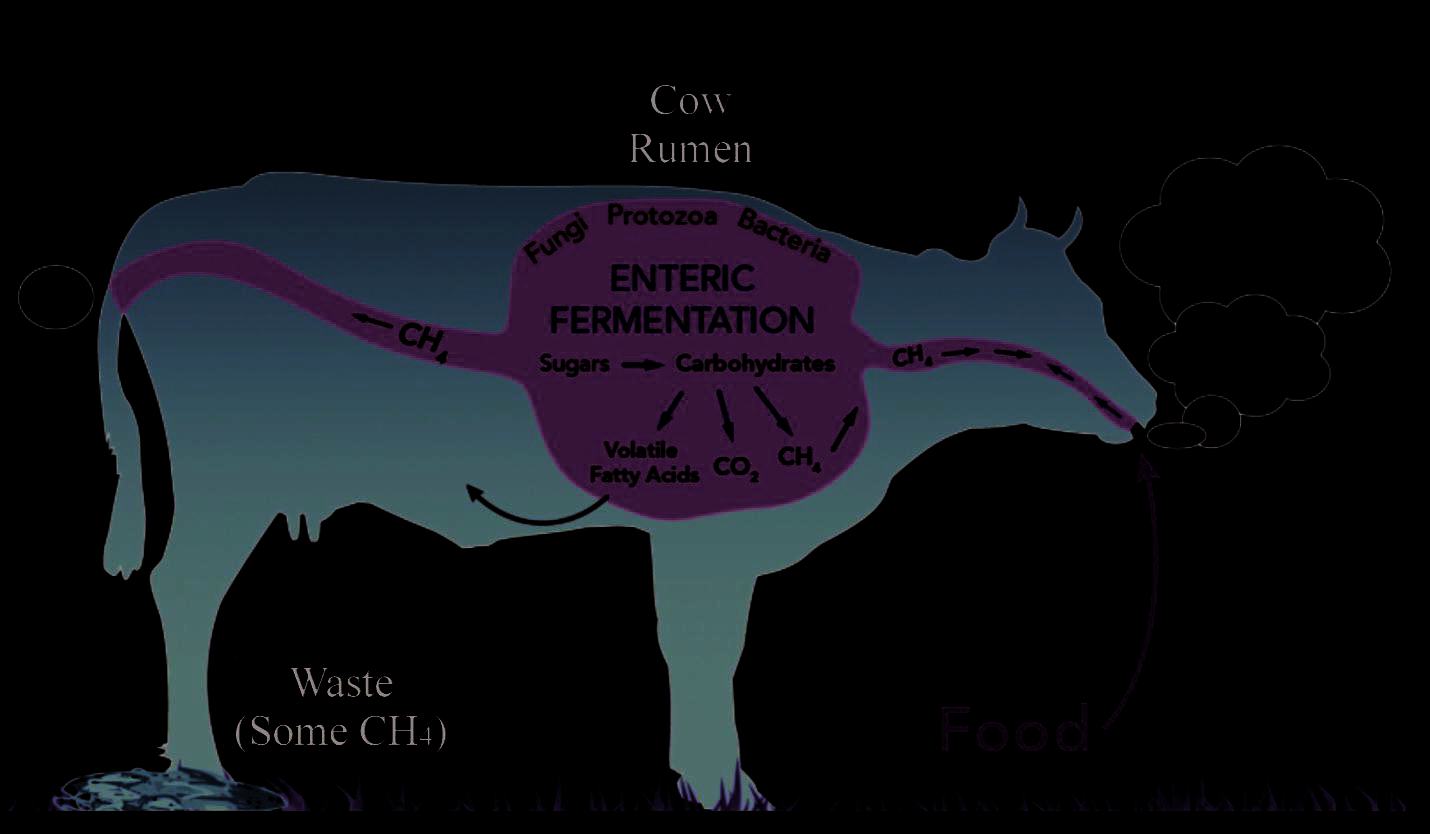
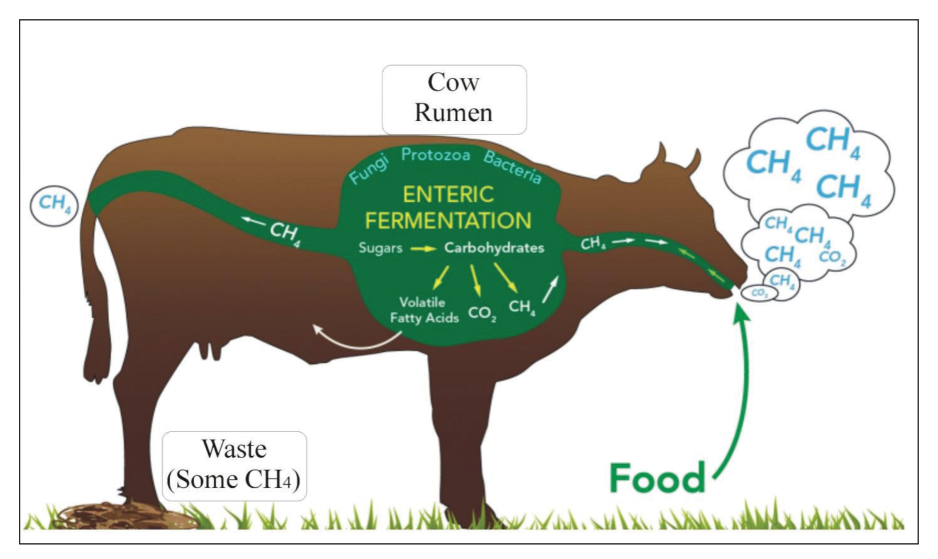
as cellulose, hemicellulose, and pectin which are converting them into simple sugar. These simple sugars are then further converted into volatile fatty acids (VFAs), mainly acetate, propionatem, and butyrate through fermentation. Along with production of VFAs in fermentation, hydrogen and carbon dioxide are also produced concurrently. The majority of VFAs are acetate, propionate and butyrate. These VFAs are absorbed in the rumen across the epithelium and intestine by the host animals. The major producers of H2 are organism that produce acetic acid in the fermentation pathway [13]. However, H2 is the end product of fermentation by bacteria, fungi, and protozoa, it does not accumulate in the rumen rather used by other bacteria known as methanogens. So, the VFAs production and gas production go handinhand in the rumen. The process of methane production in rumen of cattle is shown is the Figure 1. This figure illustrates that how enteric fermentation is done in cattle. Carbohydrates undergo fermentation by microbes after the digestion of food. The fermentation is done by bacteria, protozoa and fungi leading to the production of VFAs and CO2 and H2. This process illustrates how cattle are major source of methane emission.
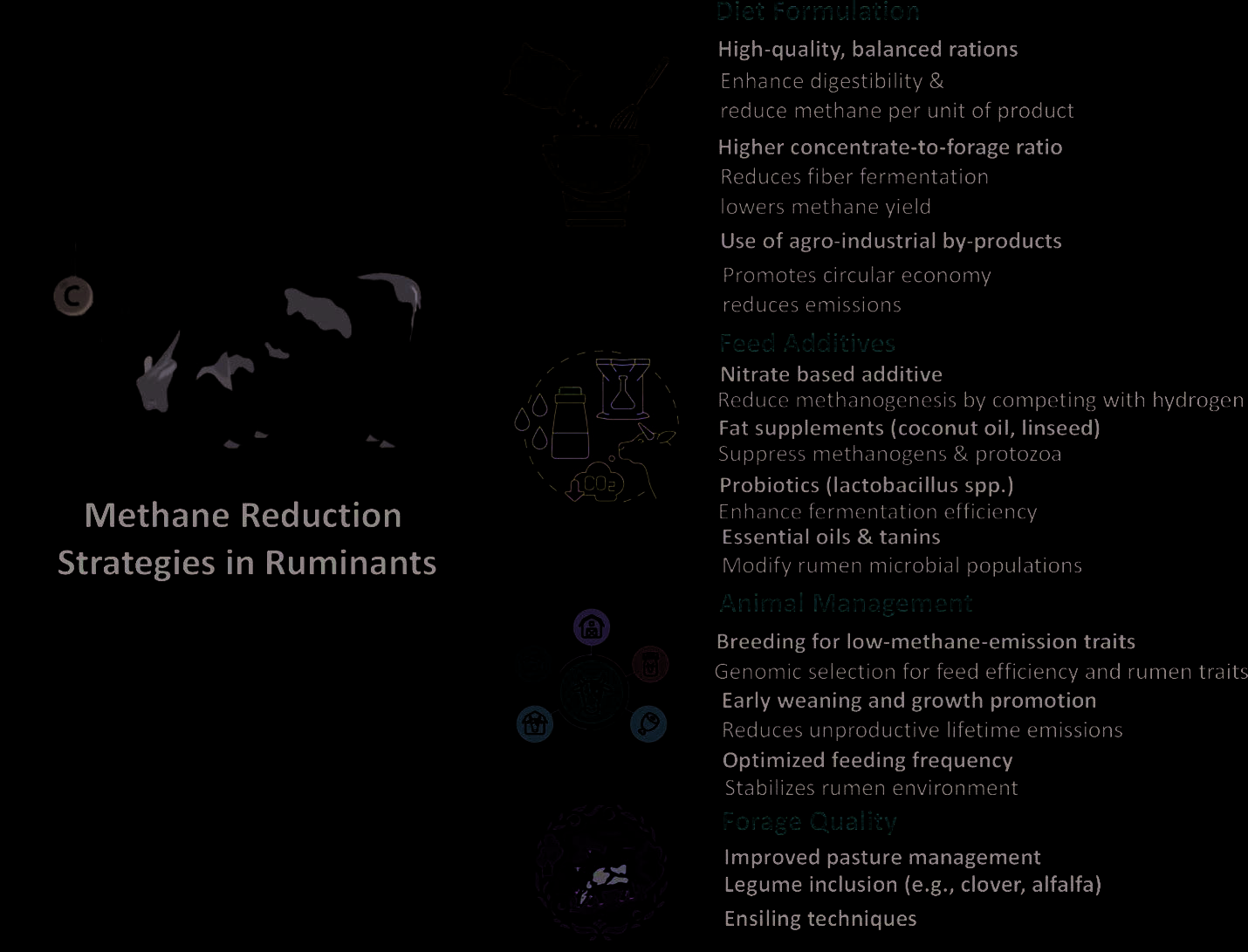
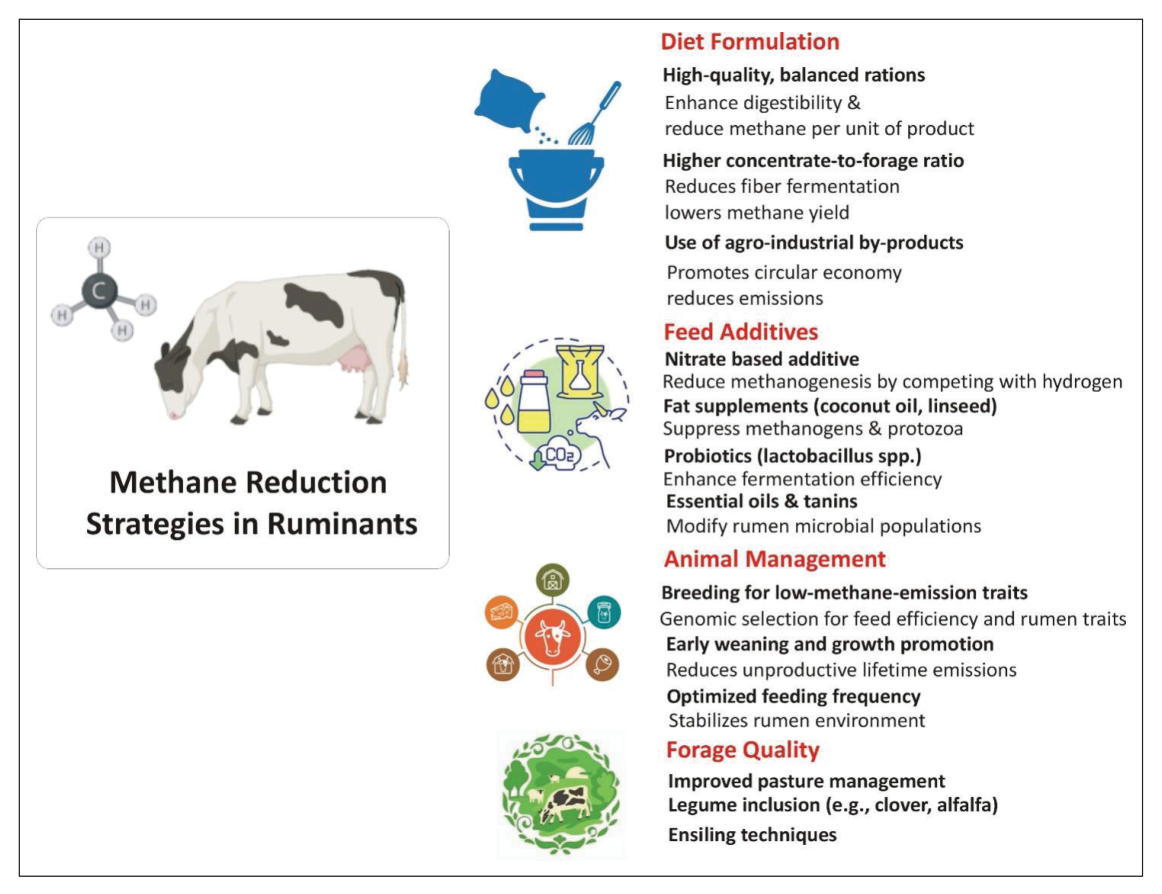
Methods of Reducing CH₄ Figure 2 represents the various strategies to reduce the methane production in cattle by adopting the feeding and management practices. The following are detail description of these strategies.
Nutritional strategies & nature of carbohydrates In ruminants, carbohydrates are digested by microbial fermentation in the rumen. During anaerobic fermentation, polysaccharides are hydrolyzed into simple sugars such as pentoses and hexoses, which are further oxidized into VFAs [14]. However, the nature of the carbohydrate greatly affects VFA production and methane formation in the rumen. The fermentation of structural carbohydrates (cell wall
components) produces more CH₄ compared with nonstructural carbohydrates (starch) [15,16]. Structural carbohydrates, for example, cellulose and hemicellulose, offer fiber that speeds up microbial fermentation but also serve as substrates for methane production. Concentraterich, starchcontaining diets generate less CH₄ per unit of fermented organic matter than celluloserich roughages. For example, intake of higher concentrate diets (40–68 g dry matter/kg) reduced methane emissions from 9.2% to 5.1% of gross energy intake (GEI) [17]. Similar results were given by Min et al. [18] reported that very high grain diets (>90%) in U.S. feedlots reduced CH₄ to 2%–3% of GEI. Gastelen et al. [19] also observed that feeding beet pulp, a highly digestible fiber source, to steers reduced methane emissions by 4%–5%. Thus, methane production depends strongly on both the level and type of grain included in the diet and the resulting ruminal fermentation patterns. Research has shown that structural carbohydrate results in a greater GEI in the form of CH4 as compared to soluble sugars and starch. GEI is the total amount of energy contained in the feed and taken by animal. This is mainly owing to the decrease in ruminal fermentation and passing them out of rumen and enhanced acetic and propionic acid ratio [20]. In contrast, a highgrain diet fed in large quantities increases the ruminal digestion and passage rate, ultimately resulting in higher propionic acid production [21]. In addition, the diet rich in grains reduces the rumen pH that also inhibits methanogens and protozoa [22].Dairy producers with cattle that have lower milk yields usually feed higherroughage diets compared to those with higher producing animals. As a result, methane production is also lower in such lactating animals. Therefore, adopting smart dieting techniques, such as increasing the proportion of concentrate diet, can help optimize the methane production. Thus, increasing grain diet improves feed efficiencies and reduce the CH4 output as well [23]. These smart techniques have a great impact on net reduction of GHG emission. Similarly, shifting dairy producers to grain feeding instead of forage feeding can reduce the methane production, it is important to assess the cost also. Moreover, before increasing grain in the diet of dairy cattle, it is important to consider the role of ruminants in converting fibrous feed into valuable protein, like milk and meat. Therefore, before implementing such strategies, it is advisable to balance them with potential benefits of reducing methane emissions.
Forage maturity and Varieties
Researchers have found that methane (CH4) production in ruminants is greatly influenced by the forage maturity and composition. For example, CH4 production increases with the maturity of forage, while legume forages reduce the CH4 production as compared with nonleguminous forage. Carmona et al. [24] found that dairy cattle grazing on the tannincontaining legumes produce less methane compare to the cattle grazing on green pasture. However, this practice does affect the milk composition like solid not fat (SNF), that indicate that mixing of tannincontaining legumes like Sulla in the ration of dairy cattle reduce methane production. Like other factors, the maturity of forages also plays an important role in CH4 production [25]. It was found that the cattle grazing on mature pasture produce higher methane. Similarly, Hansen et al. [26] found that dairy cow produces more methane gas while grazing in summer as compared with grazing in spring, attributed to the increased grass maturity. The selective grazing patterns are also associated with grass maturity that contribute to variation in methane production [17].
Phytochemical and photobiotic
These are planbased compounds. Phytochemicals lack essential nutrients like vitamins and minerals but are rich in many secondary metabolites such as essential oils, tannins, saponins, and alkaloids. These chemicals have significant biological importance. Phytochemicals play certain role in animal production systems. It can impact fermentation and can improve the digestion and subsequently reduce methane emission. Similarly, it also has antimicrobial, anthelminthic, and antioxidant qualities. Moreover, the key function of phytochemicals is to reduce is nitrogen and methane emission when used judiciously in cattle farming.
Processing of forage
Processing of forage through grinding and pelleting that enhances digestion in the rumen. [27]. Research shows that high intake of processed forages decrease CH4 losses up to 20 to 40%. This reduction is due following reasons: (i) Lower fiber digestibility, (ii) reduced available organic matter in the rumen, and (iii) faster rate of passage through rumen. The abovedescribed effects are more prominent in the cattle offered with ad libitum feed. another study by Binsulong et al. [28] has found that feeding ground diets instead of chopped one decrease acetic acid production and increase valeric acid and propionic acid. However, the forage in ground form is not good for dairy producer which are likely affect the cattle health (induce acidosis) and quality of milk (decrease milk fat content) due to lower fiber contents [29]. Concentrate diet, the feed mainly composed of energyrich ingredients such as cereal grains, such as maize, barley, and wheat, oilseed, and agriculture and industrial byproducts. Such diets always have higher levels of easily fermentable carbohydrates and very low fiber compared to other feed such as roughages. Concentrates are aimed at reducing methane emissions per unit of feed intake owing to the shifts in rumen fermentation pathways. Besides this, it also enhances energy intake, improve animal performance.
Ruminant fermentation management
Fats addition
Fat enhances the energetic efficiency in lactating cows by generating ATP more efficiently than carbohydrates and proteins, by being directly incorporated into products such as milk, especially milk fat and protien, and by enhancing nutrient utilization for milk production. It has been observed that observed that addition of fat in ruminant diet not only enhances milk quality and quantity but also reduces methane production [30]. It has also been found that mediumchain fatty acids greatly reduce methane production. In another [31], in vitro study, it has been observed that addition of 53 g/kg dry matter of canola oil, coconut oil, and palm kernel oil reduce methane by 20, 21, and 34 %, respectively. Similarly, during a feedlot study, it was found that addition of 4% canola oil with 85% concentrate diet reduces the methane up to 33 %. Similarly, a study by Min et al. [18] has observed that 2.3%, 4%, and 5.6% oil seed in the diet of cattle did not change methane production; however, the tendency of milk production efficiency increased with 4% supplementation of oil seed. Methane production corelates with the fat depending on addition of fat, type of fat, and availability of fat in rumen [32]. It has been observed that no significant difference of methane production was observed among treated groups like Ca soap fat (6.6 mmol/d), crystalline fat (6.5 mmol/d), prilled fat (6.9 mmol/day) versus controlled diet (7.0 mmol/d). So, there is no reduction in methane when protected fats are used. However, a problem associated with high fat levels in the diet (more than 5%) is that it decreases fibber degradation in rumen and reduce acetate production, ultimately, leading to a reduction in the milk fat content. Another in vitro study performed by Shi et al. [33] has found that coconut oil decrease fiber digestion in artificial rumen. Finally, it is concluded that addition of fat decrease methane production but at higher concentration, it results in increased energy availability and decreased fiber digestion. It is also observed that coconut oil is toxic to the methanogens and rumen protozoa. The mechanism of decrease in methane production by unsaturated fat is due to the fact that fatty acids accept the electrons during biohydrogenation in rumen. Bačėninaitė et al. [34] has observed that 15% decrease in methane in dairy cattle when they were fed with 5% soyabean oil, this reduction is due to decrease of fermentable substrates rather than methanogenesis directly [34].
Other modern strategies for reduction
Probiotics
Despite the fact that lipid supplements can decrease the methane by diverting hydrogen towards bio hydrogenation, probiotics and other microbebased approaches aim to openly control rumen fermentation pathways. By comparing both the methods, it highlights a tradeoff between lipids and microbial adaptation probiotics).Probiotics help dairy cattle in weight gain, nutrient utilization, retention of nitrogen, and decrease in excretion of nutrients. They improve the food intake, enhance the intestinal health, and improve the reproductive health of animal. However, there is very few knowledge on the result of probiotics on methane in dairy cattle. The effects of Saccharomyces cerevisiae and Aspergillus oryzae, the two most common microbial feed additives, on rumen fermentation were first observed during experimentation [35]. It has been demonstrated that Aspergillus oryzae reduces methane by 50% due to a decrease in the protozoal population. In ex vivo experiments, S. cerevisiae reduced marsh gas by 10%, but this effect persisted for a considerable amount of time [36]. Yeast culture has also shown increase in fiber digestion, microbial metabolism, Dry matter Intake (DMI), and milk supply in nursing heifers. Another study suggests that probiotics activate bacteria that consume lactic acid, leading to a decrease in lactic acid levels and a more balanced environment in the rumen [37]. This less acidic ruminal environment may enhance the proliferation of cellulolytic bacteria, which in turn improves fiber digestion, feed efficiency, and productive outcome. Recent research has indicated that the introduction of yeast culture in a steady culture system can increase dry matter digestion and propionic acid production, while reducing acetic acid formation and protein digestion as compared to a control group. It has been reported that using a medium containing brewer’s yeast can enhance the activity of bacteria that convert hydrogen to acetate, resulting in a 25% reduction in methane production in a continuous ruminal fermentation system. However, in studies by Benchaar et al. [38], the addition of a combination of S. cerevisiae and A. oryzae to the diets of dairy heifers showed no impact on the molar ratios of ruminal volatile fatty acids [38]. The effects of probiotics on fermentation processes vary widely among different laboratory experiments and yeast strains [39].It has been observed no effect of S. cerevisiae on fermentation in lactating dairy cows, while research by Takahashi et al. [41] has found that a probiotic supplement has increased methane emissions by 18% in sheep [40]. Despite widespread use of microbials as ruminant feed additives, there remains a clear need for additional research into the effectiveness of probiotics for reducing methane emissions ex vivo. Producers remain skeptical about the benefits of probiotics and need to understand the dietary and management conditions under which probiotics can consistently deliver positive results, along with the potential added benefit of reducing methane emissions [42].
Methane oxidizers
Methaneoxidizing bacteria have been isolated from various environments, including the rumen. Studies using carbon isotopes in ex vivo experiments show that methane oxidation to carbon dioxide within the rumen is relatively minor, ranging from 0.3% to 8%. Valdez and colleagues isolated a methaneoxidizing bacterium from juvenile pig guts, when added to rumen fluid in vitro, reduced methane levels. This effect, however, has yet to be confirmed in living organisms. Therefore, it is speculated that methane oxidizers originating from the intestines could be explored for their potential to reduce methane emissions in the rumen [43–45].With growing concerns over antimicrobial resistance, there is heightened interest in nonantibiotic growth promoters. Dicarboxylic acids, such as fumaric and malic acids, have been tested as dietary supplements in ruminants. Fumaric acid, a component of the propionic acid pathway, is converted to succinic acid in a hydrogenconsuming reaction, and reducing fumaric acid could potentially alter hydrogen utilization. Studies have shown that adding up to 500 µmol of sodium fumarate to in vitro experiments can decrease methane emission by 6.3% and increase dry matter digestibility of the base diet by 6.2% after 48–50 hours of incubation. [46] demonstrated that adding 20 mM of fumarate to fermenting cultures of hay powder and concentrate for 6 hours significantly reduced methane production by 5% and lowered propionate production by 56%. Meanwhile, adding 30 mM of fumarate led to an 11% decrease in methane and a 58% increase in propionate production compared to the control. Choudhury et al. [47] research showed that the added fumarate was converted to propionate with minimal production of acetate and succinate, though significant accumulation of succinate occurred with 30 mM fumarate addition. However, extending the study period to 12 hours resulted in most succinate being converted to propionate.
Essential oils
There is increasing interest in investigating natural substances as dietary additives to modify enteric fermentation and potentially reduce methane emissions from farm animals. Among the essential oils, which are a category of plant secondary metabolites, with antioxidant, antiinflammatory, and antimicrobial properties show a promise as natural additives for ruminant diets. Various studies have established that these oils such as eugenol, thymole, and carvacro can selectively inhibit methanogenic archaea and hydrogenproducing protozoa, while also shifting rumen fermentation toward higher propionate production, thereby lowering methane yield are derived from plants (such as thyme, mint, and sage) either through steam distillation or organic solvent extraction and are responsible for the fragrance, flavor, and other characteristics of the plant, including antimicrobial properties. Additionally, these oils can improve the utilization of nitrogen and can decrease protein degradation, which can further enhance the feed efficiency. Nevertheless, the effects are dependent on dose, and variation in animal species, contents of the diet, and oil types suggests that more in vivo studies are required to optimize their practical use in methane mitigation strategies.
They are commonly used in the production of perfumes, flavorings, food preservatives, and medicines. Essential oils are widely found in plants and may play a crucial role in defending against bacterial, fungal, or insect threats. The antimicrobial effects of essential oils are often attributed to a small number of terpenoids and phenolic compounds, such as single terpene units, limonene, thymol, and carvacrol. However, the precise mechanisms behind the resistance conferred by oil constituents are not well defined or understood. The antimicrobial properties of essential oils have been demonstrated in in vitro and in vivo studies to inhibit certain bacteria and yeasts and to regulate fermentation gases, volatile fatty acids, odors from livestock waste, and human pathogenic bacteria such as Escherichia coli O157:H7 and Salmonella sp. The study by Günal et al. [48] examined the effect of essential oil in different levels on rumen fermentation and methane production. It was observed that addition of 10% essential oil enhances the ruminal pH and decrease VFA concentration as well as methane production. However, adding 1% essential oil did not affect the methane production.In their research, Nałęcz-Jawecki et al. [49] studied how 13 different plant products influenced fermentation processes in a laboratory setting. Their findings suggested that some protozoan families experienced minor disruptions, which in turn resulted in a reduction of methane production by adding Equisetum arvense and Salvia officinalis. On the other hand, methane production saw an increase of 13.7% with Lavandula officinalis and 7.7% with Solidago virgaurea. These variations
indicate that the modes of action of plant extracts on methanogens are varied and complex.
Critical analysis
Though probiotics has the potential to lessen the GHGs emission and can improve animal’s health, their impacts remain inconsistent. The inconsistency is mainly due to the variation in plant species, diet composition, animal type, and dosage. The research suggests that large number of tannins can reduce feed intake and feed digestibility in some cases. Moreover, the lack of standardization, economic viability, and scalability need further research. Thus, while phytochemicals are sustainable substitutes, more economically viable, feasible, and longterm studies are needed before broader application.
Conclusion and Future Perspective
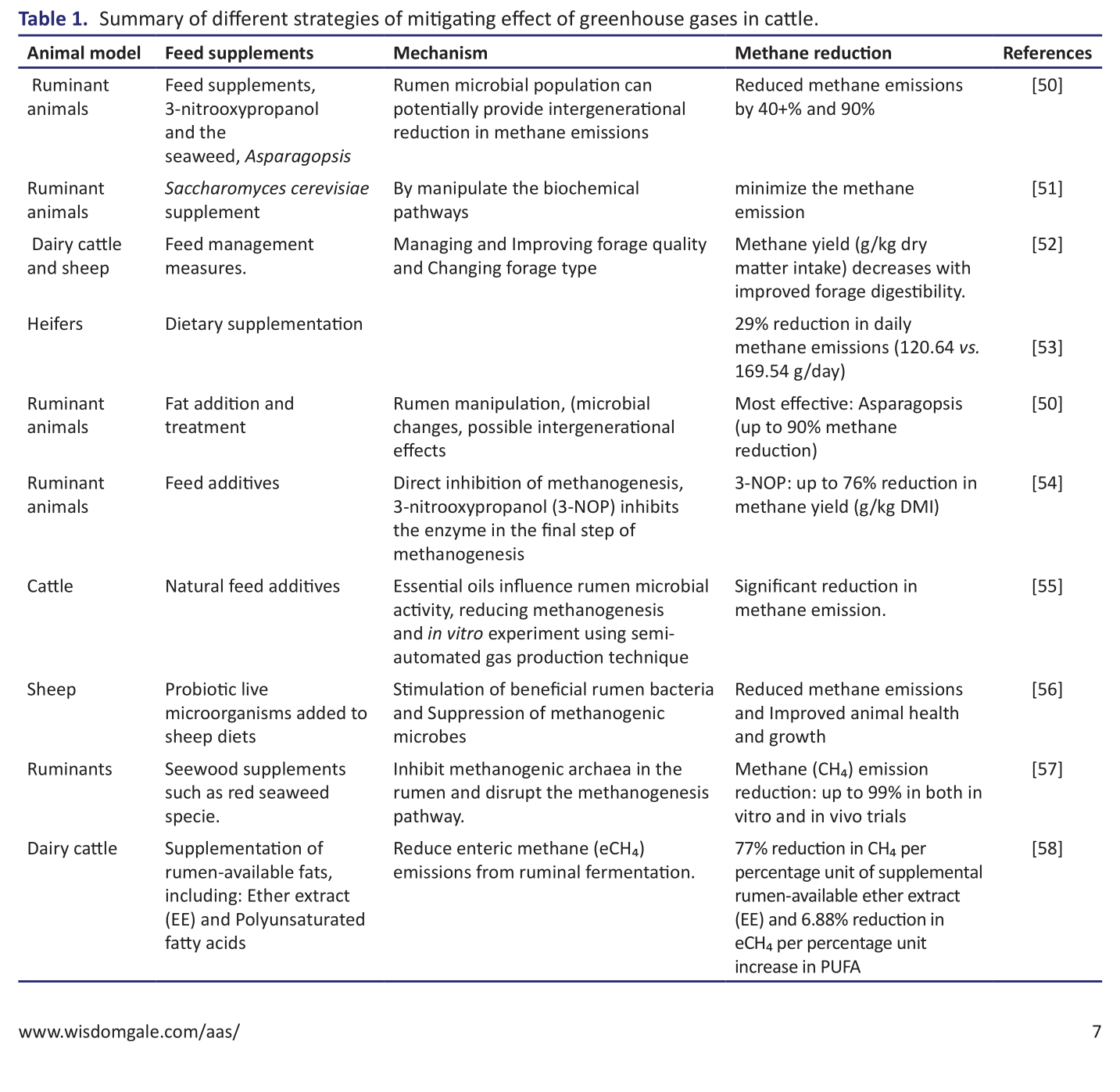
The methane emission can be reduced by adopting different strategies like increasing the efficiency of animal production, increasing feed conversion ratio, and improvement in the fermentative process in rumen. There are different practices successfully performed in trails but they required to practice at large industrial level, before successful evaluation of the toxic and harmful effect and also checking the cost effect of these treatments properly. However, those strategies that are cost effect, improve the production, and have no impact on the animal health have good chance of being adopted by the farmers. The smart diet techniques in cattle farming are very compulsory near future as it is important step to reduce the greenhouse gas emission and address the challenge of feeding a growing world population. As the food demand of animal’s product is increasing with increase of global population, the smart diet implementation in cattle farming is gaining more importance. By giving importance to the efficient practices, the industry can work towards meeting the demand of food with minimum environmental impact. In the future, further research such large scale probiotics trails especially the multistrain probiotics and integrated feed studies can enable the scientist to develop climatefriendly feed that will enhance the production capability of cattle farming with addressing methane production challenge. Based on the evidence and literature reviewed, forages rich with tannins and lipid supplementation are highly advised for methane reduction in cattle. However, products such as probiotics and essential oils need further consideration and validation in order to confirm consistency and longterm impact. In the future, ecological viability, economic feasibility, and farmers’ behavior for adaptation must be prioritized for phytochemical inclusion in the feed.This Table 1 contains the key dietary and other management to reduce methane emission in ruminants. For example, 3-NOP, Asparagopsis spp., oils, probiotics, and fats reduce emissions mainly by reducing methanogens and altering rumen. The approved reductions can range from 29% with supplements to more than 90% with seaweed. It means both natural and synthetic options can substantially reduce the enteric methane.
References1. Liu Y, Tang H, Muhammad A, Huang G. Emission mechanism and reduction countermeasures of agricultural greenhouse gases–a review. Greenh Gases Sci Technol 2019; 9:160–74. 2. Kar G. Climate change and its impact in agriculture and water resources. London: CRC Press; 2022. pp. 1–19. 3. Skytt T, Nielsen SN, Jonsson B-G. Global warming potential and absolute global temperature change potential from carbon dioxide and methane fluxes as indicators of regional sustainability–A case study of Jämtland, Sweden. Ecol Indic 2020; 110:105831. 4. Filonchyk M, Peterson MP, Zhang L, Hurynovich V, He Y. Greenhouse gases emissions and global climate change: examining the influence of CO2, CH4, and N2O. Sci Total Environ 2024; 173359. 5. Occhipinti Z, Verona R. Kyoto protocol (KP). Clim action 2020; 605–17. 6. Achakulwisut P, Erickson P, Guivarch C, Schaeffer R, Brutschin E, Pye S. Global fossil fuel reduction pathways under different climate mitigation strategies and ambitions. Nat Commun 2023; 14:5425. 7. Neubauer SC. Global warming potential is not an ecosystem property. Ecosystems 2021; 24:2079–89. 8. Kabange NR, Kwon Y, Lee S-M, Kang J-W, Cha J-K, Park H, et al. Mitigating greenhouse gas emissions from crop production and management practices, and livestock: a review. Sustainability 2023; 15:15889. 9. Eisen MB, Brown PO. Rapid global phaseout of animal agriculture has the potential to stabilize greenhouse gas levels for 30 years and offset 68 percent of CO2 emissions this century. PLoS Clim 2022; 1:e0000010. 10. Nisbet EG, Fisher RE, Lowry D, France JL, Allen G, Bakkaloglu S, et al. Methane mitigation: methods to reduce emissions, on the path to the Paris agreement. Rev Geophys 2020; 58:e2019RG000675.
11. Króliczewska B, Pecka-Kiełb E, Bujok J. Strategies used to reduce methane emissions from ruminants: controversies and issues. Agriculture 2023; 13:602. 12. Mizrahi I, Wallace RJ, Moraïs S. The rumen microbiome: balancing food security and environmental impacts. Nat Rev Microbiol 2021; 19:553–66. 13. Li H, Mei X, Liu B, Li Z, Wang B, Ren N, et al. Insights on acetateethanol fermentation by hydrogenproducing Ethanoligenens under acetic acid accumulation based on quantitative proteomics. Environ Int 2019; 129:1–9. 14. Rastall RA, Diez-Municio M, Forssten SD, Hamaker B, Meynier A, Moreno FJ, et al. Structure and function of nondigestible carbohydrates in the gut microbiome. Benef Microbes 2022; 13:95–168. 15. Sun X, Cheng L, Jonker A, Munidasa S, Pacheco D. A review: plant carbohydrate types—the potential impact on ruminant methane emissions. Front Vet Sci 2022; 9:880115. 16. Li Y, Lv J, Wang J, Zhou S, Zhang G, Wei B, et al. Changes in carbohydrate composition in fermented total mixed ration and its effects on in vitro methane production and microbiome. Front Microbiol 2021; 12:738334. 17. Zubieta ÁS, Savian JV, de Souza Filho W, Wallau MO, Gómez AM, Bindelle J, et al. Does grazing management provide opportunities to mitigate methane emissions by ruminants in pastoral ecosystems? Sci Total Environ 2021; 754:142029. 18. Min B-R, Lee S, Jung H, Miller DN, Chen R. Enteric methane emissions and animal performance in dairy and beef cattle production: strategies, opportunities, and impact of reducing emissions. Animals 2022; 12:948. 19. Gastelen S van, Bannink A, Dijkstra J. Effect of silage characteristics on enteric methane emission from ruminants. CABI Rev 2019; 1–9. 20. Dong J-N, Li S-Z, Chen X, Qin G-X, Wang T, Sun Z, et al. Effects of different combinations of sugar and starch concentrations on ruminal fermentation and bacterialcommunity composition in vitro. Front Nutr 2021; 8:727714. 21. Kozłowska M, Cieślak A, Jóźwik A, El-Sherbiny M, Gogulski M, Lechniak D, et al. Effects of partially replacing grass silage by lucerne silage cultivars in a highforage diet on ruminal fermentation, methane production, and fatty acid composition in the rumen and milk of dairy cows. Anim Feed Sci Technol 2021; 277:114959. 22. Tan C, Ramírez-Restrepo CA, Shah AM, Hu R, Bell M, Wang Z, et al. The community structure and microbial linkage of rumen protozoa and methanogens in response to the addition of tea seed saponins in the diet of beef cattle. J Anim Sci Biotechnol 2020; 11:1–10. 23. Hoffmann A, Cardoso AS, Fonseca NVB, Romanzini EP, Siniscalchi D, Berndt A, et al. Effects of supplementation with corn distillers’ dried grains on animal performance, nitrogen balance, and enteric CH4 emissions of young Nellore bulls fed a hightropical forage diet. Animal 2021; 15:100155. 24. Carmona-Flores L, Bionaz M, Downing T, Sahin M, Cheng L, Ates S. Milk production, N partitioning, and methane emissions in dairy cows grazing mixed or spatially separated simple and diverse pastures. Animals 2020; 10:1301. 25. Pereira FC, Machado Filho LCP, Kazama DCS, Júnior RG, Pereira LGR, Enríquez-Hidalgo D. Effect of recovery period of mixture pasture on cattle behaviour, pasture biomass production and pasture nutritional value. animal 2020; 14:1961–8. 26. Hansen NP, Kristensen T, Johansen M, Wiking L, Poulsen NA, Hellwing ALF, et al. Effects on feed intake, milk production, and methane emission in dairy cows fed silage or fresh grass with concentrate or fresh grass harvested at early or late maturity stage without concentrate. J Dairy Sci 2022; 105:8036–53. 27. Berhanu Y, Olav L, Nurfeta A, Angassa A, Aune JB. Methane emissions from ruminant livestock in Ethiopia: promising forage species to reduce CH4 emissions. Agriculture 2019; 9:130. 28. Binsulong B, Gunha T, Kongphitee K, Maeda K, Sommart K. Enteric methane emissions, rumen fermentation characteristics, and energetic efficiency of Holstein crossbred bulls fed total mixed ration silage with cassava instead of rice straw. Fermentation 2023; 9:850. 29. Araújo MJ, de Miranda HH, Marques CAT, Batista IL, Carvalho FJ V, de S. Jácome DL, et al. Effect of replacing ground corn with Parkia platycephala pod meal on the performance of lactating Anglo-Nubian goats. Anim Feed Sci Technol 2019; 258:114313. 30. Wu S-L, Luo G, Sun J, Wei W, Song L, Ni B-J. Medium chain fatty acids production from anaerobic fermentation of waste activated sludge. J Clean Prod 2021; 279:123482. 31. Yanza YR, Szumacher-Strabel M, Jayanegara A, Kasenta AM, Gao M, Huang H, et al. The effects of dietary mediumchain fatty acids on ruminal methanogenesis and fermentation in vitro and in vivo: a metaanalysis. J Anim Physiol Anim Nutr (Berl) 2021; 105:874–89. 32. Sato Y, Tominaga K, Aoki H, Murayama M, Oishi K, Hirooka H, et al. Calcium salts of longchain fatty acids from linseed oil decrease methane production by altering the rumen microbiome in vitro. PLoS One 2020; 15:e0242158. 33. Shi L, Zhang Y, Wu L, Xun W, Liu Q, Cao T, et al. coconut oil decrease fiber digestion in artificial rumen. Front Vet Sci 2020; 7:1–10. 34. Bačėninaitė D, Džermeikaitė K, Antanaitis R. Global warming and dairy cattle: how to control and reduce methane emission. Animals 2022;12(19): 2687.35. Kong F, Lu N, Liu Y, Zhang S, Jiang H, Wang H, et al. Aspergillus oryzae and Aspergillus niger cocultivation extract affects in vitro degradation, fermentation characteristics, and bacterial composition in a dietspecific manner. Animals 2021; 11(5):1248. 36. Xue L, Zhou S, Wang D, Zhang F, Li J, Cai L. The low dose of Saccharomyces cerevisiae is beneficial for rumen fermentation (both in vivo and in vitro) and the growth performance of heatstressed goats. Microorganisms 2022; 10(10):1877.37. Ayivi RD, Gyawali R, Krastanov A, Aljaloud SO, Worku M, Tahergorabi R, et al. Lactic acid bacteria: Food safety and human health applications. Dairy 2020; 1:202–32. 38. Benchaar C, Hassanat F, Yang WZ. Effects of active dried yeast (Saccharomyces cerevisiae), a nonionic surfactant, or their combination on gas production, rumen microbial fermentation and methane production in vitro. Anim Feed Sci Technol 2024; 307:115844. 39. Sharma R, Garg P, Kumar P, Bhatia SK, Kulshrestha S. Microbial fermentation and its role in quality improvement of fermented foods. Fermentation 2020; 6(4):106. 40. Benedetti L, Cattaneo L, Vercesi A, Trevisi E, Piccioli- Cappelli F. Effects of live Saccharomyces cerevisiae yeast administration in periparturient dairy cows. Animals 2024; 14(3):472.41. Takahashi J, Mwenya B, Santoso B, Sar C, Umetsu K, Kishimoto T, et al. Mitigation of methane emission and energy recycling in animal agricultural systems. Asian-Australas J Anim Sci 2005; 18(8):1199–1208.42. Doyle N, Mbandlwa P, Kelly WJ, Attwood G, Li Y, Ross RP, et al. Use of lactic acid bacteria to reduce methane production in ruminants, a critical review. Front Microbiol 2019; 10:2207. 43. Romanovskaya VA, Malashenko YR, Lyalko VI, Bogachenko VN, Sokolov IG. Involvement of methaneutilizing microorganisms in accumulation and recirculation of readily mobile carbon and nitrogenous compounds. Ecol Bull. 1977; 556–60. 44. Goraj W, Pytlak A, Grządziel J, Gałązka A, Stępniewska Z, Szafranek-Nakonieczna A. Dynamics of methaneconsuming biomes from wieliczka formation: environmental and enrichment studies. Biology (Basel) 2023. 45. Valdes C, Newbold CJ, Hillman K, Wallace RJ. Evidence for methane oxidation in rumen fluid in vitro. Ann Zootech 1996; 45:351.46. Li Z, Liu N, Cao Y, Jin C, Li F, Cai C, et al. Effects of fumaric acid supplementation on methane production and rumen fermentation in goats fed diets varying in forage and concentrate particle size. J Anim Sci Biotechnol 2018; 9:1–9.
47. Choudhury PK, Jena R, Tomar SK, Puniya AK. Reducing enteric methanogenesis through alternate hydrogen sinks in the Rumen. Methane 2022. p. 320–41. 48. Günal M, Pinski B, AbuGhazaleh AA. Evaluating the effects of essential oils on methane production and fermentation under in vitro conditions . Ital J Anim Sci 2017; 16:500–6. 49. Nałęcz-Jawecki G, Chojnacka J, Wawryniuk M, Drobniewska A. Influence of nanoand small microplastics on ciliated protozoan Spirostomum ambiguum (Müller, 1786) Ehrenberg, 1835. Water 2021; 13(20), 2857. 50. Black JL, Davison TM, Box I. Methane emissions from ruminants in Australia: Mitigation potential and applicability of mitigation strategies. Animals 2021; 11:951. 51. Elanthamil R, Bandeswaran C. Methane emission from ruminants and its mitigating measures using probiotic–A review 2017; 52. Eugène M, Klumpp K, Sauvant D. Methane mitigating options with forages fed to ruminants. Grass Forage Sci 2021; 76:196–204. 53. Hernández O, López A, Ceron-Cucchi ME, AdégbéÏga Alabi CD, Loza C, Juárez Sequeira AV, et al. Whole cottonseed as an effective strategy to mitigate enteric methane emissions in cattle fed lowquality forages. Animals 2025; 15:819. 54. Kelly L, Kebreab E. Recent advances in feed additives with the potential to mitigate enteric methane emissions from ruminant livestock. J Soil Water Conserv 2023; 78:111–23. 55. Benetel G, Silva T dos S, Fagundes GM, Welter KC, Melo FA, Lobo AAG, et al. Essential oils as in vitro ruminal fermentation manipulators to mitigate methane emission by beef cattle grazing tropical grasses. Molecules 2022; 27:2227. 56. Saleem ASA, Abdelnour S, Bassiony SM, Abdel-Monem UM, Elaref MY, Al-Marakby KM. Probiotic supplementation in sustainable sheep production: impacts on health, performance, and methane mitigation. Trop Anim Health Prod 2025; 57:206. 57. Wanapat M, Prachumchai R, Dagaew G, Matra M, Phupaboon S, Sommai S, et al. Potential use of seaweed as a dietary supplement to mitigate enteric methane emission in ruminants. Sci Total Environ 2024; 931:173015. 58. de Ondarza MB, de Souza VC, Kebreab E, Tricarico JM. Understanding potential opportunities and risks associated with feeding supplemental rumen available fats to mitigate enteric methane emissions in lactating dairy cows. J Dairy Sci 2024; 107:8072–83.
| How to Cite this Article |
| Pubmed Style Buzdar JA, Khan P, Marghazani IB, Gajian W, Din NU, Dehwar WA, Bibi S, Aqsa A, Usmani AK, Rehman MU, Hanif M. Climate-Smart Nutrition: Phytochemicals Based Feeding Strategies to Reduce Methane Emissions in Cattle Farming. Arch Appl Sci. 2026; 1(1): 1-10. doi:10.5455/AAS.20250819045331 Web Style Buzdar JA, Khan P, Marghazani IB, Gajian W, Din NU, Dehwar WA, Bibi S, Aqsa A, Usmani AK, Rehman MU, Hanif M. Climate-Smart Nutrition: Phytochemicals Based Feeding Strategies to Reduce Methane Emissions in Cattle Farming. https://www.wisdomgale.com/aas//?mno=302657981 [Access: June 27, 2026]. doi:10.5455/AAS.20250819045331 AMA (American Medical Association) Style Buzdar JA, Khan P, Marghazani IB, Gajian W, Din NU, Dehwar WA, Bibi S, Aqsa A, Usmani AK, Rehman MU, Hanif M. Climate-Smart Nutrition: Phytochemicals Based Feeding Strategies to Reduce Methane Emissions in Cattle Farming. Arch Appl Sci. 2026; 1(1): 1-10. doi:10.5455/AAS.20250819045331 Vancouver/ICMJE Style Buzdar JA, Khan P, Marghazani IB, Gajian W, Din NU, Dehwar WA, Bibi S, Aqsa A, Usmani AK, Rehman MU, Hanif M. Climate-Smart Nutrition: Phytochemicals Based Feeding Strategies to Reduce Methane Emissions in Cattle Farming. Arch Appl Sci. (2026), [cited June 27, 2026]; 1(1): 1-10. doi:10.5455/AAS.20250819045331 Harvard Style Buzdar, J. A., Khan, . P., Marghazani, . I. B., Gajian, . W., Din, . N. U., Dehwar, . W. A., Bibi, . S., Aqsa, . A., Usmani, . A. K., Rehman, . M. U. & Hanif, . M. (2026) Climate-Smart Nutrition: Phytochemicals Based Feeding Strategies to Reduce Methane Emissions in Cattle Farming. Arch Appl Sci, 1 (1), 1-10. doi:10.5455/AAS.20250819045331 Turabian Style Buzdar, Jameel Ahmed, Paio Khan, Illahi Bakhash Marghazani, Waseem Gajian, Nizam Ud Din, Waseem Akhtar Dehwar, Sadia Bibi, Aqsa Aqsa, Aziz Khan Usmani, Mujeeb Ur Rehman, and Maryam Hanif. 2026. Climate-Smart Nutrition: Phytochemicals Based Feeding Strategies to Reduce Methane Emissions in Cattle Farming. Archives of Applied Sciences, 1 (1), 1-10. doi:10.5455/AAS.20250819045331 Chicago Style Buzdar, Jameel Ahmed, Paio Khan, Illahi Bakhash Marghazani, Waseem Gajian, Nizam Ud Din, Waseem Akhtar Dehwar, Sadia Bibi, Aqsa Aqsa, Aziz Khan Usmani, Mujeeb Ur Rehman, and Maryam Hanif. "Climate-Smart Nutrition: Phytochemicals Based Feeding Strategies to Reduce Methane Emissions in Cattle Farming." Archives of Applied Sciences 1 (2026), 1-10. doi:10.5455/AAS.20250819045331 MLA (The Modern Language Association) Style Buzdar, Jameel Ahmed, Paio Khan, Illahi Bakhash Marghazani, Waseem Gajian, Nizam Ud Din, Waseem Akhtar Dehwar, Sadia Bibi, Aqsa Aqsa, Aziz Khan Usmani, Mujeeb Ur Rehman, and Maryam Hanif. "Climate-Smart Nutrition: Phytochemicals Based Feeding Strategies to Reduce Methane Emissions in Cattle Farming." Archives of Applied Sciences 1.1 (2026), 1-10. Print. doi:10.5455/AAS.20250819045331 APA (American Psychological Association) Style Buzdar, J. A., Khan, . P., Marghazani, . I. B., Gajian, . W., Din, . N. U., Dehwar, . W. A., Bibi, . S., Aqsa, . A., Usmani, . A. K., Rehman, . M. U. & Hanif, . M. (2026) Climate-Smart Nutrition: Phytochemicals Based Feeding Strategies to Reduce Methane Emissions in Cattle Farming. Archives of Applied Sciences, 1 (1), 1-10. doi:10.5455/AAS.20250819045331 |