

| Review Article Online Published: 09 Mar 2026 | ||||||||||||
Arch Appl Sci. 2026; 1(1): 43-46 Microbial Bioremediation Strategies for Restoration of Urban Lakes in India: A Review Vijayakumar V, Bhagavanth Reddy G, Dr. Madhusudan Reddy.
| ||||||||||||



Introduction
Urban lakes are integral components of city landscapes in India, providing essential ecosystem services such as water storage, biodiversity support, microclimate regulation, and cultural value. Rapid urbanization, unplanned landuse changes, and discharge of untreated domestic and industrial effluents have led to widespread degradation.Urban lakes such as Hussain Sagar (Hyderabad), Ulsoor Lake (Bengaluru), and Rabindra Sarobar (Kolkata) have experienced severe anthropogenic stress due to sewage inflows, industrial effluents, and solid waste dumping [1]. Domestic wastewater contributes nearly 80% of the nutrient load in Indian urban lakes, accelerating eutrophication and biodiversity loss [2].Conventional physicochemical remediation methods such as chemical precipitation, aeration, and dredging are often costly and unsustainable [3]. Microbialbased approaches offer ecofriendly and selfsustaining alternatives [4].Microbialbased restoration strategies directly advance SDG 6 (Clean Water and Sanitation) by improving urban surface water quality and enabling decentralized wastewater treatment.
Sources of pollution in Urban Lakes
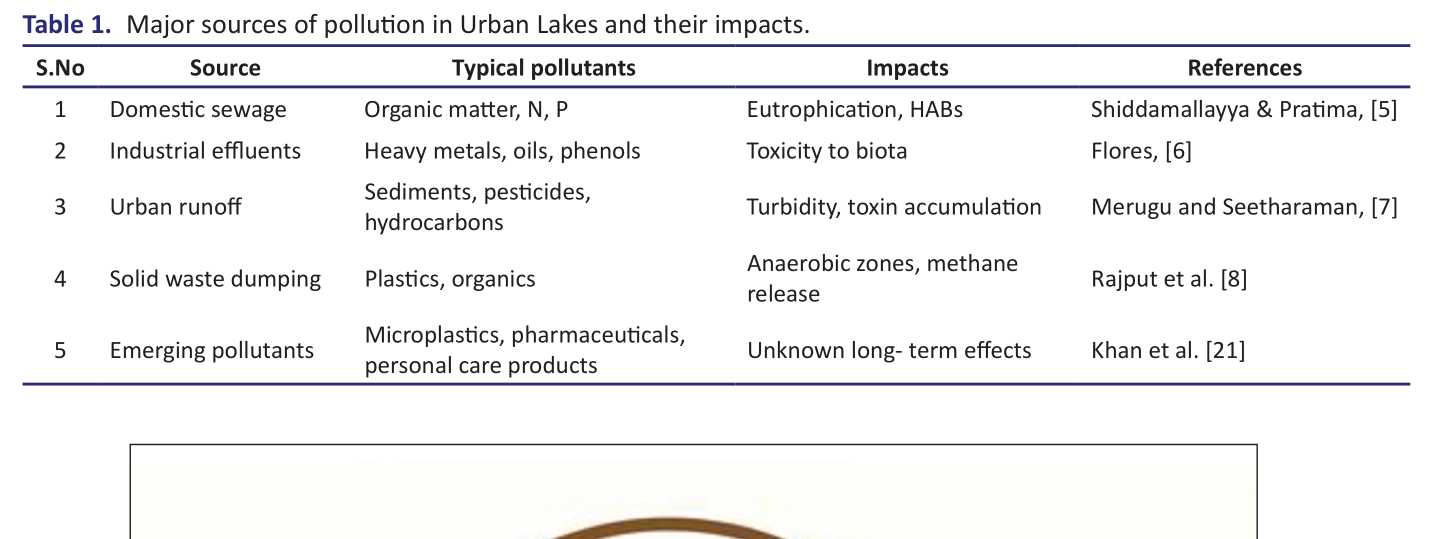
Urban lakes are subjected to multiple pollution sources. Domestic sewage contributes high organic matter and nutrient loads, accelerating eutrophication [5] Table 1. Untreated industrial effluents introduce heavy metals and toxic compounds [6]. Urban runoff transports sediments, pesticides, and hydrocarbons into lakes [7]. Improper solid waste dumping leads to anaerobic conditions and methane release [8].
Role of microbial communities in Urban Lake ecosystems Microbes act as primary decomposers and biogeochemical regulators [9]. Heterotrophic bacteria degrade organic carbon, reducing biological oxygen demand (BOD) and chemical oxygen demand (COD) [10]. Nitrifying bacteria such as Nitrosomonas and Nitrobacter oxidize ammonia to nitrate [11]. Denitrifying bacteria, including Pseudomonas and Bacillus, remove nitrates via gaseous nitrogen release [12]. Phosphatesolubilizing bacteria mitigate phosphorus availability [13]. Hydrocarbonoclastic bacteria degrade oil pollutants [14]. Archaea contribute to nitrogen cycling and anaerobic sediment processes [15].
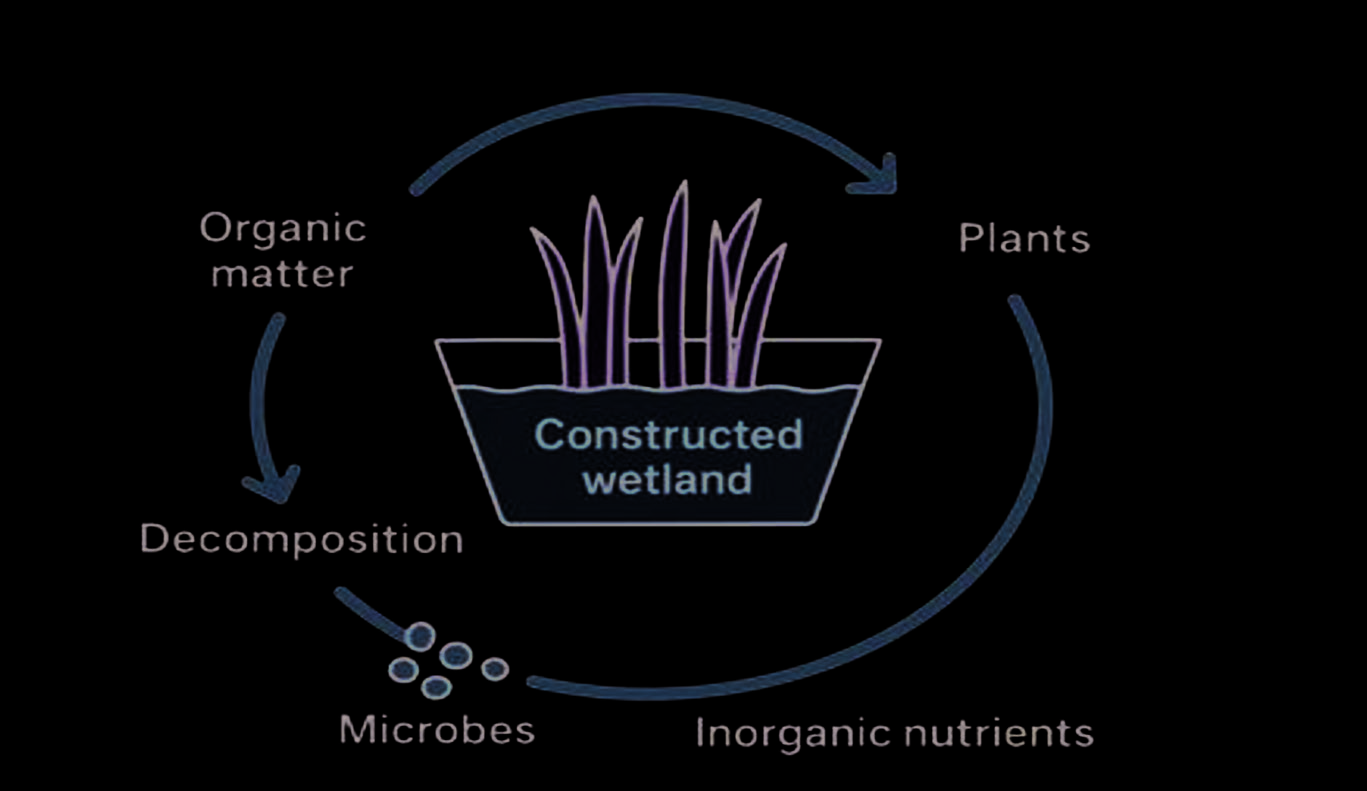
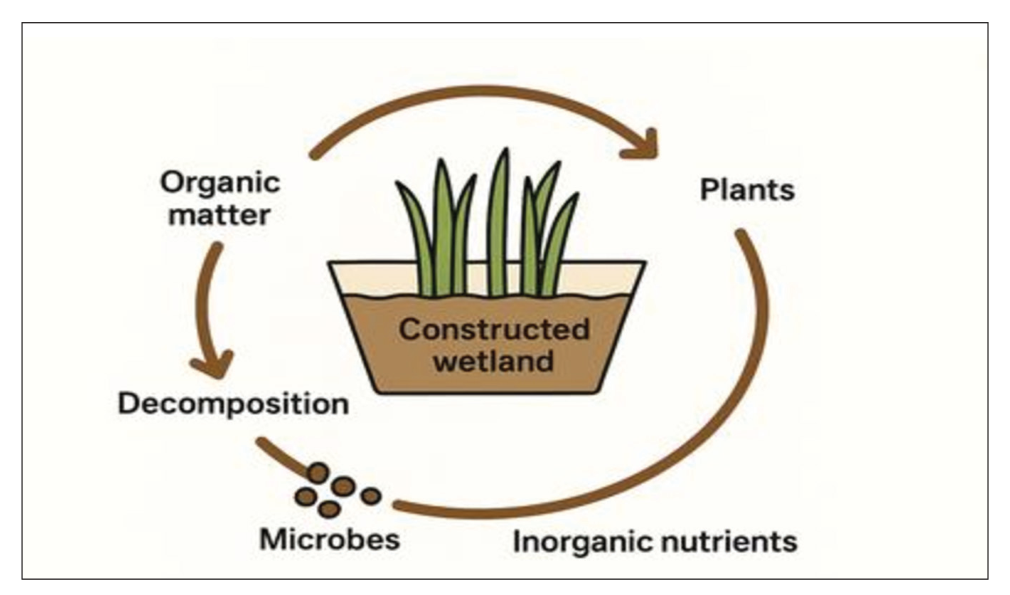
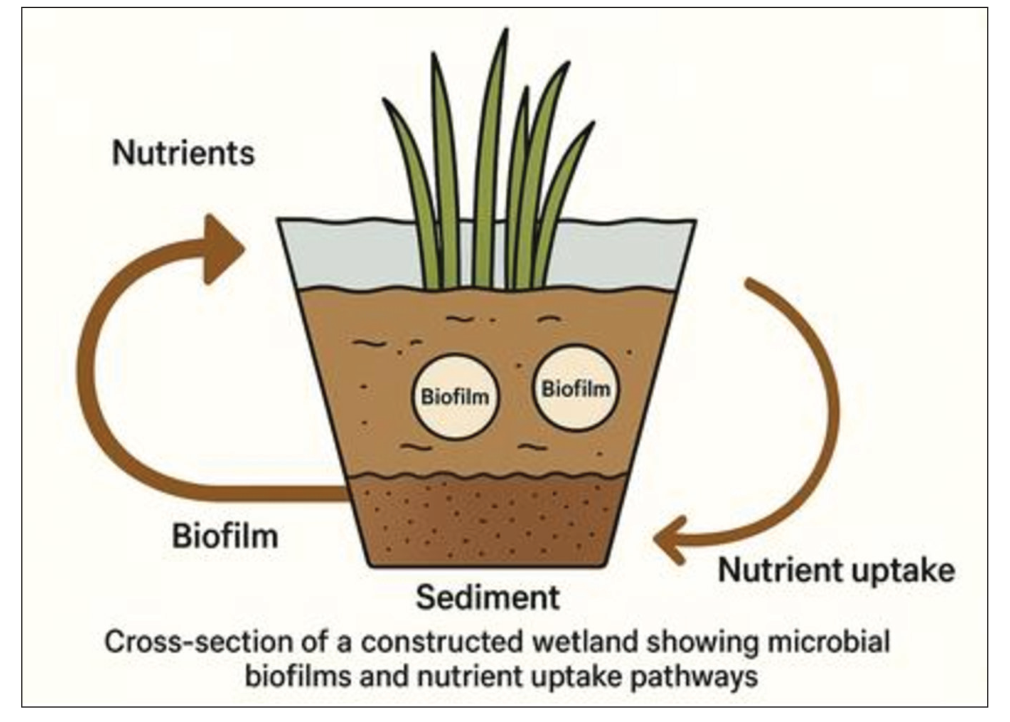
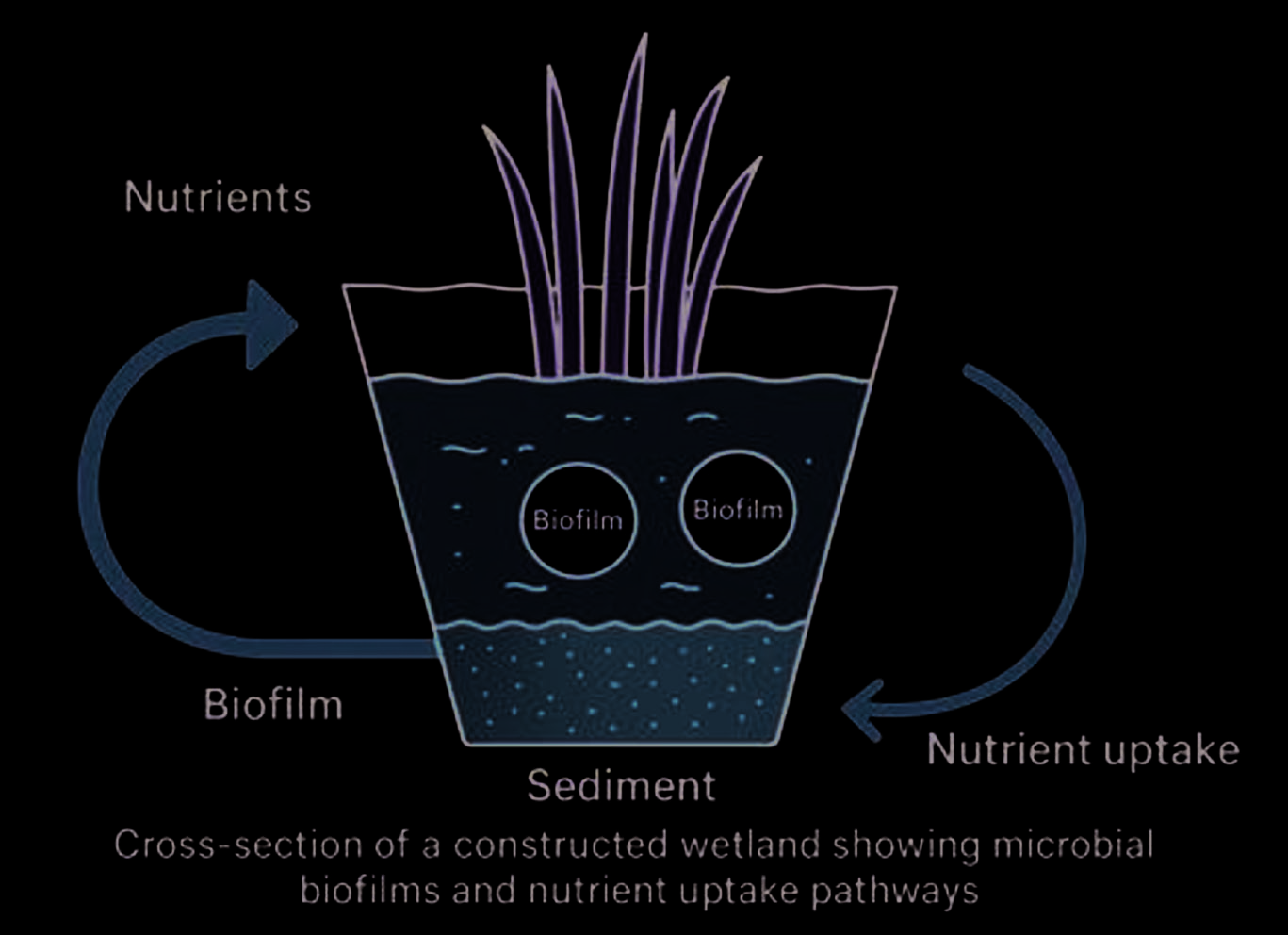
Microbial bioremediation strategies for Urban Lakes Constructed wetlands (CWs) Constructed wetlands are engineered systems mimicking natural wetlands to treat wastewater [16]. Microbial biofilms on plant roots degrade organic pollutants and transform nitrogen compounds through nitrification–denitrification [17,18] Figure 1. Surface flow and subsurface flow systems are commonly employed [19]. In Varthur Lake, Karnataka, CW implementation achieved 78% COD and 69% total nitrogen reduction within five months [20].
Floating treatment wetlands (FTWs) FTWs are buoyant systems planted with macrophytes whose roots support microbial colonization [22]. They enhance dissolved oxygen, reduce turbidity, and remove nutrients [23].
Bioaugmentation and biostimulation
Bioaugmentation involves introducing pollutantspecific microbes such as Pseudomonas putida for hydrocarbon degradation [24] Figure 2. Biostimulation enhances native microbial activity through nutrient amendments [25,26].
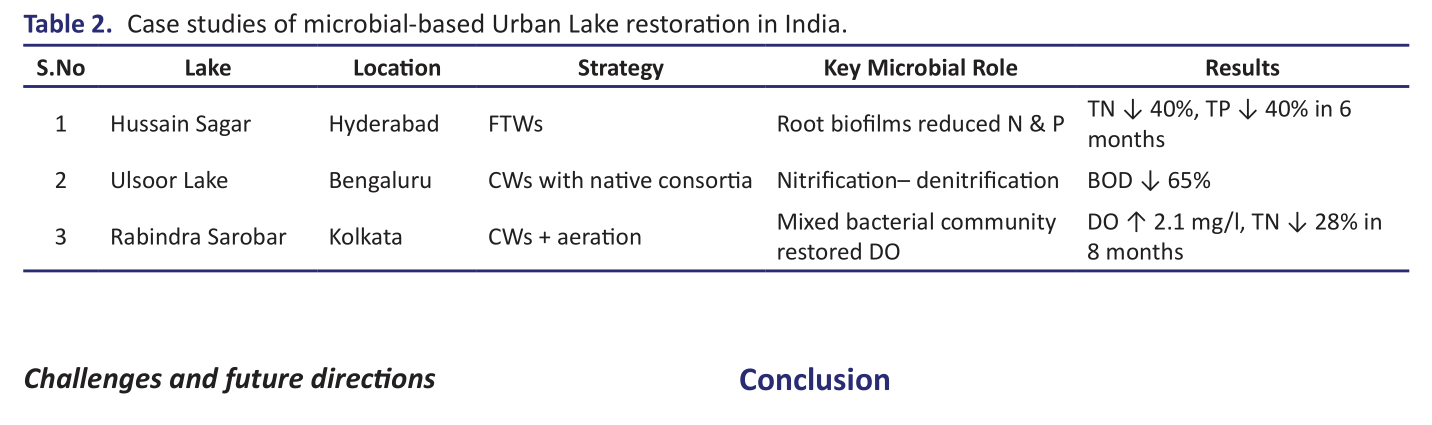
Results: case studies from India In Hussain Sagar Lake, installation of FTWs resulted in 40% reduction in total nitrogen and phosphorus within 6 months [27]. Ulsoor Lake restoration using CWs enriched with microbial consortia achieved 65% reduction in BOD [16]. Rabindra Sarobar restoration using CWs and aeration increased dissolved oxygen and reduced total nitrogen over 8 months.
Urban lake restoration faces challenges, including variable pollutant loads, seasonal microbial shifts, and space constraints. Integration of IoTbased monitoring, metagenomicsguided interventions, and smart city governance frameworks can enhance restoration efficiency [28] Table 2.
Knowledge gaps and research needs
Longterm microbial community dynamics remain underresearched. Limited data exist on microbial responses to emerging pollutants such as microplastics and pharmaceuticals. Integration of molecular tools with physicochemical monitoring is needed.
Microbialbased restoration strategies integrated with constructed wetlands and floating treatment wetlands represent scalable, costeffective naturebased solutions for rehabilitating urban lakes in India. Advances in microbial monitoring and governance integration are essential for sustainable urban water management.
References
1. Nogales B, Lanfranconi MP, Piña-Villalonga JM, Bosch R. Anthropogenic perturbations in marine microbial communities. FEMS Microbiol Rev 2011; 35(2):275–98.
2. Kumar P, Singh JS. Ecological indicators of urban lakes. Ecol Indic 2020; 111:1–20.
3. Naveen BP, Mahapatra DM, Sitharam TG, Sivapullaiah PV, Ramachandra TV. Physicochemical characterization of landfill leachate. Environ Pollut 2017; 220:1–12.
4. Reddy MS, Char NVV. Management of lakes in India. Lakes Reserv Res Manag 2006; 11(4):227–37.
5. Shiddamallayya N, Pratima M. Impact of domestic sewage on freshwater body. J Environ Biol 2008; 29(3):303–8.
6. Flores L. Urban lakes: ecosystems at risk. Proc World Lake Conf 2008; 1333–7.
7. Merugu CS, Seetharaman R. Land use and lake water quality analysis. Environ Dev Sustain 2013; 15(2):511–28.
8. Rajput S, Kumari A, Rajput VD, Minkina T, Mandzhieva S, Sushkova S. Restoration perspectives of ponds in India. Sains Tanah 2023; 20(1):19-31.
9. Wang T, Li Y, Xu T, Zhang C, Zhao Z, Liu J. Biofilm microbial community structure. Environ Earth Sci 2016; 75(4):327.
10. Karafistan A, Arik-Colakoglu F. Water quality of Manyas Lake. Mitig Adapt Strateg Glob Change 2005; 10(1):127–43.
11. Mao C, Wang X, Li X, Zhang Y, Liu H, Chen J. Microbial communities in urban lakes. J Hazard Mater Adv 2023; 9:100233.
12. Jordan B. Nitrogen cycling processes. Hermes 2017; 145(2):174–94.
13. Maguire RO, Sims JT. Soil testing to predict phosphorus leaching. J Environ Qual 2002; 31(5):1601–9.
14. Fagan JE, Reuter MA, Langford KJ. Sustainability metrics in urban water systems. Resour Conserv Recycl 2010; 54(10):719–36.
15. Li J, Liang Y, Zou C, Wang H, Wu Z, Zhang Y. Water diversion and lake quality improvement. Water 2023; 15(16):2874.
16. Kumar S, Pratap B, Dubey D, Dutta V. Microbial communities in constructed wetlands. Microorganisms 2020; 18:311–27.
17. Kalam S, Basu A, Ankati S. Plant rootassociated biofilms. In: Singh DP, Singh HB, Prabha R, (eds.). Plantmicrobe interactions in agroecological perspectives, Singapore, Springer, pp 337–55, 2017.
18. Shinde R, Shahi DK, Mahapatra P, Singh S, Kumar A, Patel V. Microbial degradation in soil systems. J Environ Manag 2022; 320:115865.
19. Scholz M, Lee BH. Constructed wetlands review. Int J Environ Stud 2005; 62(4):421–47.
20. Sourav SK, Clements L, Nguyen TT, Buerkert A. Urbanization effects on lake ecosystem. Environ Chall 2024; 15:100944.
21. Khan G, Tiwari A, Patel DK, Anbumani S, Manickam N. Bioremediation of polyaromatic hydrocarbon polluted sewage sludge soil employing a bacterial consortium and phytotoxicity evaluation. Lett Appl Microbiol 2024; 77(12):ovae130.
22. Colares GS, Dell’Osbel N, Wiesel PG, Oliveira GA, Lutterbeck CA, Silva FP. Floating treatment wetlands review. Sci Total Environ 2020; 714:136776.
23. Pereira AC, Mulligan CN, Rahman M, Dassanayake KB, Prakash S, Gupta SK. Lake remediation review. Water 2023; 15:2143.
24. Alvarez A, Saez JM, Davila Costa JS, Colin VL, Fuentes MS, Cuozzo SA. Actinobacteria in bioremediation. Chemosphere 2017; 166:41–62.
25. Gupta D, Guzman MS, Bose A. Extracellular electron uptake. J Ind Microbiol Biotechnol 2020; 47(9-10):863–76.
26. Farda B, Djebaili R, Vaccarelli I, Del Gallo M, Pellegrini M, Di Gioia D. Actinomycetes diversity and applications. Microorganisms 2022; 10(2):329.
27. Singh R, Mishra V, Narasimhan B, Kumar R, Gosain AK, Chatterjee C. Hydrological modeling in India. Proc Indian Natl Sci Acad 2020; 86(1):479–94.
28. Mundoli S, Unnikrishnan H, Nagendra H. Urban ecosystems in smart cities. Decision 2017; 44(2):103–20.
| How to Cite this Article |
| Pubmed Style V V, G BR, Reddy DM. Microbial Bioremediation Strategies for Restoration of Urban Lakes in India: A Review. Arch Appl Sci. 2026; 1(1): 43-46. doi:10.5455/AAS.20251229101149 Web Style V V, G BR, Reddy DM. Microbial Bioremediation Strategies for Restoration of Urban Lakes in India: A Review. https://www.wisdomgale.com/aas//?mno=304880 [Access: June 27, 2026]. doi:10.5455/AAS.20251229101149 AMA (American Medical Association) Style V V, G BR, Reddy DM. Microbial Bioremediation Strategies for Restoration of Urban Lakes in India: A Review. Arch Appl Sci. 2026; 1(1): 43-46. doi:10.5455/AAS.20251229101149 Vancouver/ICMJE Style V V, G BR, Reddy DM. Microbial Bioremediation Strategies for Restoration of Urban Lakes in India: A Review. Arch Appl Sci. (2026), [cited June 27, 2026]; 1(1): 43-46. doi:10.5455/AAS.20251229101149 Harvard Style V, V., G, . B. R. & Reddy, . D. M. (2026) Microbial Bioremediation Strategies for Restoration of Urban Lakes in India: A Review. Arch Appl Sci, 1 (1), 43-46. doi:10.5455/AAS.20251229101149 Turabian Style V, Vijayakumar, Bhagavanth Reddy G, and Dr. Madhusudan Reddy. 2026. Microbial Bioremediation Strategies for Restoration of Urban Lakes in India: A Review. Archives of Applied Sciences, 1 (1), 43-46. doi:10.5455/AAS.20251229101149 Chicago Style V, Vijayakumar, Bhagavanth Reddy G, and Dr. Madhusudan Reddy. "Microbial Bioremediation Strategies for Restoration of Urban Lakes in India: A Review." Archives of Applied Sciences 1 (2026), 43-46. doi:10.5455/AAS.20251229101149 MLA (The Modern Language Association) Style V, Vijayakumar, Bhagavanth Reddy G, and Dr. Madhusudan Reddy. "Microbial Bioremediation Strategies for Restoration of Urban Lakes in India: A Review." Archives of Applied Sciences 1.1 (2026), 43-46. Print. doi:10.5455/AAS.20251229101149 APA (American Psychological Association) Style V, V., G, . B. R. & Reddy, . D. M. (2026) Microbial Bioremediation Strategies for Restoration of Urban Lakes in India: A Review. Archives of Applied Sciences, 1 (1), 43-46. doi:10.5455/AAS.20251229101149 |