

| Case Report Online Published: 02 May 2026 | ||||||||||||||||||||||||||||||
Arch Appl Sci. 2026; 1(2): 54-58 Effect of hepatitis B infection on gamma glutamyltransferase and some biochemical variables in human Rafad Rabeea Saadun, Safaa Al-ameen.
| ||||||||||||||||||||||||||||||



Introduction
Viral hepatitis is a longterm infection that affects the liver’s primary viral replication cycle site [1]. A lot of attention has been focused on hepatitis B virus (HBV) infection. Over two billion people worldwide were infected with HBV, of which 350 million were chronic carriers. Every year, HBVrelated diseases claim the lives of over 780,000 people [2]. Chronic liver disorders such as cirrhosis and hepatocellular carcinoma (HCC) can be brought on by hepatitis B [3]. The intention of treating chronic HBV infection is to identify liver damage as soon as possible and to halt the disease’s development with appropriate therapy. In order to do this, a thorough comprehension of the several elements contributing to HBV pathogenesis is necessary [4]. The current study included estimation of some liver enzymes, kidney parameters, and iron with its variables such as Total Iron Binding Capacity (TIBC), Unsaturated Iron Binding Capacity (UIBC). The most sensitive biomarker for liver disease, gamma glutamyl transferase (GGT), which can be found in liver, kidney, and intestinal cells. Nearly all serumdetected GGT is caused by hepatic GGT [5]. Patients with liver diseases associated with HBV often have abnormalities in iron metabolism. Serum indicators of issues with iron metabolism vary according to the stage of liver illness caused by HBV. Histological alterations, chronic liver damage, and modifications in iron metabolism can all have an influence on iron metabolism and worsen liver injury. Prolonged iron retention in hepatocytes worsens liver damage and is associated with higher chances of fibrosis, cirrhosis, and HCC in patients with CHB, according to research conducted in both lab and clinical settings, Increased iron deposition and elevated GGT work together to promote oxidative damage in the liver, where iron catalyzes the production of free radicals and GGT indicates the activity of pathways linked to oxidative stress. Thus, the development and aggravation of liver disorders such as cirrhosis, chronic hepatitis, and fatty liver are associated with both increased GGT and disrupted iron metabolism [6].The total ironbinding capacity (TIBC) is a crucial test for the identification of iron deficient anemias and other iron metabolism problems. Iron binding capability is the ability of transferrin to bind with iron. There are two types of iron binding capacity: unsaturated ironbinding capacity (UIBC) and TIBC. When iron stocks are depleted, blood transferrin levels increase. The remaining 67% of serum transferrin has an extra binding capability since only onethird of it is saturated with iron. This is the ability to bind unsaturated iron. TIBC is the total of serum iron and UIBC [7]. The present study includes the evaluation of Liver enzymes: Glutamic Oxaloacetic Transaminase, Glutamic Pyruvic Transaminase, and Gammaglutamyl transferase, Iron parameters (three): Serum iron, Total ironbinding capacity, and Unsaturated ironbinding capacity, Renal function markers: Urea and Creatinine. Additionally, serum Albumin, Creactive protein (CRP), and Total serum bilirubin were also assessed.
Experimental Part
- Study groups Forty four participants in all were chosen for the study and split into two groups: the control group, which consisted of twentyfour (n=24) healthy adults. Patients group, which consisted of 20 people (n=20) who had hepatitis B. Under the guidance of specialists, the samples were chosen from the Ibn Sina Specialized Teaching Hospital in Mosul, under medical supervision.
- Study parameters A spectrophotometer device with an analysis kit from BioLabo (French) estimates total ironbinding capacity, unsaturated ironbinding capacity, and iron levels. Analysis kit from Roche/Germany and photometric assays cobas c 311 were used to measure the activities of Glutamic Oxaloacetic Transaminase (GOT), Glutamic Pyruvic Transaminase (GPT), gammaglutamyl transferase (GGT). Also, an analysis kit from Randox/Irish spectrophotometric to measure albumin, Creactive protein, urea, and creatinine levels, total serum bilirubin level estimate with Accent 200 technology.
- Statistical analysis Version 22.0 of the SPSS software was used to examine quantitative data. Means ± SE values were used to show all data. The correlation coefficient (r) was used to assess the relationship between illness status and the variables being examined. The coefficient of determination (R2) was computed after a regression analysis. Statistical significance was defined as differences with p values less than 0.05.
Results
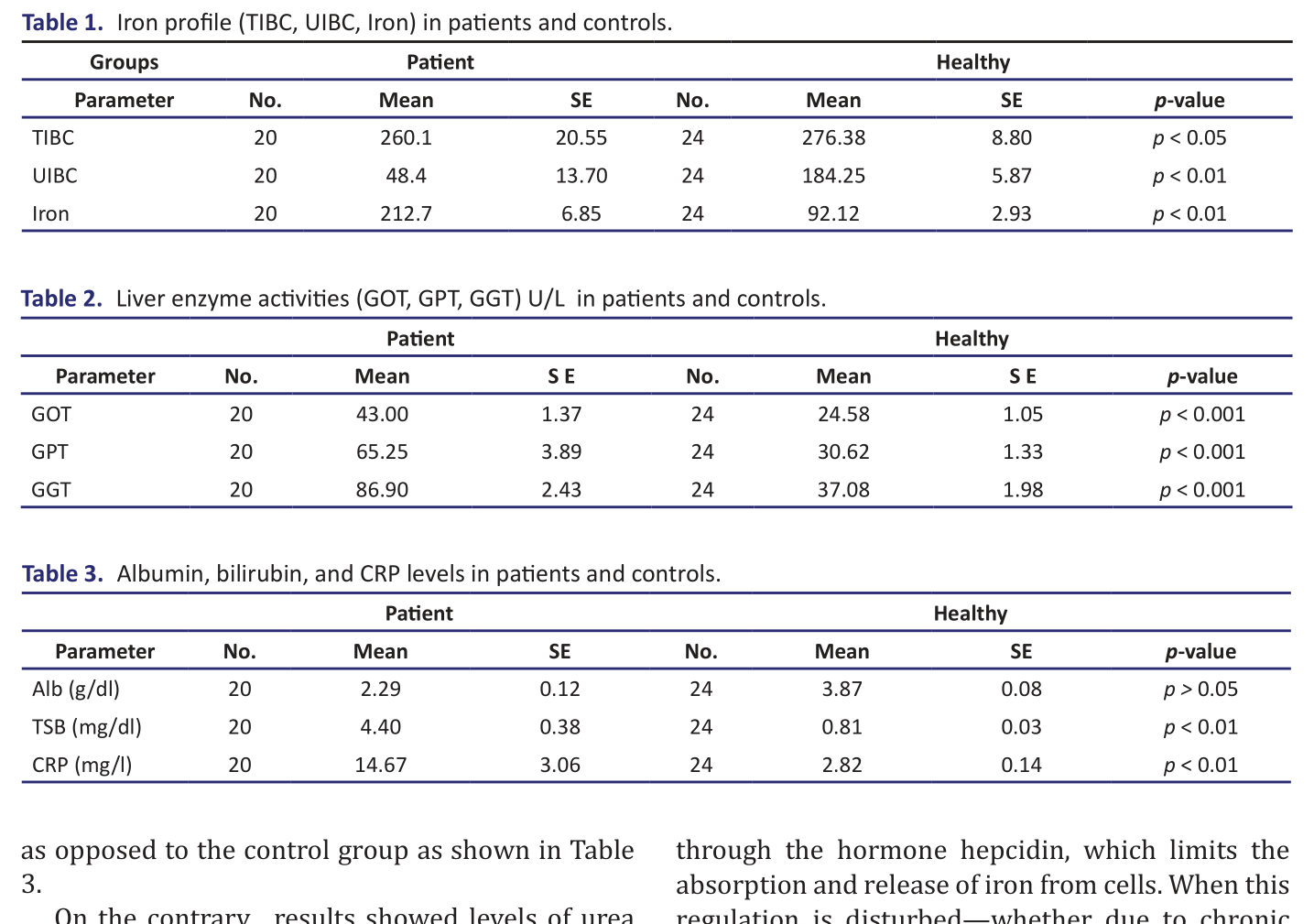
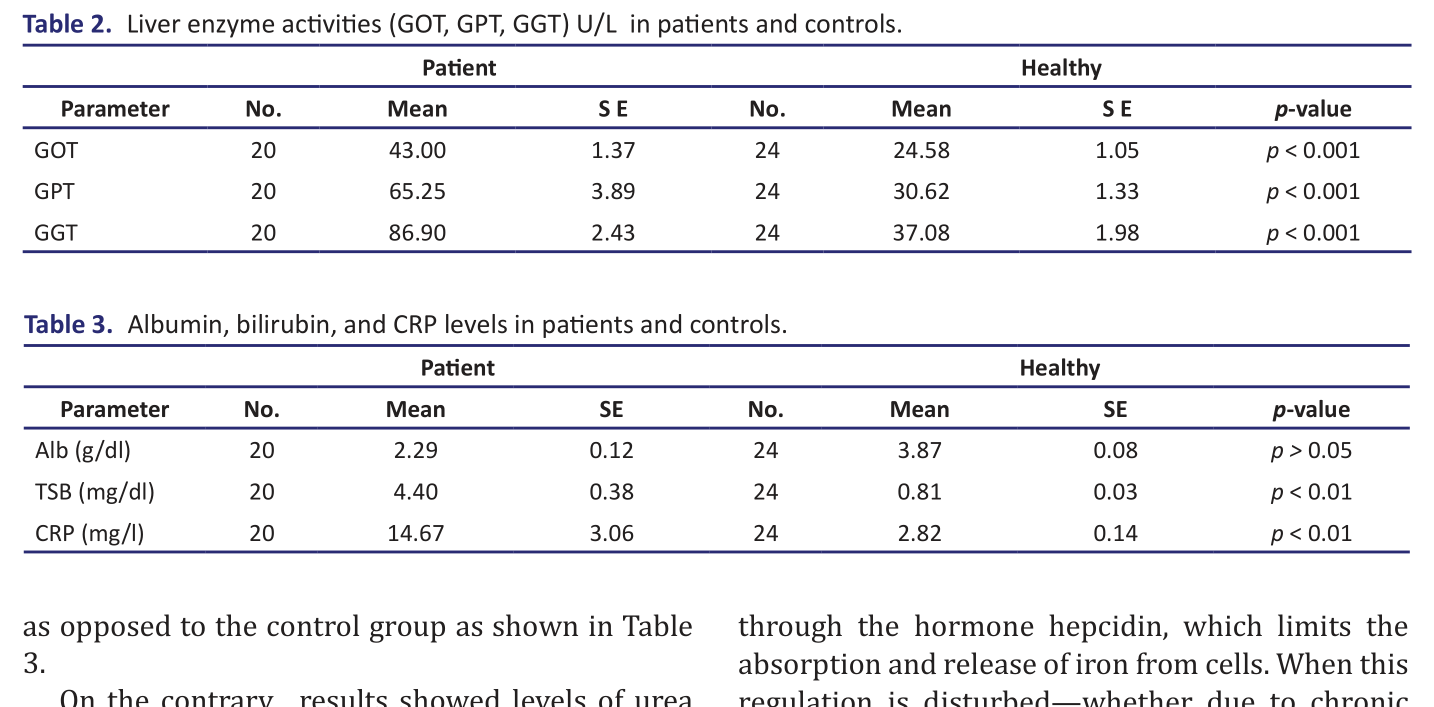
The results of the statistical analysis showed a slight but statistically significant decrease in the total iron binding capacity (TIBC) in hepatitis B patients compared to the control group (p < 0.05), while a clear significant decrease in the unsaturated iron binding capacity (UIBC) was recorded with a significant increase in the level of serum iron in the patients as shown in Table 1.According to the data, the patient group’s activity of glutamate oxaloacetate transaminase and glutamate pyruvate transaminase were much higher than that of the control group, and gammaglutamyl transferase was also significantly higher. The enzyme activity increased by 1.3 times in hepatitis patients compared to the control, and 30% of the patients had an enzyme activity greater than 110.5 U/L, which are considered very high and indicative of disease progression, as shown in Table 2. Albumin level did not change in the patient group, while total serum bilirubin and Creactive protein levels were increased in group of patients as opposed to the control group as shown in Table 3.On the contrary, results showed levels of urea was not affected by disease condition, while a significant decrease in creatinine level of patients group, 69.05µmol/L, compared to control group, 71.40 µmol/L, as shown in Table 4.
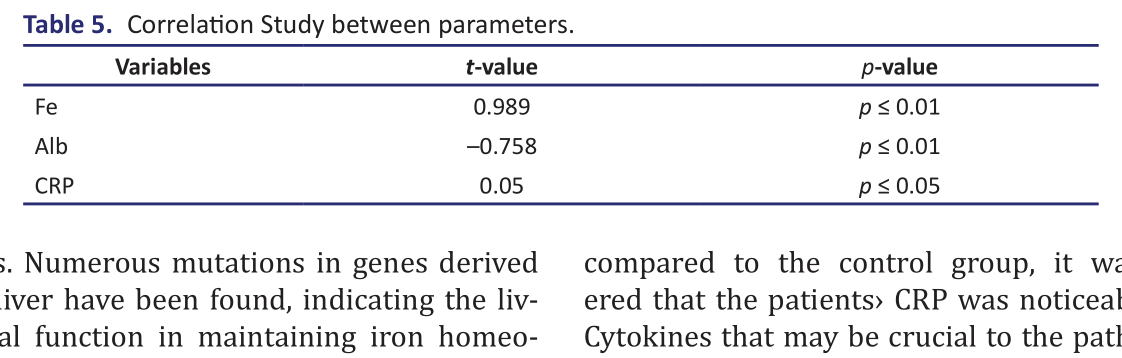
- Studying correlations between activity of GGT and GPT enzymes and measured biochemical variables Table 5 indicates presence of a positive, significant correlation between activity of GGT, as well as with levels of CRP and iron in hepatitis B patients, while an inverse significant correlation was found between activity of GGT and albumin level.
Discussion
Although the decrease in total iron binding capacity (TIBC) was statistically significant, the magnitude of this change was relatively limited, which may reflect the presence of compensatory mechanisms in the regulation of transferrin synthesis in chronic hepatitis B cases. Iron is a vital element in many biological functions, but increased concentrations in the liver under pathological conditions can contribute to worsening liver injury through mechanisms associated with inflammation and oxidative stress. Normally, the liver regulates iron balance through the hormone hepcidin, which limits the absorption and release of iron from cells. When this regulation is disturbed—whether due to chronic inflammation or liver dysfunction—iron absorption and accumulation within hepatocytes increases, leading to an increase in nontransferrinbound iron in the serum and its accumulation in hepatic tissue. This accumulation promotes the formation of free radicals through reactions such as the Fenton reaction[8]. Also, studies have shown that iron can activate cellular pathways such as NF-κB in Kupffer cells, which increases the production of inflammatory cytokines (such as TNF-α and IL-6), thus being associated with a cascade of inflammatory responses that contribute to the exacerbation of liver injury and the development of fibrosis. These combined mechanisms between iron imbalance and the inflammatory response explain why high iron levels are associated with deterioration of liver condition in diseases such as chronic hepatitis and hepatitis B, especially if they are accompanied by chronic inflammation or hepcidin dysregulation [9].Capacity and regulatory genes, one of the main causes of ironrelated illnesses is an iron imbalance brought on by the dysregulation of these processes. Over a billion individuals worldwide suffer from anemia and iron overload, two of the most common
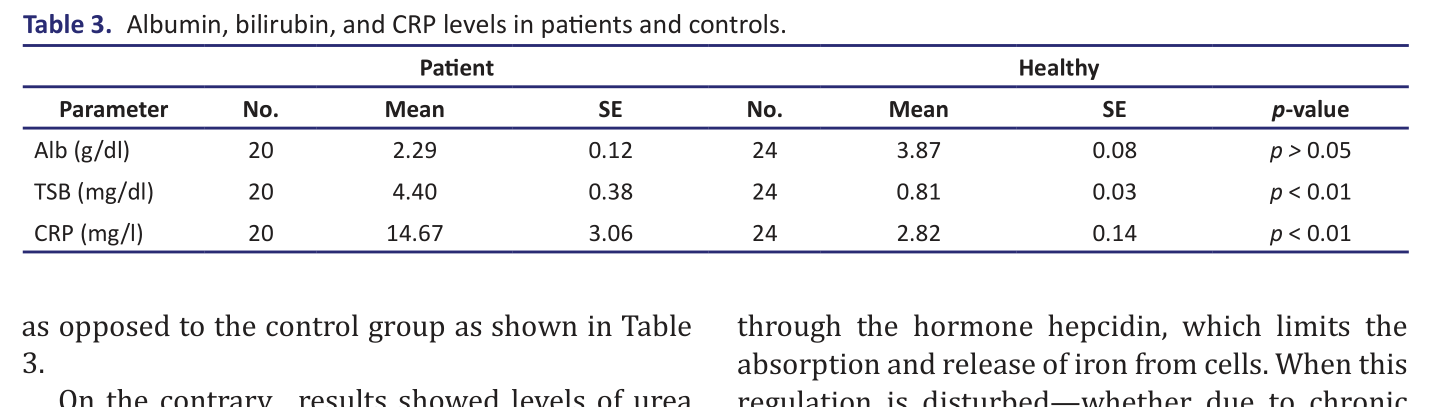
conditions. Numerous mutations in genes derived from the liver have been found, indicating the liver›s crucial function in maintaining iron homeostasis. When there is an overabundance of iron, the liver stores more iron and shields other organs from cellular damage caused by iron, such as the heart and pancreas. On the other hand, excessive reactive oxygen species generation and liver damage are the outcomes of a persistent rise in liver iron reserves. One of the main causes of increasing cirrhosis, fibrosis, hepatocellular cancer, and steatohepatitis is excess liver iron [10].According to the study›s findings, the patients› group›s level of UIBC significantly decreased when compared to the control group, while the TIBC level did not significantly change between the two groups. The results of the present investigation were consistent with those of Anderson & Shah [11].A significant increase in activity of gammaglutamyl transferase, glutamate pyruvate transaminase, and glutamate oxaloacetate transaminase in patients group compared to control group in this regard, it has been proposed that chronic HBV patients experiencing an acute flareup have significantly elevated activities of serum GPT and GGT. An increase of enzymatic activities more commonly associated with hepatic injury because hepatocellular damage from HBV infection due to in the release of GPT, GGT, and GOT into the circulation. This findings were in agreement with study by Mohsen et al. [12].The study showed high levels of total serum bilirubin of patients infected with viral hepatitis B which caused by a viral infection, when the liver cannot fully perform its functions, leading to a high blood concentration of bilirubin. Cholangitis can also cause obstruction in bile ducts and substances in bile cannot be delivered to intestines [13].Serum CRP›s function as a prognostic factor in HBV patients was investigated in this study. When compared to the control group, it was discovered that the patients› CRP was noticeably higher. Cytokines that may be crucial to the pathophysiology of chronic hepatitis B virus infection have been demonstrated to mediate inflammation in hepatitis B virusinfected individuals [14]. According to earlier research, systemic inflammation can result in major side effects such encephalopathy, variceal hemorrhage, and persistent acute liver failure [15–16]. A recent comprehensive evaluation of 11,987 cirrhosis patients revealed that a bacterial infection raised the probability of mortality by four times [17]. The findings show a marked drop in creatinine levels in the patient group, which may be due to increased fluid volume, lower creatine generation (from starvation and liver injury), or both. This is not always an indication of better kidney function [18].The results show that there is a significant positive correlation between gammaglutamyltransferase (GGT) activity and both Creactive protein (CRP) and iron levels in the serum of patients with viral hepatitis B, while a significant inverse correlation was found between GGT activity and albumin level. These results reflect the intertwined role of inflammation, oxidative stress, and impaired iron metabolism in the development of liver disease [19].Elevated GGT is an indicator of increased oxidative stress and hepatocyte damage, due to its role in glutathione metabolism, while the positive association with CRP reflects an active inflammatory state associated with hepatitis B virus infection. The positive relationship between GGT and iron may also be explained by dysregulation of iron in chronic liver disease, where impaired hepcidin secretion leads to increased hepatic iron accumulation, which promotes oxidative damage [20].In contrast, a decrease in albumin level is an indicator of a decline in the liver›s synthetic capacity, and its inverse association with GGT is explained
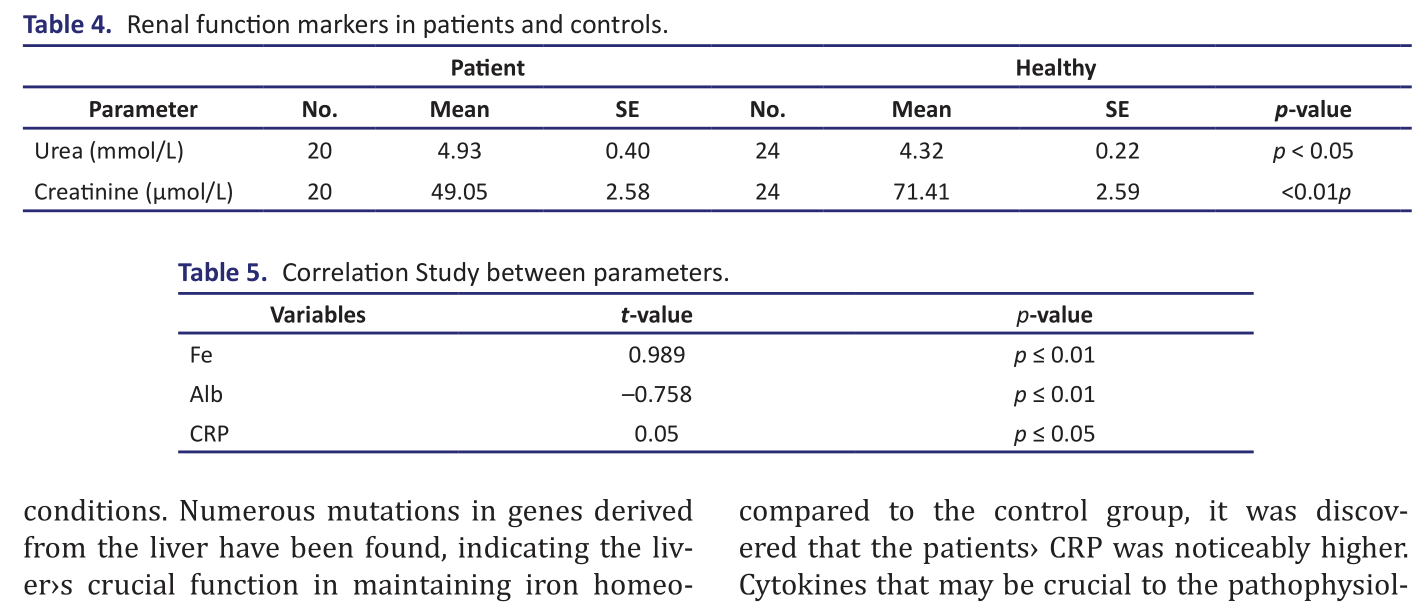
by the progression of liver damage. Together, these results suggest that changes in GGT, CRP, iron, and albumin reflect interconnected disease pathways, supporting their use as ancillary biomarkers in assessing the severity and progression of HBV.
Conclusion
The findings of this study indicate that hepatitis B infection is associated with significant alterations in liver enzymes, iron metabolism, and inflammatory markers. Elevated GGT activity, in particular, reflects both hepatic injury and systemic inflammation, supporting its role as a useful adjunct biomarker in monitoring disease progression.
References1. Mohammed HK. Study of physiological and some biochemical parameters in patients infected with chronic hepatitis-B virus. HIV Nurs 2022; 22(2):2039–44. 2. Gan T, Cheng N, Ding J, Cheng Z, Zhang D, Li H, et al. Effects of hepatitis B virus infection, alanine aminotransferase, aspartate aminotransferase and gammaglutamyl transferase on prediabetes and diabetes mellitus: a cohort study. Ann Hepatol 2020; 19(2):197–203; doi:10.1016/j.aohep.2019.08.008 3. Wu SJ, Lin YX, Ye H, Xiong XZ, Li FY, Cheng NS. Prognostic value of alkaline phosphatase, gammaglutamyl transpeptidase and lactate dehydrogenase in hepatocellular carcinoma patients treated with liver resection. Int J Surg 2016; 36:143–51; doi:10.1016/j.ijsu.2016.10.033 4. Gao YH, Wang JY, Liu PY, Sun J, Wang XM, Wu RH, et al. Iron metabolism disorders in patients with hepatitis Brelated liver diseases. World J Clin Cases 2018; 6(13):600–10; doi:10.12998/wjcc.v6.i13.600 5. Ban MA, Mushtak TS, Khalid FA. Comparative study of the molecular, biochemical, and other parameters in Iraqi hepatitis B patients. Drug Invention Today 2020; 14(6):870–6. 6. Zheng H, Yang F, Deng K, Wei J, Liu Z, Zheng YC, et al. Relationship between iron overload caused by abnormal hepcidin expression and liver disease: a review. Med (Baltimore) 2023; 102(11):e33225; doi:10.1097/MD.0000000000033225 7. Faruqi A, Zubair M, Mukkamalla SKR. Ironbinding capacity. In: StatPearls [Internet]. Treasure Island (FL): StatPearls Publishing; 2024. Available from: https://www.ncbi.nlm.nih.gov/books/NBK559119. 8. Toyokuni S, Kong Y, Cheng Z, Sato K, Hayashi S, Ito F, et al. Carcinogenesis as side effects of iron and oxygen utilization: from the unveiled truth toward ultimate bioengineering. Cancers (Basel) 2020; 12(11):3320; doi:10.3390/cancers12113320 9. Rahaoui M, Fakhrddine A, Elmqaddem O, Koulali H, Zazour A, Ismaili Z, et al. Elevated serum ferritin as a predictor of complications in cirrhotic patients: a retrospective cohort study. BMC Gastroenterol 2025; 25(1):761; doi:10.1186/s12876-025-04316-w 10. Khan K, Kumar DA, Sharma DH. Study of serum iron parameters in chronic liver disease. Int J Adv Biochem Res 2022; 6(1):74–8. 11. Anderson ER, Shah YM. Iron homeostasis in the liver. Compr Physiol 2013; 3(1):315–30; doi:10.1002/cphy.c120016 12. Mohsen R, Gayadh E, H. Alazzawi R, Adhiah A. Correlation of chronic viral hepatitis B and liver function tests. J Univ Anbar Pure Sci 2022; 16(1):9–12. 13. Du M, Zhang S, Xiao L, Xu Y, Liu P, Tang Y, et al. The relationship between serum bilirubin and elevated fibrotic indices among HBV carriers: a crosssectional study of a Chinese population. Int J Mol Sci 2016; 17(12):2057; doi:10.3390/ijms17122057 14. Thabut D, Massard J, Gangloff A, Carbonell N, Francoz C, Nguyen-Khac E, et al. Model for endstage liver disease score and systemic inflammatory response are major prognostic factors in patients with cirrhosis and acute functional renal failure. Hepatology 2007; 46(6):1872–82; doi:10.1002/hep.21920 15. Cazzaniga M, Dionigi E, Gobbo G, Fioretti A, Monti V, Salerno F. The systemic inflammatory response syndrome in cirrhotic patients: relationship with their inhospital outcome. J Hepatol 2009; 51(3):475–82; doi:10.1016/j.jhep.2009.04.017 16. Shawcross DL, Davies NA, Williams R, Jalan R. Systemic inflammatory response exacerbates the neuropsychological effects of induced hyperammonemia in cirrhosis. J Hepatol 2004; 40(2):247–54; doi:10.1016/j.jhep.2003.10.016 17. Zhu S, Waili Y, Qi X, Chen Y, Lou Y, Chen B. Serum Creactive protein predicts early mortality in hospitalized patients with HBVrelated decompensated cirrhosis. Med (Baltimore) 2017; 96(4):5988; doi:10.1097/MD.0000000000005988 18. Liu X, Han L, Bi S, Ding X, Sheng Q, Jiang Y, et al. Differential metabolites in cirrhotic patients with hepatitis B and muscle mass loss. Front Nutr 2023; 10:1068779; doi:10.3389/fnut.2023.1068779 19. Xing M, Gao M, Li J, Han P, Mei L, Zhao L. Characteristics of peripheral blood gammaglutamyl transferase in different liver diseases. Med (Baltimore) 2022; 101(1):e28443; doi:10.1097/MD.0000000000028443 20. Xia T, Ni J, Ni Y, Wu X, Du K, Wan X, et al. Serum iron status is associated with allcause mortality in metabolic dysfunctionassociated steatotic liver disease: a prospective, observational study. Front Endocrinol (Lausanne) 2024; 15:1454193; doi:10.3389/fendo.2024.1454193
| How to Cite this Article |
| Pubmed Style Saadun RR, Al-ameen S. Effect of hepatitis B infection on gamma glutamyltransferase and some biochemical variables in human. Arch Appl Sci. 2026; 1(2): 54-58. doi:10.5455/AAS.20260311083033 Web Style Saadun RR, Al-ameen S. Effect of hepatitis B infection on gamma glutamyltransferase and some biochemical variables in human. https://www.wisdomgale.com/aas//?mno=313564 [Access: June 27, 2026]. doi:10.5455/AAS.20260311083033 AMA (American Medical Association) Style Saadun RR, Al-ameen S. Effect of hepatitis B infection on gamma glutamyltransferase and some biochemical
variables in human. Arch Appl Sci. 2026; 1(2): 54-58. doi:10.5455/AAS.20260311083033 Vancouver/ICMJE Style Saadun RR, Al-ameen S. Effect of hepatitis B infection on gamma glutamyltransferase and some biochemical
variables in human. Arch Appl Sci. (2026), [cited June 27, 2026]; 1(2): 54-58. doi:10.5455/AAS.20260311083033 Harvard Style Saadun, R. R. & Al-ameen, . S. (2026) Effect of hepatitis B infection on gamma glutamyltransferase and some biochemical
variables in human. Arch Appl Sci, 1 (2), 54-58. doi:10.5455/AAS.20260311083033 Turabian Style Saadun, Rafad Rabeea, and Safaa Al-ameen. 2026. Effect of hepatitis B infection on gamma glutamyltransferase and some biochemical
variables in human. Archives of Applied Sciences, 1 (2), 54-58. doi:10.5455/AAS.20260311083033 Chicago Style Saadun, Rafad Rabeea, and Safaa Al-ameen. "Effect of hepatitis B infection on gamma glutamyltransferase and some biochemical
variables in human." Archives of Applied Sciences 1 (2026), 54-58. doi:10.5455/AAS.20260311083033 MLA (The Modern Language Association) Style Saadun, Rafad Rabeea, and Safaa Al-ameen. "Effect of hepatitis B infection on gamma glutamyltransferase and some biochemical
variables in human." Archives of Applied Sciences 1.2 (2026), 54-58. Print. doi:10.5455/AAS.20260311083033 APA (American Psychological Association) Style Saadun, R. R. & Al-ameen, . S. (2026) Effect of hepatitis B infection on gamma glutamyltransferase and some biochemical
variables in human. Archives of Applied Sciences, 1 (2), 54-58. doi:10.5455/AAS.20260311083033 |