

| Research Article Online Published: 24 Jul 2026 | ||||||||||||
Arch Appl Sci. 2026; 1(3): 59-71 Heavy metals adsorption efficiency of Desho grass derived activated carbon from municipal wastewater Jabir Danyaya Aliyu, Ibrahim Abubakar, Shehu Ibrahim.
| ||||||||||||



Introduction
Anthropogenic and industrial activities have escalated due to overpopulation and industrial expansion globally. Activities such as waste dumping, agricultural runoff, gold mining, and oil spills discharge toxic heavy metals, synthetic chemicals, plastic waste, and nutrient runoff that disrupt aquatic ecosystems. Domestic and industrial contaminants containing toxic heavy metals, organic, and inorganic substances are being discharged into surface water sources, causing environmental pollution. These pollutants cause adverse health effects and environmental disruptions. Heavy metals remain the major pollutants in surface and groundwater sources [1,2]. Exposure to toxic heavy metals causes adverse effects on aquatic life and human health, including tissue damage and chronic diseases [3]. Thus, wastewater from the water treatment plant must be effectively treated prior to distribution to the township for domestic consumption. Ineffective and insufficient wastewater treatment leads to the distribution of water containing contaminants for township use.Conventional methods for wastewater treatment are associated with several challenges, including ineffective removal of pollutants from wastewater [4–6], more energy utilization and waste generation in high amounts, leading to disruption of sustainable ecosystems and natural resources [7]. Hence, there is a need for safe and effective wastewater treatment methods. Aquatic plants have been documented with high potential for the removal of pollutants from wastewater. They exhibit a high capacity for absorbing, degrading, and transforming organic and inorganic pollutants from wastewater [8]. Phytoremediation is a technique that involves the use of plants for the remediation of wastewater. Researchers have concentrated on the use of phytoremediation in wastewater treatment due to its simplicity, high efficiency, effectiveness, and affordability compared with conventional treatment methods. However, adsorbents derived from plants are highly effective in wastewater treatment due to their availability and affordability in every intended area [9]. Desho grass (Pennisetum glaucifolium Trin.) is a perennial grass that belongs to the Poaceae family [10]. Desho grass originated from the southern region of Ethiopia and is widely available in tropical countries. The plant is a vital source of feed for animals in tropical regions [11,12]. It is also an important source of biomass and dry matter [13–15], indicating that the grass could be an excellent source of carbon. The plant has been used in the conservation of natural resources [16,17] and the preparation of silage and hay [10,11,18]. In Nigeria, the plant is locally called kyasuwa in Hausa and is abundantly found in several local areas where it serves as feedstock for animals. Although many grasses have been used in phytoremediation of polluted environments, there is no study reported on the phytoremediation potential of Desho grass. Yauri is a town surrounded by water and characterized by abundant vegetation, including Desho grass and Vetiver grass, which has been reported to have a high adsorption capacity against many pollutants. However, Desho grass exhibited various physicochemical properties due to its constituents, such as cellulose, lignin, and hemicellulose, and distinct functional groups like OH and COOH that enhance the pollutant’ adsorption capacity of plant materials. This study aimed to evaluate the heavy metal adsorption efficiency of Desho grass-derived activated carbon in wastewater from the Kebbi state water treatment plant.
Materials and Methods
Study site
This study was conducted in Birnin Kebbi, the Kebbi state metropolis in Nigeria. Birnin Kebbi is located on the Sokoto River at coordinates 12°27′13″N and 4°12′01″E [19]. According to the 2006 National census, Kebbi state had a total population of 3,238,628, with 366,200 estimated population in Birnin Kebbi in 2016 [19]. The state has a total of 21 Local Government Areas and four Emirates Councils, which include Gwandu, Argungu, Yauri, and Zuru. Domestic and industrial wastewater in Birnin Kebbi is discharged into the Niger and other nearby rivers, which are then sourced by the Kebbi state water board treatment Plant for the township after treatment.
Plant sample
A total of 150 fresh roots of Desho grass were collected from the moist site of the River Niger in Yauri Local Government Area, Kebbi state, Nigeria. The plant sample was collected in early January 2024 using a simple random sampling technique. The plant samples were identified by a Herbarium Officer at the Herbarium Unit, Department of Plant Science, Usmanu Danfodiyo University, Sokoto. The voucher number (UDUH/ANS/1092) was deposited in the herbarium for record and reference.
Wastewater sample
The wastewater sample was collected from Kebbi state water board treatment plant in mid-February 2024, 2024 after preparation and physicochemical analyses of the plant sample. The wastewater sample was collected at four different points in a sterilized plastic containers and stored at 4℃ in the Laboratory Unit, Department of Science Technology, Waziri Umaru Federal Polytechnic, Birnin Kebbi, Nigeria, before the experiments.
Production of activated carbon
The roots of the plant were thoroughly washed with distilled water, dried at 60°C in an oven for 48 hours, and then ground to a fine powder using an electrical grinder. The activated carbon was prepared using the phosphoric acid (H3PO4) chemical activation method as described by Pam et al. [20]. The powder sample was treated with 85% conc. H3PO4 with intermittent stirring for 30 minutes. The carbon was dried in an oven at 110°C for 24 hours. The dried sample was heated in a furnace at 700°C for 2 hours to activate the obtained carbon. The activated carbon residue was washed several times with distilled water, filtered, and then dried in an oven at 110°C for 24 hours.
Analysis of physicochemical properties of the activated carbon
Determination of surface area
The surface area of the activated carbon was determined using a low-temperature argon adsorption method based on the adsorption of iodine gas from the potassium iodide (KI) solution. The sample was heated at 180°C for 24 hours, and the surface area was obtained by calculating the iodine adsorption number.
Determination of bulk density
A method of Ahmedna et al. [21] was employed for the estimation of the bulk density of the activated carbon. An empty measuring cylinder was weighed and then filled with the activated carbon sample to the 10 ml mark. The cylinder containing the sample was weighed, and the mass of the sample was obtained by subtracting the weight of the empty cylinder from that of the cylinder containing the sample. The bulk density of the activated carbon was obtained using the formula below:

Determination of pore volume and porosity
The pore volume and porosity of the activated carbon were evaluated using the liquid saturation method as described by Ekpete et al. [22]. The activated carbon sample was transferred into a measuring cylinder to the 20 ml mark, followed by the addition of distilled water up to the 20 ml mark. The volume of distilled water that filled up was recorded as the pore volume. The porosity was obtained using the following formula:

Determination of pH and electrical conductivity
The pH and electrical conductivity of the activated carbon were determined using the methods of ASTM [23] and Ahmedna et al. [21], respectively. One gram of the activated carbon was dissolved in 100 ml of distilled water, followed by shaking at 200 rpm for 20 minutes. The pH of the suspension was measured using a pH meter and a conductivity meter, respectively.
Determination of moisture content
The moisture content of the activated carbon was analyzed using the oven-drying method as described by Aliyu et al. [24] and Ekpete et al. [22]. An empty, clean, and dried crucible was weighed (W1) and heated. The activated carbon sample (1 g) (W2) was placed in the weighed preheated crucible. The crucible with the sample was heated in an oven at 105 °C for 4 hours. The sample was allowed to cool and then weighed (W3). The moisture content was obtained using the following equation:

Determination of ash content
The ash content of the activated carbon was determined using the method of Aliyu et al. [25] and Ekpete et al. [22]. An empty crucible was weighed (W1) and heated in an oven at a temperature of 105℃ for 60 minutes. The activated carbon (1 g) (W2) was placed in a weighed preheated crucible. The crucible containing the activated carbon was heated in a muffle furnace at 600℃ for 1 hour. The crucible was cooled in a desiccator at room temperature and then weighed (W3). The ash content was obtained using the following equation:

Fourier transform infrared (FT–IR) spectroscopic analysis The FT–IR spectroscopic technique was employed for the determination of essential functional groups present in the grass-derived activated carbon. The FT–IR spectrophotometer (Agilent Technologies, Happ-Genzel) was used for the detection of band peaks at 650–4,000 cm-1 wavenumber and 4 cm−1 resolution. A drop of the sample was introduced between two potassium bromide (KBr) cell plates.
A thin film developed between the plates that enables the flow of light through the sample was observed. The plates were taken to the sample holder in the standard compartment for the generation of spectra.
Batch adsorption study
Batch adsorption capacity test of the activated carbon was conducted according to the method described by the American Public Health Association [26] and Aliyu et al. [24]. The initial concentration of heavy metals in the wastewater sample was determined using the atomic absorption spectroscopic technique. Five hundred miles of the wastewater was transferred into a conical flask and then treated with 5 g of the activated carbon. The conical flask was kept on shaking using a magnetic stirrer at 100 rpm for 1 hour. The mixture was filtered using Whatman filter paper, and the liquid phase was separated. The final (equilibrium) concentration of the heavy metals in the liquid phase was determined. For each heavy metal, the difference between the initial and final (equilibrium) concentrations was obtained, and the amount of each heavy metal adsorbed was calculated using the equation below:
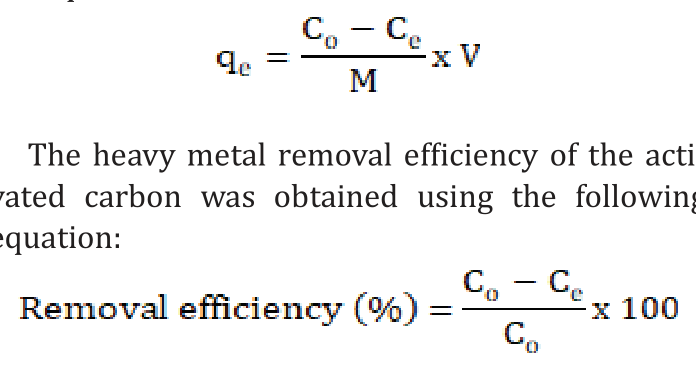
The heavy metal removal efficiency of the activated carbon was obtained using the following equation:

Where: qe=amount of heavy metal adsorbed in mg/g at equilibrium, Co=initial concentration of the heavy metal in mg/l, Ce=equilibrium or final concentration in mg/l, M=mass of the activated carbon in grams, and V=volume of wastewater containing the heavy metals in litres.
Analysis of the mechanism of heavy metal adsorption efficiency Freundlich and Langmuir adsorption isotherms were employed for evaluating the mechanism of heavy metals adsorption performance of the grass-derived activated carbon. The data obtained from the batch adsorption experiment were analyzed and plotted in accordance with the Freundlich and Langmuir isotherm equations using Microsoft Excel sheets. The linear Freundlich equation is as follows:
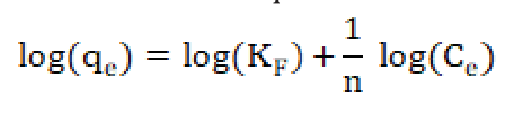
Where: Ce=equilibrium concentration of sorbate (mg/l), qe=amount of sorbate adsorbed at equilibrium (mg/g), KF=Freundlich constant indicating adsorption capacity, and n=Freundlich exponent [27]. The linear Langmuir equation is shown below:
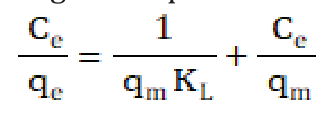
Where: Ce=concentration of sorbate at equilibrium (mg/l), qe=amount of metal ions adsorbed at equilibrium (mg/g), qm=maximum amount of metal ions that can be adsorbed (mg/g), and KL=Langmuir constant (l/mg) [27].
Statistical analysis
The experimental data were analyzed using the Statistical Package for Social Sciences. The significance level of heavy metal adsorption was evaluated by one-way analysis of variance using Dunnett’s test at a 95% confidence level. The p-values less than 0.05 were considered statistically significant.
Results
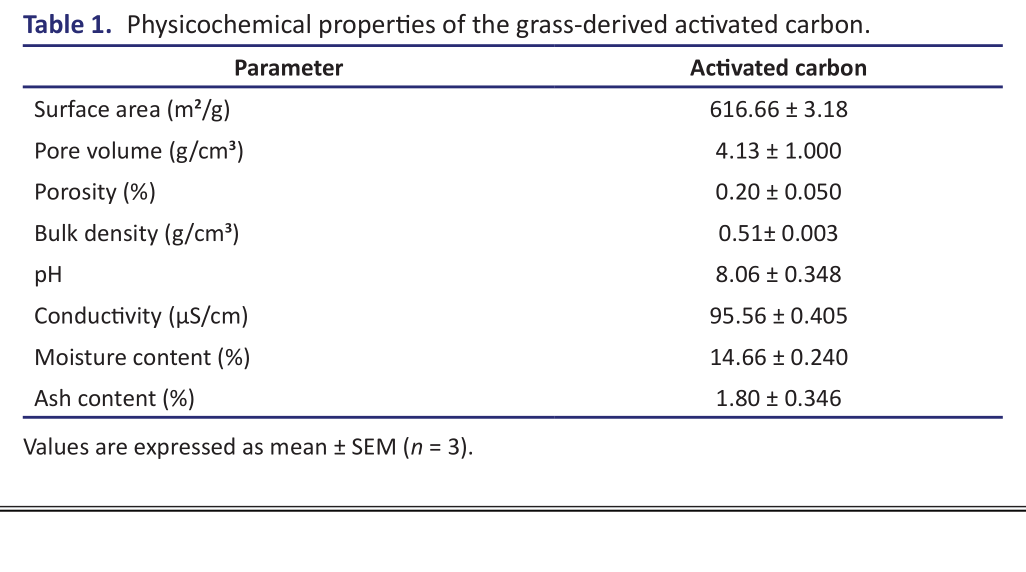
Physicochemical properties of the grass-derived activated carbon Table 1 shows the physicochemical properties of the activated carbon produced from the root sample of Desho grass. The activated carbon exhibiteda significantly larger (p < 0.05) surface area, pore volume, pH, conductivity, and moisture content up to 616.66 m2/g, 4.13 g/cm3, 8.06, 95.56 µS/cm, and 14.66%, respectively. However, low porosity (0.20%), ash content (1.80%), and bulk density (0.51 g/cm3) were found in the activated carbon (Table 1).
FT–IR analysis of the grass-derived activated carbon The FT–IR spectrum of the grass-derived activated carbon is shown in Figure 1. Several peaks were displayed from the spectrum at different wavenumbers ranging from 3,366–802 cm−1. The bands on the peaks indicated different functional groups present in the activated carbon (Fig. 1). Table 2 shows the functional groups present in the activated carbon with specific absorption intensities. From the FT–IR spectrum, the maximum peaks (88.39%, 86.63%, 85.51%, 83.91%, 83.65%, 82.80%, and 80.85%) were obtained at 2,847.7 cm−1, 1,315.8 cm−1, 1,377.3 cm−1, 1,241.2 cm−1, 2, 926.0 cm−1, 1,427.6 cm−1, and 1,205.8 cm−1, respectively. The spectrum also showed higher peaks at 1,645.6 cm−1 (78.46%), 918.8 cm−1 (77.51%), 1,105.2 cm−1 (73.93%), 1,159.2 cm−1 (73.42%), 868.5 cm−1 (73.22%), 801.4 cm−1 (67.47%), 3,205.5 cm−1 (62.63%), 3,365.8 cm−1 (62.18%), and 3,276.3 cm−1 (61.68%). The band peaks (2,847.7 cm−1 and 2,926.0 cm−1) indicated strong C–H stretching. The bands indicating strong vibration of C–C were observed at 1,315.8 cm−1, 1,377.3 cm−1, and 1,427.6 cm−1. The bands observed at 918.8 cm−1, 868.5 cm−1, and 801.4 cm−1 could indicate of strong C=C stretching. Strong vibration of C=O was noticed at 1,645.6 cm−1 while strong O−H
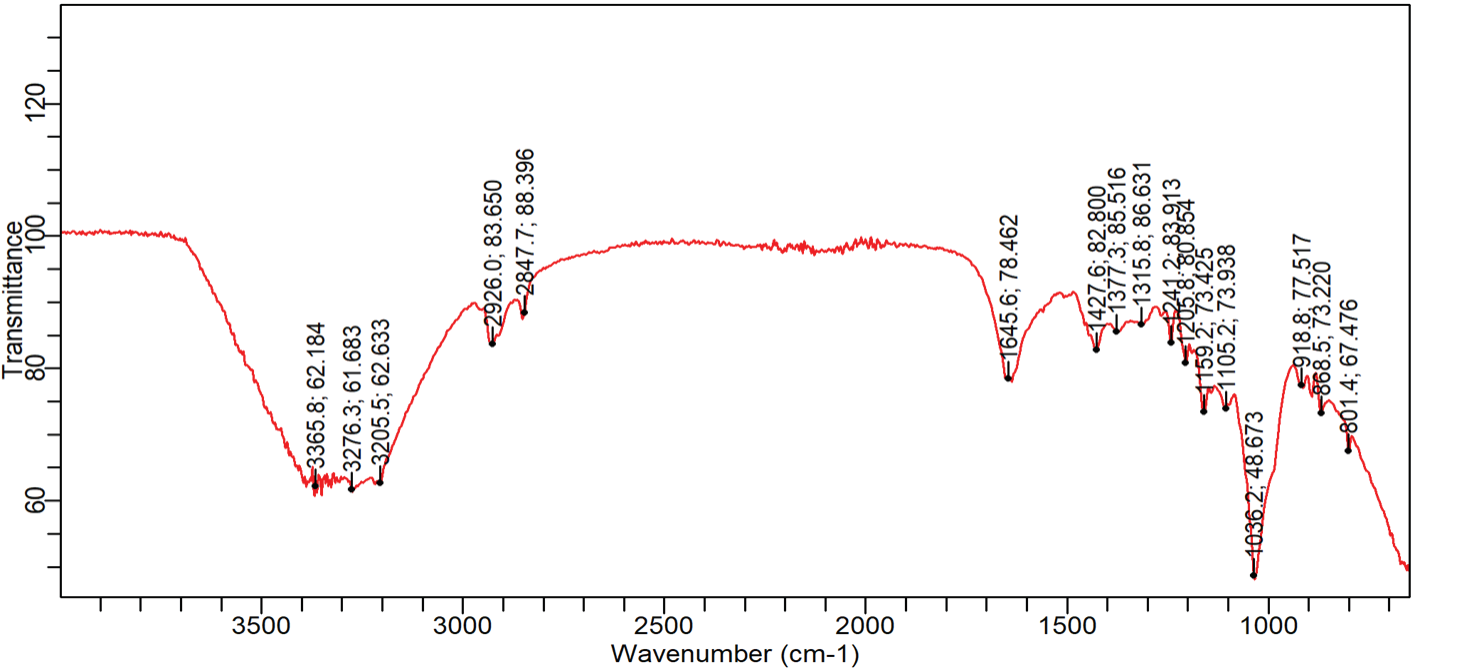
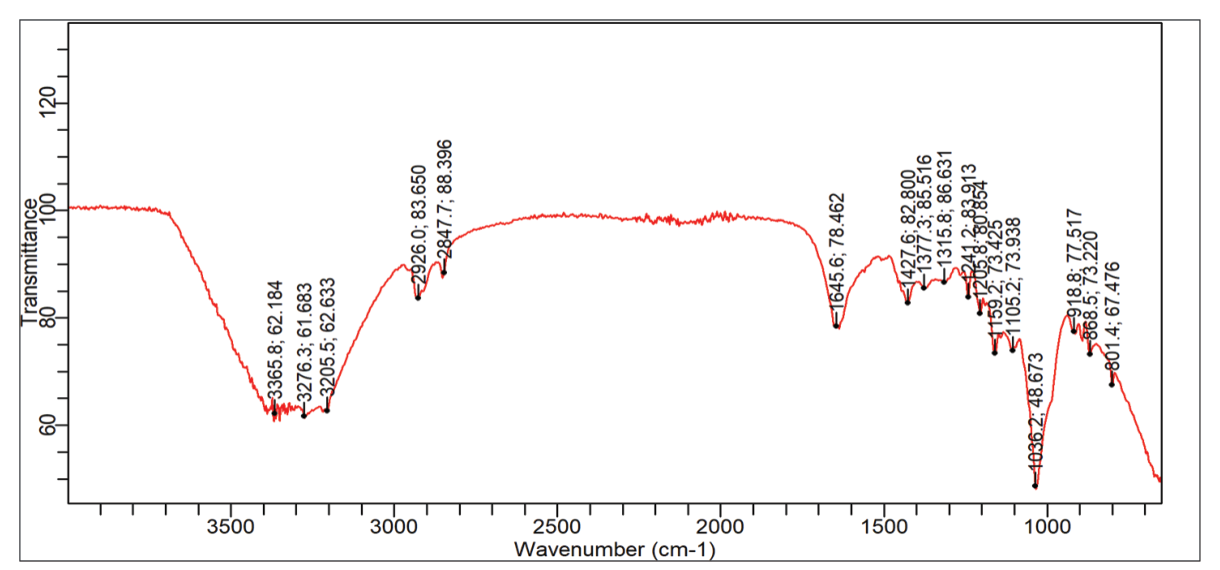
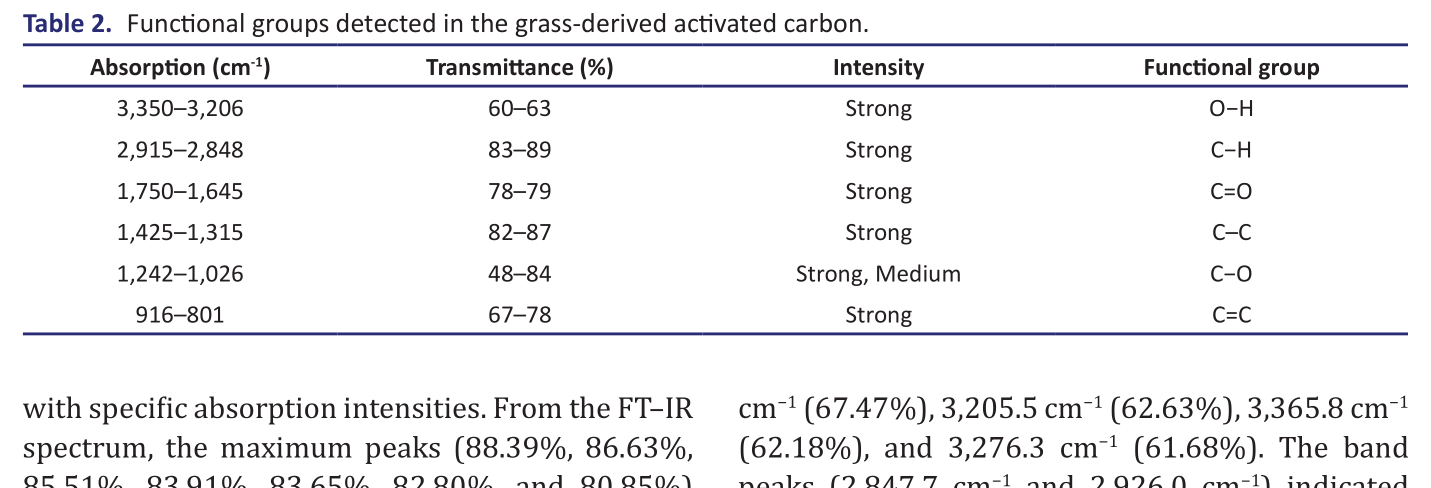
stretching was detected at 3,205.5 cm−1, 3,365.8 cm−1, and 3,276.3 cm−1. Strong C−O stretching was detected at 1,241.2 cm−1, 1,205.8 cm−1, 1,105.2 cm−1 and 1,159.2 cm−1 while medium vibration of C−O was found at 1,036.2 cm−1 (Table 2).
Heavy metal content of the wastewater
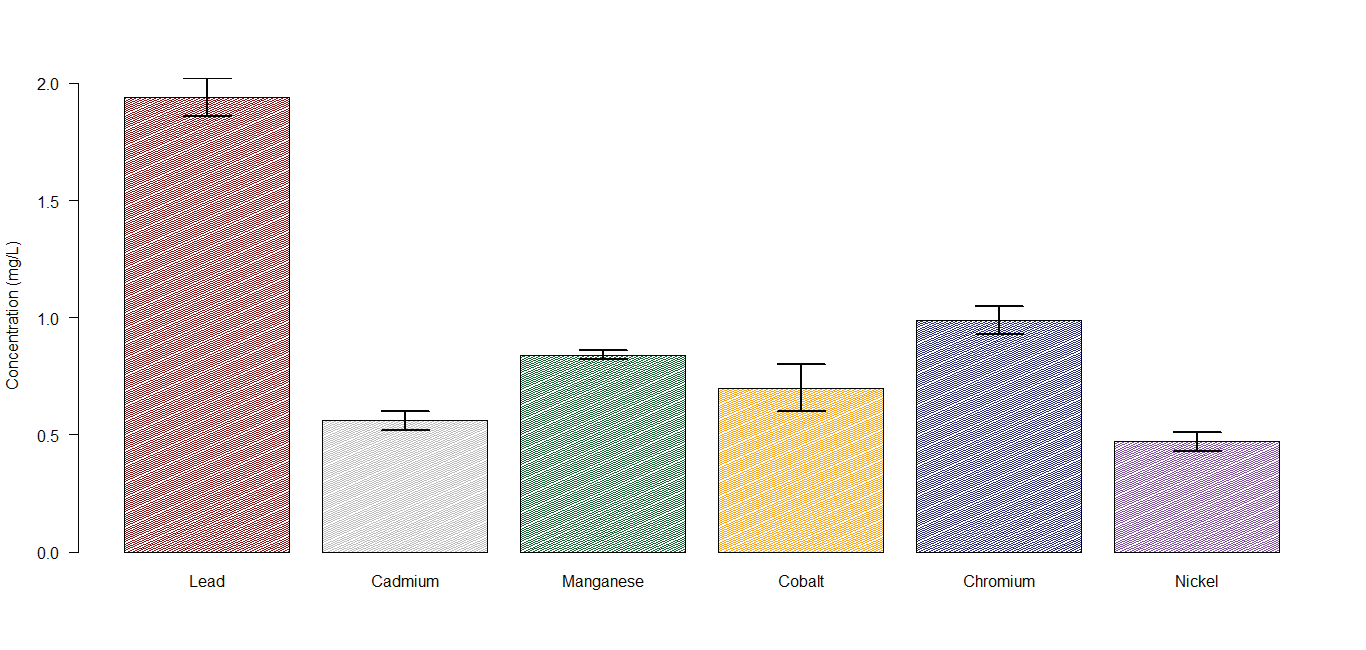
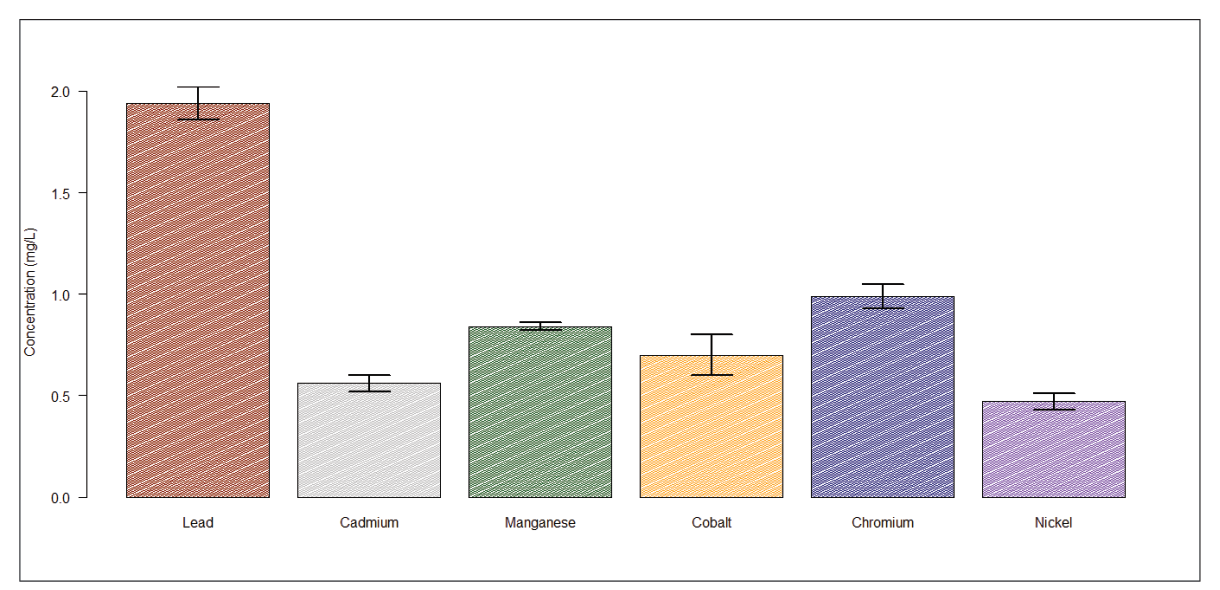
Figure 2 presents the levels of lead, cadmium, manganese, cobalt, chromium, and nickel in the wastewater sample. The wastewater sample exhibited high significant (p < 0.05) level of lead, cadmium, manganese, cobalt, chromium, and nickel up to 1.94, 0.56, 0.84, 0.70, 0.99, and 0.47 mg/l, respectively (Fig. 2).
Heavy metal removal performance of the grassderived activated carbon The percentage removal efficiency of the grass-derived activated carbon for lead, cadmium, manganese, cobalt, chromium, and nickel from the wastewater sample is presented in Figure 3. The activated carbon displayed high significant (p <
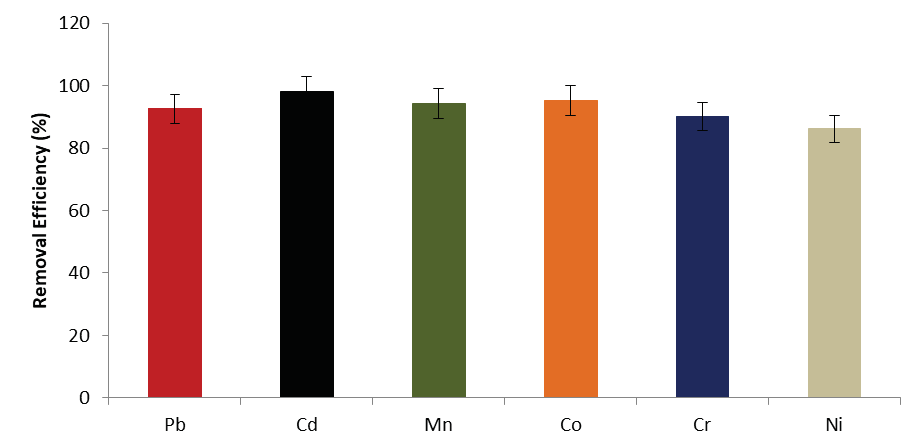
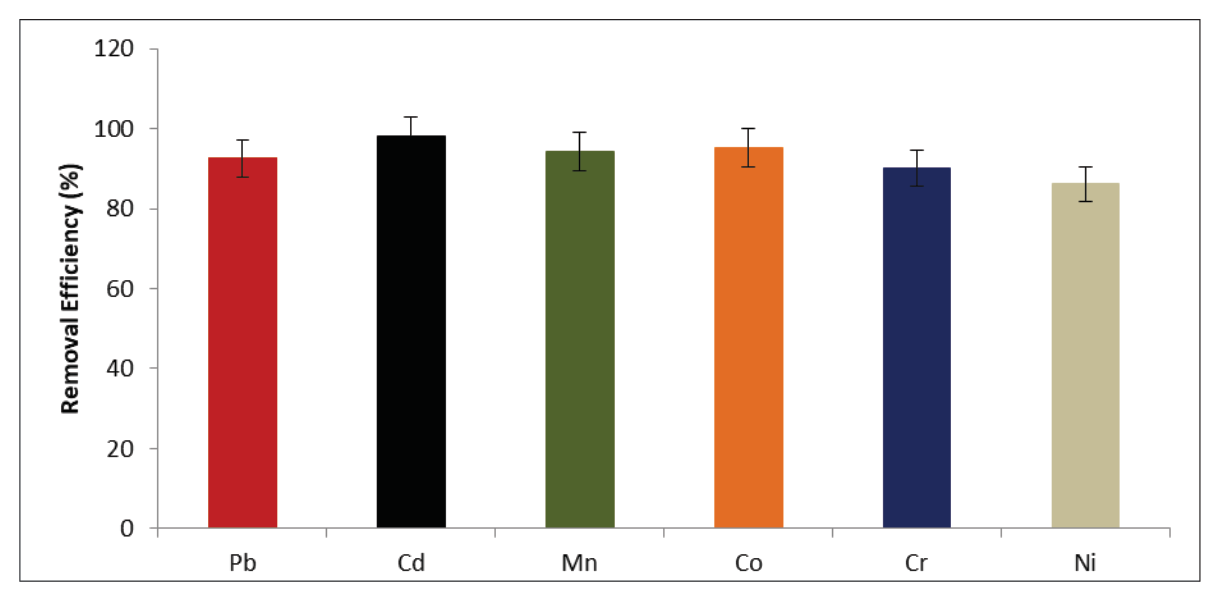
0.05) percentage removal efficiencies for cadmium (98.05%), cobalt (95.17%), manganese (94.20%), lead (92.64%), chromium (90.00%), and nickel (86.10%) from the wastewater sample (Fig. 3).
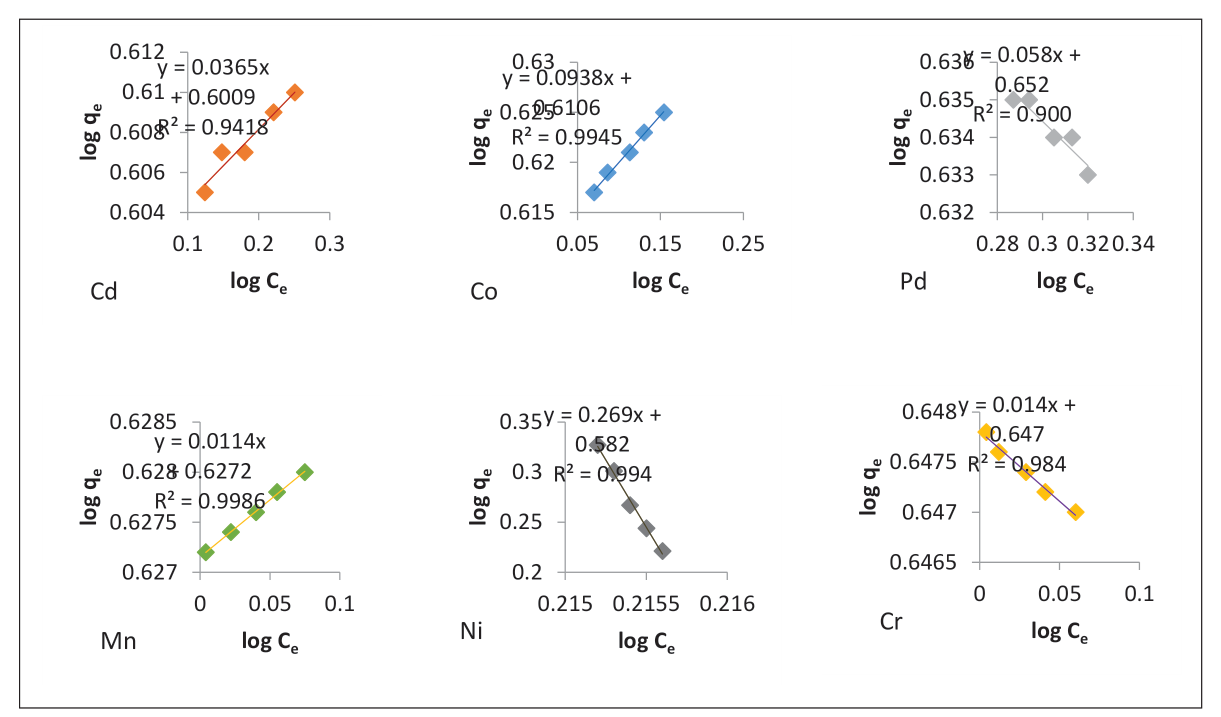
Mechanism of heavy metals adsorption efficiency of the grass-derived activated carbon The linear plots of the Freundlich and Langmuir adsorption isotherms for the detected heavy metals are shown in Figures 4 and 5, respectively. The constant parameters of the Freundlich and Langmuir adsorption isotherms for the detected heavy metals are presented in Table 3. The Freundlich isotherm plots showed that the Freundlich constant (n) value (90.909) for manganese is significantly (p < 0.05) higher compared with the other detected metals. The adsorption capacity (KF) of the activated carbon for lead (4.487) is higher, followed by chromium (4.436), manganese (4.236), cobalt (4.073), cadmium (3.981), and nickel (3.819). The Langmuir constant (KL) value (105.263) for manganese is significantly (p < 0.05) higher than that of displayed by the other heavy metals. Cobalt displayed a high value (0.261) of monolayer adsorption capacity (KF) compared with the other heavy metals. However, it was observed that all the heavy metals demonstrated high regression coefficient (R²) values for the Langmuir adsorption isotherm compared with those exhibited by the metals for the Freundlich adsorption isotherm (Table 3).
Discussion
This finding revealed that the wastewater sample contained high amounts of lead, cadmium, manganese, cobalt, chromium, and nickel. Heavy metals have been documented with many health adverse effects, such as neurological disorders, influencing fetal development, carcinogenic effects, and disruption of the immune system [28,29]. In this research, the H3PO4 activation method was used for the production of activated carbon from the Desho grass roots sample. H3PO4 has been documented as a high-performance activator for the activation of carbon from different biomasses. H3PO4 has been used for the activation of carbon in many different plant materials [30]. The method is characterized by low temperature, inhibition of tar formation, and enhancement of the high surface area and porous structure of carbon materials [31]. Moreover, the H3PO4 activation method has simple recycling and minimizes environmental impact [32]. Similar findings reported a high surface area of 2,806 m2/g paulownia wood-derived carbon material activated by the H3PO4 method [33]. Relevant research showed that H3PO4activated carbon displayed high adsorption capacities for different contaminants [34].
The result of this study showed that activated carbon derived from the roots of Desho grass demonstrated high significant removal capacity for Pb, Cd, Mn, Co, Cr, and Ni. Activated carbon is an effective adsorbent used for the removal of pollutants from wastewater [35]. Plant-derived activated carbon exhibits high capacity for adsorption of different wastewater pollutants, including toxic heavy metals [36]. The result of this work is in agreement with the results of a similar study, which showed that plant species in the families Gramineae, Pontederiaceae, Ceratophyllaceae, Typhaceae, and Haloragaceae exhibited high adsorption capacity for heavy metals [37]. A relevant study by Wani et al. [38] indicated that heavy metals from contaminated water were significantly adsorbed by aquatic plants. Findings of similar studies on Vetiver grass showed that the grass demonstrated significant removal efficiencies for pollutants from aquatic environments [39,40]. The present finding is also in line with the findings of similar research, which revealed that Ludwigia stolonifera displayed highly significant performance for adsorption of heavy metals, including Pb, Cd, and Cr from wastewater [41].Activated carbon is an adsorbent characterized by interior area, pore structure, high adsorption capacity, and surface reactivity [42]. Absorption capacity of carbon-based adsorbents for heavy metals is determined by its surface characteristics, such as pore structure and size [43]. In the present study, the Desho grass-derived activated carbon displayed a high value of surface area, pore volume, pH, and
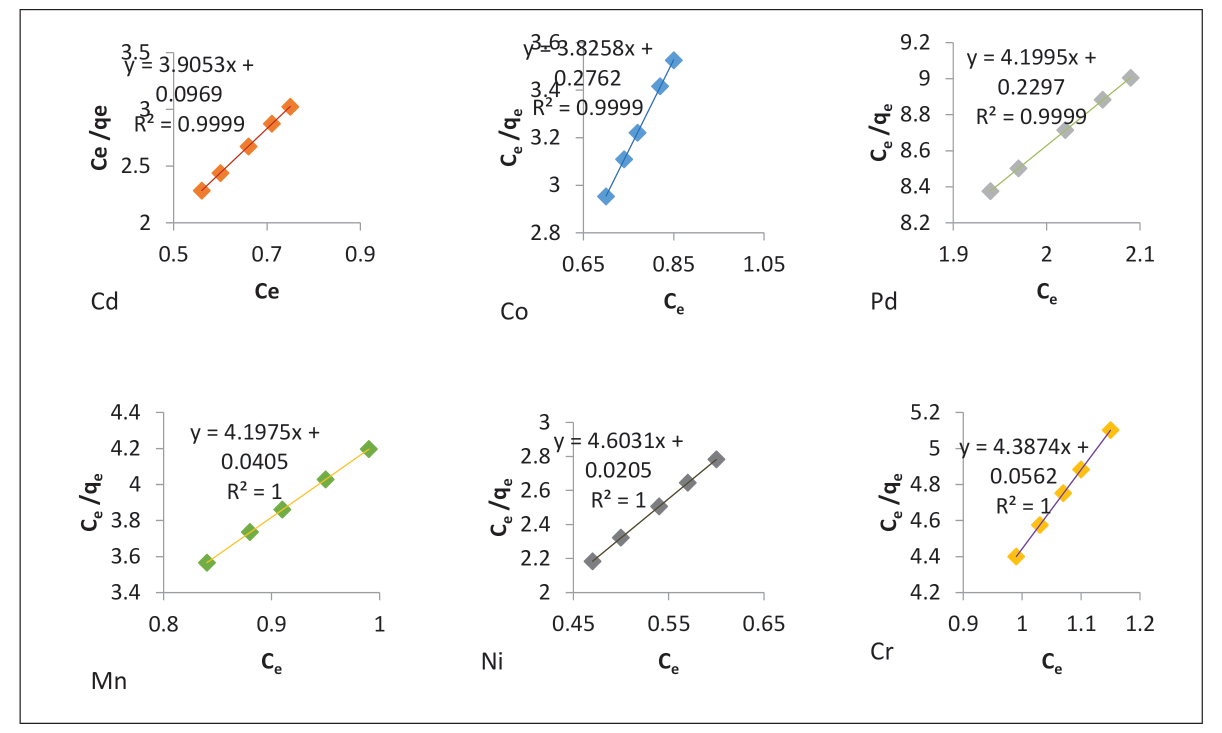
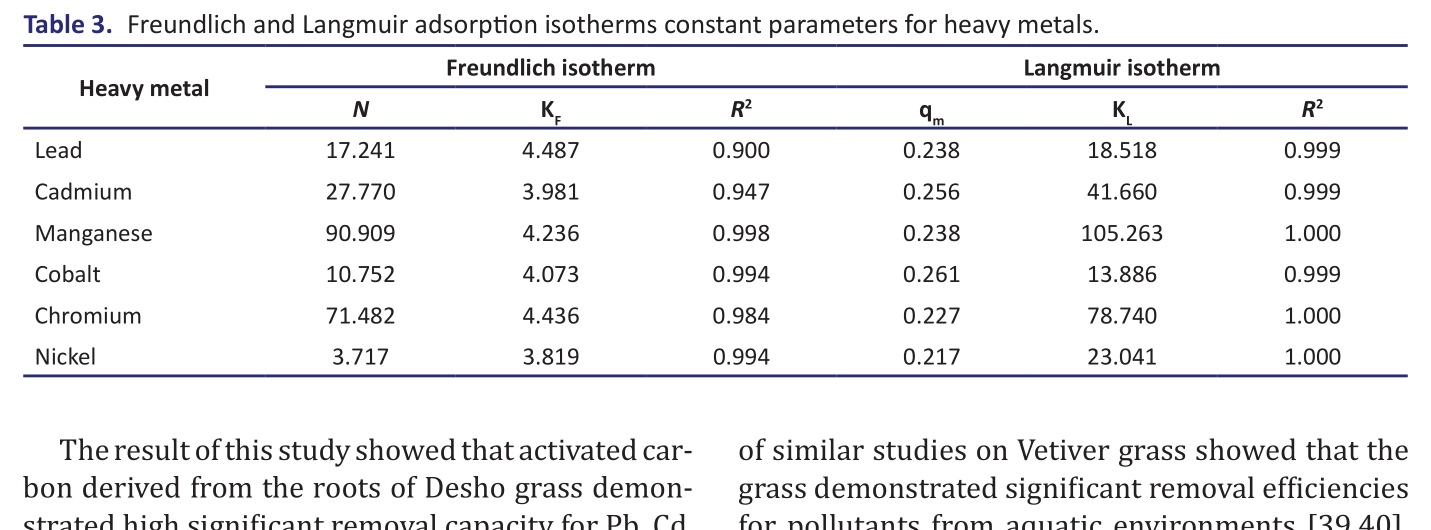
conductivity, coupled with a low value of porosity, bulk density, and ash content. Larger surface area yields more active sites for adsorption, leading to enhanced adsorption capacity for the removal of heavy metals [44]. The larger the surface area of the adsorbent, the more adsorption sites its surface has and the higher its adsorption capacity. Larger surface area enhances adsorption performance by promoting the interface for adsorbent–adsorbate interactions [45]. Similar studies showed that activated carbon with a larger surface area displayed high absorption capacity for different pollutants from wastewater [46].Larger pore volume enhances the adsorption capacity of the adsorbent for pollutants. It has been reported that the high binding capacity of the adsorbent was due to its surface characteristics, such as larger pore volume [47]. The high pH value of the activated carbon observed in the current study implies a more alkaline nature of the activated carbon. The high electrical conductivity of the activated carbon could be due to the ease in inter-particle movement of electrons, which is mainly enhanced by the low porosity of the adsorbent [48,49]. Low porosity and bulk density of the adsorbent are indicators of its high adsorption capacity [50]. The observed ash content of the activated carbon was within the reported range of 1%–20% values from other grasses [51]. High ash content of adsorbent lowers its adsorption capacity and subsequently its pollutants removal efficiency [52]. Low ash content of adsorbent increases its effective pore volume, which enhances its surface area, leading to an increase in its adsorption capacity for various pollutants [52].In the current study, the FT–IR spectrum displayed many band peaks representing C–C, C–H, C=O, O−H, and C−O stretching at a wave number between 3,350 and 801 cm−1. The presence of functional groups on the surface of the adsorbent significantly influences its adsorption capacity [53]. It has been documented that functional groups such as hydroxyl (OH), carboxyl (-COOH), or amine (-NH2) groups present on the adsorbent surface can improve the binding of the adsorbent to pollutants, thereby enhancing the adsorption process [54–46]. Study showed that functional groups, including amino, carboxyl, hydroxyl, and methyl groups, enhance adsorbents’ capacity and selectivity for specific pollutants [57,58]. The adsorption mechanism determines how the adsorbent interacts with different adsorbates, like heavy metals and dyes. It is used to evaluate the application potential of adsorbents in wastewater treatment. Isotherm models describe the relationship between the amount of pollutant adsorbed by adsorbent and the amount remaining in a solution at equilibrium state [59,60]. The present finding revealed that lead, cadmium, manganese, cobalt, chromium, and nickel displayed higher regression coefficient (R²) values for the Langmuir isotherm than the Freundlich isotherm model. Hence, the experimental equilibrium data for the Pb, Cd, Mn, Co, Cr, and Ni were best fitted to the Langmuir isotherm model rather than to the Freundlich isotherm model. The result of this study is in agreement with the result of a similar study by Lalhruaitluanga et al. [61], who found that adsorption of Pb2+ in solution by the Melocanna bacciferaderived activated carbon was best fitted to the Langmuir isotherm model. This finding also agrees with the result of a similar study, which showed that experimental data for the adsorption of Pb2+ and Cd2+ by biosorbents derived from dragon fruit peel, rambutan peel, and passion fruit peel were best fitted to the Langmuir isotherm [62]. Langmuir isotherm constant parameters are used to describe the adsorbate–adsorbent relationships, surface properties, and adsorption mechanism [63]. The value of KL is a major criterion in selecting a biosorbent for wastewater treatment [27]. KL value is used to determine the interaction affinity between adsorbate and adsorbent materials [64]. Low KL value indicates low surface energy in the adsorption process and low interaction between metal ions and biosorbent [65]. Langmuir adsorption isotherm implies a monolayer adsorption mechanism on a uniform (homogeneous) surface layer [66,67]. Therefore, the Desho grass-derived activated carbon adsorbed lead, cadmium, manganese, cobalt, chromium, and nickel from the wastewater sample on a uniform surface layer.
Conclusion
The wastewater from the Kebbi state water treatment plant displayed high amounts of Pb, Cd, Mn, Co, Cr, and Ni. The Desho grass-derived activated carbon exhibited high adsorption capacity for Pb, Cd, Mn, Co, Cr, and Ni from the Kebbi water treatment plant wastewater. The high adsorption efficiency of the activated carbon could be attributed to its physicochemical characteristics and the presence of certain functional groups. The batch adsorption experimental data for Pb, Cd, Mn, Co, Cr, and Ni were best fitted to the Langmuir adsorption isotherm model, implying a monolayer adsorption mechanism on a uniform surface.
Acknowledgment
Sincere appreciation to the staff of Chemistry/Biochemistry Laboratory, Waziri Umaru Federal Polytechnic, Birnin Kebbi, Nigeria, for the equipment and technical support.
Conflict of interest
The authors declare no competing interests.
Funding
This study did not receive a grant from any organization or institution. All the expenses were covered by the authors.
Ethical approval
This study does not involve human participants or animal models. Thus, ethical consideration is not required.
Authors contribution
J. D. Aliyu designed the study and conducted the experiments with the assistance of I. Abubakar and S. Ibrahim. Data analysis was performed by S. Ibrahim. I. Abubakar wrote the original draft of the manuscript. All the authors revised the original draft of the manuscript.
AI declaration statement
No AI was used.
References
1. Saravanan A, Kumar PS, Govarthanan M, George CS, Vaishnavi S, Moulishwaran B, et al. Adsorption characteristics of magnetic nanoparticles coated mixed fungal biomass for toxic Cr(VI) ions in aquatic environment. Chemosphere 2021; 267:129226; doi:10.1016/j.chemosphere.2020.129226
2. Varghese AG, Paul SA, Latha MS. Remediation of heavy metals and dyes from wastewater using cel-lulose-based adsorbents. Environ Chem Lett 2019; 17:867–77; doi:10.1007/s10311-018-00843-z
3. Sun Y, Zhou S, Sun W, Zhu S, Zheng H. Flocculation activity and evaluation of chitosan-based floccu-lant CMCTS-gP(AM-CA) for heavy metal removal. Separat Purification Technol 2020; 241:116737; doi:10.1016/j.seppur.2020.116737
4. Budania R, Dangayach S. A comprehensive review on permeable reactive barrier for the remediation of groundwater contamination. J Environ Manage 2023; 332:117343; doi:10.1016/j.jenvman.2023.117343
5. Ettahiri Y, Bouargane B, Fritah K, Akhsassi B, P´erez-Villarejo L, Aziz A, et al. A state-of-the-art review of recent advances in porous geopoly-mer: applications in adsorption of inorganic and organic contaminants in water. Construction Building Mater 2023; 395:132269; doi:10.1016/j.conbuildmat.2023.132269
6. Bhagat J, Nishimura N, Shimada Y. Toxicological interactions of microplastics/nanoplastics and environmental contaminants: current knowledge and future perspectives. J Hazardous Mater 2021; 405:123913; doi:10.1016/j.jhazmat.2020.123913
7. John KI, Obu M, Adeleye AT, Ebiekpe V, Adenle AA, Chi H, et al. Oxygen deficiency induction and boundary layer modulation for improved adsorption performance of titania nanoparticles. Chem Paper 2022; 76(6):3829–40; doi:10.1007/s11696-022-02126-y
8. Chen XW, Wong JTF, Wang JJ, Wong MH. Vetiver grass-microbe interactions for soil remediation. Crit Rev Environ Sci Technol 2021; 51:897–938; doi:10.1080/10643389.2020.1738193
9. Jellali S, Khiari B, Usman M, Hamdi H, Charabi Y, Jeguirim M. Sludge-derived biochars: a review on the influence of synthesis conditions on pol-lutants removal efficiency from wastewaters. Renew Sustain Energy Rev 2021; 144:111068; doi:10.1016/j.rser.2021.111068
10. Mengistu S, Nurfeta A, Tolera A, Bezabih M, Adie A, Wolde-meskel E, et al. Livestock production chal-lenges and improved forage production efforts in the Damot Gale District of Wolaita Zone, Ethiopia. Adv Agric 2021; (2):1–10; doi:10.1155/2021/5553659
11. Abera M, Tolera A, Nurfeta A, Geleti D. Production, utilization and constraints of desho grass (Pennisetum glaucifolium) as livestock feed in Ethiopia. J Anim Feed Res 2021; 11(6):196–205; doi:10.51227/OJAFR.2021.29
12. Serekebrhan T, Getachew A, Yosef M, Getnet A. Assessment of farmers’ perception towards pro-duction and utilization of improved forages for dairy cattle feeding in the central highlands of Ethiopia. East Afr J Vet Anim Sci 2018; 2(1):45–56.
13. Hidosa D, Belachew B, Kibiret S. Evaluation of Desho (Pennisetum pedicellatum) grass varieties for dry matter yield and chemical composition in South Omo Zone, South Western Ethiopia. Agricult Res Technol 2020; 25(2):1–8; doi:10.19080/ARTOAJ.2020.25.556294
14. Wana D, Husen N, Abate D. Evaluation of Desho (Pennisetum pedicellatum Trin) grasses for dry matter yield and nutritive quality for the mid Rift Valley of Oromia at Adami Tulu agricultural research center. J Sci Innov Res 2021; 10(2):49–52; doi:10.31254/jsir.2021.10204
15. Asmare B, Demeke S, Tolemariam T, Tegegne F, Haile A, Wamatu J. Effects of altitude and harvest-ing dates on morphological characteristics, yield and nutritive value of Desho grass (Pennisetum ped-icellatum Trin.) in Ethiopia. Agric Nat Resour 2017; 51(3):148–53; doi:10.1016/j.anres.2016.11.001
16. Keba W. Determination of optimum level of seeding rate of silver leaf desmodium intercropping with desho grass for dry matter yield and yield-related components in western Ethiopia. Adv Agric 2023; 1(1):6647745; doi:10.1155/2023/6647745
17. Fuglie K, Peters M, Burkart S. The extent and eco-nomic significance of cultivated forage crops in developing countries. Front Sustain Food Syst 2021; 5:401; doi:10.3389/fsufs.2021.712136
18. Seid W, Tsega W, Demisse E. Growth performance of arsi-bale sheep fed desho grass (Pennisetum pedicellatum) hay supplemented with different concentrate levels. Ethiopian J Agricult Sci 2021; 31(4):89–98.
19. Traditional States of Nigeria (TSN). 2010. Available via http://www.worldstatesmen.org/Nigeria_native.html.WorldStatesmen.org20. Pam AA, Abdullah AH, Tan YP, Zainal Z. Physicochemical properties of porous activated carbon prepared from palm kernel shell through a low-cost activation protocol. South Afr J Sci 2022; 118(9/10):13497.
21. Ahmedna M, Johns MM, Clarke SJ, Marshall WE, Rao RM. Potential of agricultural by-product-based acti-vated carbons for use in raw sugar decolourisation. J Sci Food Agric 1997; 75(1):117–24; doi:10.1002/(SICI)1097-0010(199709)75:1
22. Ekpete OA, Marcus AC, Osi V. Preparation and char-acterization of activated carbon obtained from plantain (Musa paradisiaca) fruit stem. J Chem 2017; 17:e8635615; doi:10.1155/2017/8635615
23. ASTM, Standard Test Method for pH of Activated Carbon, ASTM International, 1999 [Online]. Available via https://worldwidestandard.net/wp-content/uploads/ 2019/07/D-3838.pdf24. Aliyu JD, Abubakar I, Abdullahi Z, Musa S. Application of activated carbon derived from Typha domingensis in industrial wastewater treatment. J Bioresources Environ Sci 2026; 2026: doi:10.61435/jbes.2026.20003
25. Aliyu JD, Abubakar I, Sahabi M, Abdullahi Z, Zubairu A, Sahabi AU, et al. Phytochemicals, nutri-ents and anti-nutrients composition of the aque-ous roots and stem extracts of Typha domingensis. Natural Appl Sci J 2025; 8(1):1–7; doi:10.38061/idunas.1582691
26. American Public Health Association. Standard methods for the examination of water and waste-water. 23rd edition, Washington, DC, APHA, 2018.
27. Ho YS, Chiang TH, Hsueh YM. Removal of basic dye from aqueous solution using tree fern as a biosorbent. Process Biochem 2005; 40(1):119–24; doi:10.1016/j.procbio.2003.11.035
28. Abubakar I, Aliyu JD, Mohammed AG, Ibrahim IB, Said SS, Umar SF. Evaluation of phytochemicals, nutritional and anti-nutritional composition of the aqueous extracts of white and red onions bulbs. Biol Med Nat Product Chem 2025; 14(1):443–50; doi:10.14421/biomedich.2025.141.443-450
29. Abubakar I, Aliyu JD, Abdullahi Z, Zubairu Z, Umar AS, Ahmad F. Phytochemical screening, nutritional and anti-nutritional composition of aqueous rhizome extract of Curcuma longa. J Biotechnol Biochem 2022; 8(2):1–9; doi:10.9790/264X-08020109
30. Heidarinejad Z, Dehghani MH, Heidari M, Javedan G, Ali I, Sillanpää M. Methods for preparation and activation of activated carbon: a review. Environ Chem Lett 2020; 18(2):393–415; doi:10.1007/s10311-019-00955-0
31. Pam AA, Abdullah AH, Tan YP, ZainalZ. Optimizing the route for medium temperature-activated car-bon derived from agro-based waste material. Biomass Convers Biorefinery 2021; doi:10.1007/s13399-021-01597-5
32. Villota EM, Lei H, Qian M, Yang Z, Villota SMA, Zhang Y, et al. Optimizing microwave-assisted pyrolysis of phosphoric acid-activated biomass: impact of concentration on heating rate and carbonization time. ACS Sustain Chem Eng 2018; 6:1318–26; doi:10.1021/acssuschemeng.7b03669
33. Yorgun S, Yıldız D, Şimşek YE. Activated carbon from paulownia wood: yields of chemical activation stages. Energy Sour Part A 2016; 38:2035–42; doi:10.1080/15567036.2015.1030477
34. Tuli FJ, Hossain A, Kibria AKMF, Tareq ARM, Mamun SMMA, Ullah AKMA. Removal of methylene blue from water by low-cost activated carbon prepared from tea waste: a study of adsorption isotherm and kinetics. Environ Nanotechnol Monit Manage 2020; 14:100354; doi:10.1016/j.enmm.2020.100354
35. Rahimian R, Zarinabadi S. A review of studies on the removal of methylene blue dye from industrial wastewater using activated carbon adsorbents made from almond bark. Prog Chem Biochem Res 2020; 3:251–68; doi:10.33945/SAMI/PCBR.2020.3.8
36. Björklund K, Li LY. Adsorption of organic storm-water pollutants onto activated carbon from sew-age sludge. J Environ Manage 2017; 197:490–7; doi:10.1016/j.jenvman.2017.04.011
37. Li J, Yu H, Luan Y. Meta-analysis of the copper, zinc, and cadmium absorption capacities of aquatic plants in heavy metal-polluted water. Int J Environ Res Public Health 2015; 12(12):14958–73; doi:10.3390/ijerph121214959
38. Wani RA, Ganai BA, Shah MA, Uqab B. Heavy metal uptake potential of aquatic plants through phytoremediation technique: a review. J Bioremediation Biodegradation 2017; 8(404):2; doi:10.4172/2155-6199.1000404
39. Angassa K, Leta S, Mulat W, Kloos H, Meers E. Effect of hydraulic loading on bioremediation of municipal wastewater using constructed wetland planted with vetiver grass, Addis Ababa, Ethiopia. Nanotechnol Environ Eng 2019; 4:1; doi:10.1007/S41204-018-0053-Z
40. Badejo AA, Omole DO, Ndambuki JM. Municipal wastewater management using vetiveria zizani-oides planted in vertical flow constructed wet-land. Appl Water Sci 2018; 8:s1–6; doi:10.1007/s13201-018-0756-0
41. Saleh HM, Aglan RF, Mahmoud HH. Ludwigiasto lonifera for remediation of toxic metals from sim-ulated wastewater. Chem Ecol 2019; 35(2):164–78; doi:10.1080/02757540.2018.1546296
42. Hasanzadeh M, Simchi A, Shahriyari Far H. Nanoporous composites of activated carbon-metal organic frameworks for organic dye adsorption: synthesis, adsorption mechanism and kinet-ics studies. J Ind Eng Chem 2020; 81:405–14; doi:10.1016/j.jiec.2019.09.031
43. Sabzehmeidani MM, Mahnaee S, Ghaedi M, Heidari H, Roy VAL. Carbon based materials: a review of adsorbents for inorganic and organic compounds. Mater Adv 2021; 2(2):598–627; doi:10.1039/d0ma00087f
44. Zhang Z, Zhu Z, Shen B, Liu L. Insights into bio-char and hydrochar production and applications: a review. Energy 2019; 171:581–98; doi:10.1016/j.energy.2019.01.035
45. Amrutha JG, Girish CR, Prabhu B, Mayer K. Multi-component adsorption isotherms: review and modeling studies. Environ Process 2023; 10(2):1–52; doi:10.1007/s40710-023-00631-0
46. Ghosh S, Falyouna O, Onyeaka H, Malloum A, Bornman C, Alkafaas SS, et al. Recent progress on the remediation of metronidazole antibiotic as emerging contaminant from water environments using sustainable adsorbents: a review. J Water Process Eng 2023; 51:103405; doi:10.1016/j.jwpe.2022.103405
47. Sherugar P, Padaki M, Naik NS, George SD, Murthy DHK. Biomass derived versatile activated carbon removes both heavy metals and dye molecules from wastewater with near-unity efficiency: mechanism and kinetics. Chemosphere 2022; 287:132085; doi:10.1016/j.chemosphere.2021.132085
48. Adinaveen T, Vijaya JJ, Kennedy LJ. Comparative study of electrical conductivity on activated carbons prepared from various cellulose materials. Arabian J For Sci Eng 2016; 41(1):55–65; doi:10.1007/s13369-014-1516-6
49. Kennedy LJ, Vijaya JJ, Sekaran G. Electrical conductiv-ity study of porous carbon composite derived from rice husk. Mater Chem Phys 2005; 91(2–3):471–6; doi:10.1016/j.matchemphys.2004.12.013
50. Negro SRL, dos D, Pereira S, Montanari R, Dalchiavon FC, Oliveira CF. Correlaç˜oes de rendimento de soja com a porosidade e densidade de um Latossolo. Pesqui Agropecu ´aria Trop 2018; 48(2018):476–v485; doi:10.1590/1983-40632018v4852654
51. Abdullah AH, Anuar K, Zulkarnain Z, Mohd ZH, Dzulkefly K, Faujan A, et al. Preparation and char-acterization of activated carbon from gelam wood bark (Melaleuca cajuputi). Malaysian J Anal Sci 2001; 7(1):65–8.
52. Tetteh IK, Nandomah S, Boadu JA, Nortey A, Dwemoh EB, Tetteh AY. Characterization and environmental performance evaluation of locally manufactured P-32 and commercial activated carbons on the Ghanaian market. Sustain Chem For Environ 2025; 10:100261; doi:10.1016/j.scenv.2025.100261
53. Al-Sareji OJ, Meiczinger M, Somogyi V, Al-Juboori RA, Grmasha RA, Stenger-Kovács C, et al. Removal of emerging pollutants from water using enzyme-immobilized activated carbon from coco-nut shell. J Environ Chem Eng 2023; 11(3):109803; doi:10.1016/j.jece.2023.109803
54. Tan XF, Zhu SS, Wang RP, Chen YD, Show PL, Zhang FF, et al. Role of biochar surface characteristics in the adsorption of aromatic compounds: pore struc-ture and functional groups. Chin Chem Lett 2021; 32(10):2939–46; doi:10.1016/j.cclet.2021.04.059
55. Zhu Y, Yue X, Xie F. Adsorptive removal of phos-phate by a Fe–Mn–La tri-metal composite sorbent: adsorption capacity, influence factors, and mecha-nism. Adsorption Sci Technol 2020; 38(7–8):254–70; doi:10.1177/0263617420942709
56. An Y, Fu Q, Zhang D, Wang Y, Tang Z. Performance evaluation of activated carbon with different pore sizes and functional groups for VOC adsorption by molecular simulation. Chemosphere 2019; 227:9–16; doi:10.1016/j.chemosphere.2019.04.011
57. Mahajan P, Jaspal D, Malviya A. Adsorption of dyes using custard apple and wood apple waste: a review. J Indian Chem Soc 2023; 6:100948; doi:10.1016/j.jics.2023.100948
58. Ohale PE, Igwegbe CA, Iwuozor KO, Emenike EC, Obi CC, Białowiec A. A review of the adsorption method for norfloxacin reduction from aqueous media. Methods X 2023; 84:102180; doi:10.1016/j.mex.2023.102180
59. Fu L, Li J, Wang G, Luan Y, Dai W. Adsorption behavior of organic pollutants on microplastics. Ecotoxicol Environ Saf 2021; 217:112207; doi:10.1016/j.ecoenv.2021.112207
60. Joo SH, Liang Y, Kim M, Byun J, Choi H. Microplastics with adsorbed contaminants: mechanisms and treatment. Environ Challenges 2021; 3:100042; doi:10.1016/j.envc.2021.100042
61. Lalhruaitluanga H, Jayaram K, Prasad MNV, Kumar KK. Lead (II) adsorption from aqueous solutions by raw and activated charcoals of Melocanna bac-cifera Roxburgh (Bamboo): a comparative study. J Hazardous Mater 2010; 175:311–8; doi:10.1016/j.jhazmat.2009.10.005
62. Wattanakornsiri A, Rattanawan P, Sanmueng T, Satchawan S, Jamnongkan T, Phuengphai P. Local fruit peel biosorbents for lead (II) and cadmium (II) ion removal from waste aqueous solution: a kinetic and equilibrium study. South Afr J Chem Eng 2022; 42:306–17; doi:10.1016/j.sajce.2022.09.008
63. Kumar KV. Comments on adsorption of acid dye onto organobentonite. J Hazardous Mater 2006; 137(1):638–9.
64. Tran HN, You SJ, Chao HP. Fast and efficient adsorp-tion of methylene green 5 on activated carbon prepared from new chemical activation method. J Environ Manage 2017; 188:322–36; doi:10.1016/j.jenvman.2016.12.003
65. Huang K, Zhu H. Removal of Pb (II) from aqueous solution by adsorption on chemically modified muskmelon peel. Environ Sci Pollut Res Int 2013; 20(7):4424–34.
66. Pala J, Le T, Kasula M, Rabbani-Esfahani M. Systematic investigation of PFOS adsorption from water by metal organic frameworks, activated car-bon, and functionalized metal organic frameworks. Separat Purification Technol 2023; 309:123025; doi:10.1016/j.seppur.2022.123025
67. Nguyen TT, Nguyen TD, Pham TTH, Le Duc G, Van An HT, Ninh TS. A Novel rice straw–butyl acrylate graft copolymer: synthesis and adsorption study for oil spill cleanup from seawater. Cellulose Chem Technol 2022; 56(3–4):461–70.
| How to Cite this Article |
| Pubmed Style Aliyu JD, Abubakar I, Ibrahim S. Heavy metals adsorption efficiency of Desho grass derived activated carbon from municipal wastewater. Arch Appl Sci. 2026; 1(3): 59-71. doi:10.5455/AAS.20260501065616 Web Style Aliyu JD, Abubakar I, Ibrahim S. Heavy metals adsorption efficiency of Desho grass derived activated carbon from municipal wastewater. https://www.wisdomgale.com/aas//?mno=319379 [Access: July 30, 2026]. doi:10.5455/AAS.20260501065616 AMA (American Medical Association) Style Aliyu JD, Abubakar I, Ibrahim S. Heavy metals adsorption efficiency of Desho grass derived activated carbon from municipal wastewater. Arch Appl Sci. 2026; 1(3): 59-71. doi:10.5455/AAS.20260501065616 Vancouver/ICMJE Style Aliyu JD, Abubakar I, Ibrahim S. Heavy metals adsorption efficiency of Desho grass derived activated carbon from municipal wastewater. Arch Appl Sci. (2026), [cited July 30, 2026]; 1(3): 59-71. doi:10.5455/AAS.20260501065616 Harvard Style Aliyu, J. D., Abubakar, . I. & Ibrahim, . S. (2026) Heavy metals adsorption efficiency of Desho grass derived activated carbon from municipal wastewater. Arch Appl Sci, 1 (3), 59-71. doi:10.5455/AAS.20260501065616 Turabian Style Aliyu, Jabir Danyaya, Ibrahim Abubakar, and Shehu Ibrahim. 2026. Heavy metals adsorption efficiency of Desho grass derived activated carbon from municipal wastewater. Archives of Applied Sciences, 1 (3), 59-71. doi:10.5455/AAS.20260501065616 Chicago Style Aliyu, Jabir Danyaya, Ibrahim Abubakar, and Shehu Ibrahim. "Heavy metals adsorption efficiency of Desho grass derived activated carbon from municipal wastewater." Archives of Applied Sciences 1 (2026), 59-71. doi:10.5455/AAS.20260501065616 MLA (The Modern Language Association) Style Aliyu, Jabir Danyaya, Ibrahim Abubakar, and Shehu Ibrahim. "Heavy metals adsorption efficiency of Desho grass derived activated carbon from municipal wastewater." Archives of Applied Sciences 1.3 (2026), 59-71. Print. doi:10.5455/AAS.20260501065616 APA (American Psychological Association) Style Aliyu, J. D., Abubakar, . I. & Ibrahim, . S. (2026) Heavy metals adsorption efficiency of Desho grass derived activated carbon from municipal wastewater. Archives of Applied Sciences, 1 (3), 59-71. doi:10.5455/AAS.20260501065616 |